Myxoedema coma !
Myxoedema coma is the most severe, life-threatening form of an underactive thyroid, with low temperature, slowed breathing and confusion.
Updated 2026-11-01
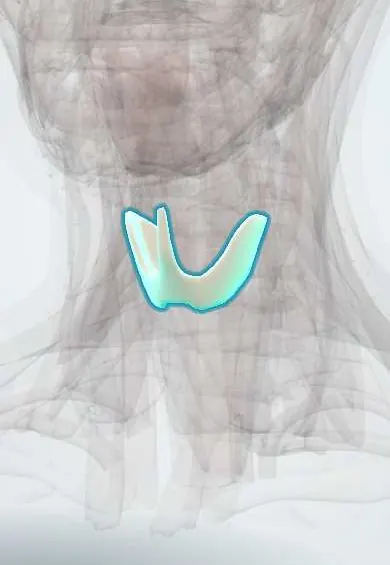
Structures involved
Tap one to see what it is and open it in 3D.
In the clinical exam
Why it happens
- Actions of thyroid hormones
- The thyroid axis: reading TSH and free T4
- Body temperature regulation
- Hypothermia and cold injury
- ADH, thirst and water balance
What it is
Decompensated severe hypothyroidism with altered mental status, hypothermia and failure of several organ systems. Despite the name, many patients are not in coma; it is a medical emergency.
Who gets it
Rare. It mostly affects older women with long-standing untreated or undertreated hypothyroidism, usually in the cold months and after a precipitating event. Mortality is high.
Causes
- Long-standing primary hypothyroidism (autoimmune Hashimoto thyroiditis, after thyroidectomy or radioiodine), rarely central hypothyroidism
- Trigger: infection, especially pneumonia or urinary infection
- Cold exposure
- Sedatives, opioids, anaesthesia or other drugs that depress the brain
- Stroke, myocardial infarction, heart failure, gastrointestinal bleeding or trauma
- Stopping thyroid hormone replacement
Risk factors
- Older age and female sex
- Untreated or poorly adherent hypothyroidism
- Winter or cold environment
- Admission to hospital with sedative use
Pathophysiology
Severe lack of thyroid hormone slows metabolism and thermogenesis, depresses the respiratory drive and heart, and reduces free-water clearance. A stressor tips this fragile balance: hypothermia, hypoventilation with carbon dioxide retention, bradycardia, hyponatraemia and hypoglycaemia follow and worsen the mental state.
Symptoms and signs
- Confusion, lethargy, stupor or coma
- Hypothermia, often without shivering
- Bradycardia, hypotension and slow, shallow breathing
- Dry skin, non-pitting swelling of face and hands, thin hair, macroglossia
- Delayed relaxation of tendon reflexes; a thyroidectomy scar may give a clue
Diagnosis
- Clinical
- Suspected in a hypothermic, drowsy patient with signs or history of hypothyroidism. A diagnostic score exists, but treatment starts on clinical suspicion once blood is drawn.
- Tests
- Very high TSH with low free T4 in primary hypothyroidism (TSH may be low or normal in central forms). Arterial blood gas with hypercapnia, hyponatraemia, hypoglycaemia, raised creatine kinase; cortisol drawn before steroids; cultures to look for infection.
- Imaging
- Chest X-ray for pneumonia or pericardial effusion; echocardiography for effusion; head CT when another cause of coma must be excluded.
Differential diagnosis
- Sepsis
- Hypothermia from environmental exposure
- Adrenal crisis
- Stroke or other structural brain lesion
- Sedative or opioid overdose
Goal of treatment
Replace thyroid hormone, cover possible adrenal insufficiency, support breathing, circulation and temperature, and treat the trigger.
Treatment
- Medical
- Intravenous thyroid hormone (levothyroxine, sometimes with liothyronine), adjusted carefully in older patients and those with heart disease.
- Medical
- Intravenous glucocorticoids until coexisting adrenal insufficiency is ruled out.
- Acute
- Intensive care support: airway protection and mechanical ventilation if needed, passive rewarming, cautious fluids, correction of hyponatraemia and hypoglycaemia, empirical antibiotics when infection is suspected.
- Follow-up
- Core temperature, cardiac rhythm, blood gases, sodium and glucose; nursing focus on airway, slow rewarming, pressure-area care and avoiding sedatives.
Complications
- Respiratory failure
- Shock and arrhythmias, especially when hormone is replaced too fast
- Severe hyponatraemia with seizures
- Pericardial effusion and, rarely, tamponade
- Death
Prognosis
Mortality is high, especially in older patients with severe hypothermia, low consciousness or heart disease. Survivors need lifelong thyroid hormone replacement and follow-up.
Prevention
- Diagnosis and adequate replacement of hypothyroidism
- Caution with sedatives and opioids in hypothyroid patients
Test yourself
Think of the answer, then tap the question to see it.
Why are glucocorticoids given with thyroid hormone in myxoedema coma?
Coexisting adrenal insufficiency is possible, and thyroid hormone raises cortisol clearance and could precipitate an adrenal crisis.
How is hypothermia managed in myxoedema coma?
With passive rewarming (blankets, warm room); active external rewarming can cause vasodilation and collapse.
Which electrolyte disorder is typical of myxoedema coma?
Hyponatraemia, from reduced free-water clearance.
What is the most common trigger of myxoedema coma?
Infection, especially pneumonia, often with cold exposure or sedative drugs.
Related conditions
- Hypothyroidism
- Adrenal insufficiency
- Adrenal crisis
- Sepsis and septic shock
- Heart failure
- Thyroid storm
- Hypoglycaemia (including insulin-induced)
Educational information, not medical advice. For any symptom, see a health professional.
Sources: Hypothyroidism (MedlinePlus Medical Encyclopedia (U.S. National Library of Medicine), 2024); Myxedema Coma (StatPearls (NCBI Bookshelf), 2023).
Spotted a mistake?We are always improving for the community. Tell us what is wrong and our team will review it.Report a mistake
Representative model, for educational purposes only.