Nervous system · Head and neck
Hypothalamus !
The hypothalamus is a small region below the thalamus, joined to the pituitary; it controls temperature, hunger, thirst, sleep and many hormones.
Opens in the Durgical app, no sign-up needed.
What it is
A small region below the thalamus, joined to the pituitary.
What it does
Controls temperature, hunger, thirst, sleep and the pituitary hormones.
Key facts
- Where
- Floor of the third ventricle, above the pituitary
- Blood supply
- Circle of Willis perforators: posterior communicating (thalamotuberal branches), anterior cerebral and anterior communicating (front part), posterior cerebral (mammillary region)
- Function
- Temperature, hunger, thirst, sleep, endocrine control via the pituitary
Relations
- Medial
- Third ventricle, whose floor and lower lateral walls it forms
- Above
- Thalamus, separated by the hypothalamic sulcus
- In front
- Lamina terminalis and the optic chiasm
- Below
- Tuber cinereum and median eminence, continuing as the infundibulum (pituitary stalk) down to the pituitary gland in the sella turcica
- Behind
- Mammillary bodies, then the interpeduncular fossa and the midbrain
How to find it
It lies below the hypothalamic sulcus in the walls and floor of the third ventricle. Seen from below, it fills the space between the optic chiasm and the mammillary bodies: the tuber cinereum, from which the infundibulum descends to the pituitary. On sagittal MRI it sits just above the pituitary stalk and the sella.
Examination
- Water deprivation test followed by desmopressin: urine stays dilute without water and then concentrates after desmopressin in central diabetes insipidus; little change after desmopressin points to the kidney (nephrogenic form)
On imaging
Sagittal and coronal MRI show it in the floor of the third ventricle between the optic chiasm and the mammillary bodies. Shrunken mammillary bodies support chronic Korsakoff syndrome; a calcified, partly cystic mass above the sella suggests craniopharyngioma.
Clinical notes
- Craniopharyngioma, from remnants of Rathke's pouch, grows above the sella and presses on the hypothalamus and optic chiasm: diabetes insipidus, obesity, growth failure in children and visual loss
- The arcuate nucleus sends dopamine down the portal vessels to hold back prolactin, so any mass that squeezes the stalk raises prolactin a little (stalk effect)
- Fever: inflammatory signals act on the preoptic area to raise the temperature set point
- Hypothalamic hamartoma causes laughing (gelastic) seizures and early puberty
Development
Part of the diencephalon. Its floor grows down as the infundibulum to form the posterior pituitary, while the anterior pituitary rises from the roof of the primitive mouth (Rathke pouch), which explains the two lobes' different tissue.
Memory aid
Anterior = A/C (cools you); posterior keeps you warm. Zap the ventromedial and you grow ventrally and medially; zap the lateral and you shrink.
Related conditions
- Wernicke encephalopathy (thiamine deficiency)
- Hyponatraemia
- Hypernatraemia
- Syndrome of inappropriate antidiuretic hormone secretion (SIADH)
- Heat stroke and heat exhaustion
- Accidental hypothermia
- Diabetes insipidus (central and nephrogenic)
- Hypopituitarism (incl. Sheehan syndrome and pituitary apoplexy)
- Human African trypanosomiasis (sleeping sickness)
- Cluster headache
- Narcolepsy
- Myalgic encephalomyelitis / chronic fatigue syndrome (ME/CFS)
- Premenstrual syndrome and premenstrual dysphoric disorder
- Functional hypothalamic amenorrhoea
- Neonatal abstinence syndrome
- Prader–Willi and Angelman syndromes (imprinting)
- Panic disorder
- Anorexia nervosa
- Bulimia nervosa
- Neuroleptic malignant syndrome
- Perinatal depression and postpartum psychosis
- Binge-eating disorder
- Insomnia disorder
- Premenstrual dysphoric disorder (PMDD)
- Gender dysphoria
- Paraphilic disorders
- Migraine
- Hypothyroidism
- Pituitary adenoma
Test yourself
Think of the answer, then tap the question to see it.
Which hypothalamic nuclei make ADH and oxytocin, and where are these released?
The supraoptic and paraventricular nuclei; the hormones travel down their axons through the pituitary stalk and are released from the posterior pituitary.
What causes central diabetes insipidus?
Damage to the supraoptic and paraventricular nuclei or the stalk (head injury, surgery, tumours) stops ADH: large volumes of dilute urine and intense thirst.
What is the role of the suprachiasmatic nucleus of the hypothalamus?
The body's master clock, set by light through a direct path from the retina; it times melatonin release by the pineal gland.
What do lesions of the lateral hypothalamic area and of the ventromedial nucleus cause?
Lateral area (hunger): weight loss; ventromedial nucleus (satiety): overeating and obesity.
How does a craniopharyngioma present?
From Rathke's pouch remnants above the sella, it presses on the hypothalamus and optic chiasm: diabetes insipidus, obesity, growth failure in children and visual loss.
Educational information, not medical advice. For any symptom, see a health professional.
Its names
- Official Latin (TA2)
- hypothalamus TA2 5714
- Official Spanish (DeCS)
- Hipotálamo y cuerpos mamilares
- English (TA2)
- Hypothalamus
- Also called
- floor of third ventricle
Related
Sources: Terminologia Anatomica (TA2); Neuroanatomy, Hypothalamus; 13.1 The Embryologic Perspective (OpenStax (Rice University), 2022) · adapted, CC BY 4.0; 17.3 The Pituitary Gland and Hypothalamus (OpenStax (Rice University), 2022) · adapted, CC BY 4.0.
Spotted a mistake?We are always improving for the community. Tell us what is wrong and our team will review it.Report a mistake
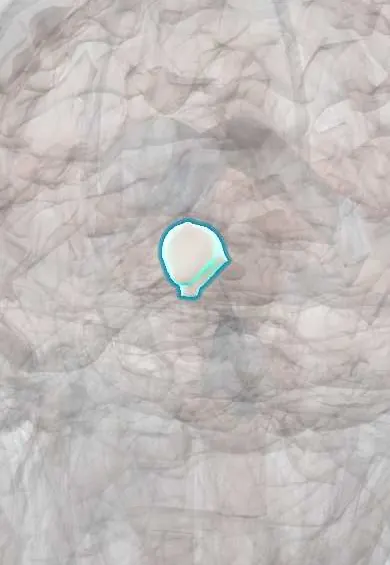
Representative model, for educational purposes only.