Conditions · Surgery and trauma
Pilonidal disease !
Pilonidal disease is an infected pocket of hair and skin in the crease between the buttocks. It causes painful abscesses and often comes back.
Updated 2026-11-01
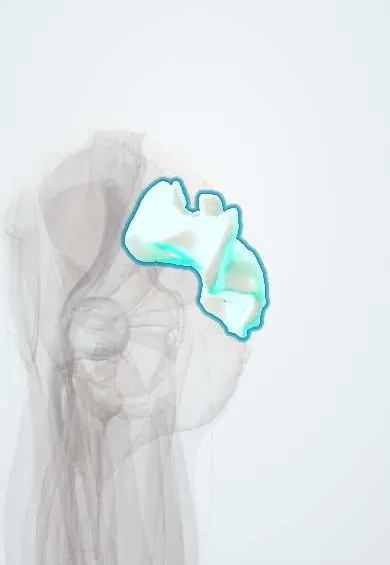
Structures involved
Tap one to see what it is and open it in 3D.
Why it happens
- Granulomatous inflammation: caseating vs non-caseating, the causes to know
- Patterns of acute inflammation: serous, fibrinous, purulent, abscess, ulcer
- Hair follicles, sebaceous and sweat glands, nails
What it is
An acquired inflammatory disease of the skin and subcutaneous tissue of the natal cleft over the sacrum and coccyx. Loose hairs are driven into enlarged hair follicles, forming midline pits and a sinus tract that can become an acute abscess or a chronic draining sinus.
Who gets it
It mainly affects young adults after puberty, most often men in their late teens and twenties. It is common in people who sit for long periods, and it is a frequent reason for outpatient surgery in Latin America, including among students, drivers and military personnel.
Causes
- Hair, often shed from the head or back, drawn into the natal cleft and into stretched follicles
- Friction and suction from movement of the buttocks
- Secondary bacterial infection with skin and bowel flora
Risk factors
- Male sex and age 15–30 years
- Thick, coarse body hair
- Deep natal cleft
- Obesity
- Prolonged sitting (drivers, office workers, students)
- Poor local hygiene and sweating
- Family history
Pathophysiology
Shearing forces in the cleft open hair follicles and pull hairs in, root first or tip first. The body reacts to the hair as a foreign body, forming a granulation-lined tract beneath the midline pits. Blockage and infection of this tract produce an abscess that usually points lateral to the midline. Repeated cycles leave chronic sinuses with side tracts.
Classification
- Asymptomatic pits found incidentally
- Acute pilonidal abscess
- Chronic pilonidal sinus with intermittent discharge
- Complex or recurrent disease with multiple tracts
Symptoms and signs
- Pain and swelling at the top of the buttock crease
- Red, tender, fluctuant lump (abscess)
- Discharge of pus or blood from small midline pits
- Pain on sitting
- Fever when the abscess is large
Diagnosis
- Clinical
- Clinical diagnosis: midline pits in the natal cleft over the sacrum and coccyx, with an abscess or sinus usually off the midline. Check that the openings are not connected to the anus with a digital rectal examination if there is doubt.
- Tests
- Usually none. Culture of pus in recurrent or complicated cases; blood glucose in people with diabetes risk.
- Imaging
- Not routinely needed. Ultrasound or MRI can map complex tracts or help distinguish an anal fistula.
Differential diagnosis
- Perianal abscess and anal fistula
- Hidradenitis suppurativa
- Furuncle or carbuncle
- Crohn disease with perianal tracts
- Sacrococcygeal tumours or dermoid cyst (rare)
Goal of treatment
Drain acute infection, remove or heal the sinus tracts, and reduce recurrence by keeping hair out of the cleft.
Treatment
- Procedure
- Acute abscess: incision and drainage under local anaesthesia, preferably off the midline, for both first and recurrent episodes; the wound is left open to heal. Antibiotics alone do not resolve an abscess.
- Conservative
- Disease without abscess: regular hair removal from the cleft by shaving (at least weekly) or laser epilation, plus hygiene; phenol or fibrin glue injection into the tract are minimally invasive options.
- Surgical
- Chronic or recurrent sinus: excision with healing by secondary intention or with primary closure (faster healing, slightly more recurrence); off-midline or flap techniques flatten the cleft and are used for complex and recurrent disease.
- Medical
- Antibiotics are reserved for surrounding cellulitis, immunosuppression or systemic signs; routine perioperative antibiotics have not shown clear benefit.
- Follow-up
- Nursing priorities: wound packing and dressing changes, pain control, signs of wound infection, hair removal around the wound until healed, and teaching to avoid prolonged sitting.
Complications
- Recurrence (common after drainage and after excision)
- Chronic non-healing wound
- Cellulitis and, rarely, necrotising infection
- Wound dehiscence after primary closure
- Squamous cell carcinoma in long-standing sinuses (very rare)
Prognosis
Drainage relieves an acute abscess quickly, but many patients have further episodes and need definitive surgery. Recurrence after surgery is frequent; off-midline closure and ongoing hair control reduce it. The disease tends to settle after the third decade of life.
Prevention
- Regular hair removal in the natal cleft
- Good hygiene and keeping the area dry
- Weight loss when obese
- Breaks from prolonged sitting
Test yourself
Think of the answer, then tap the question to see it.
What is the first-line treatment of an acute pilonidal abscess?
Incision and drainage, preferably off the midline; antibiotics alone are not enough.
What is thought to be the main cause of pilonidal disease?
Loose hairs driven into stretched follicles of the natal cleft, provoking a foreign-body reaction and infection.
Which patients are most typically affected by pilonidal disease?
Young, hirsute men who sit for long periods.
Why is primary midline closure after excision less favoured for recurrent disease?
A midline wound in the deep cleft heals poorly and recurs more often; off-midline or flap closures flatten the cleft.
Which condition should be ruled out when sinus openings lie close to the anus?
An anal fistula, including Crohn disease.
Related conditions
- Hidradenitis suppurativa
- Anorectal abscess and fistula
- Abscess, furuncle and carbuncle
- Surgical site infection
- Wound dehiscence and evisceration
- Anal fissure
Educational information, not medical advice. For any symptom, see a health professional.
Sources: Pilonidal Disease Management: Guidelines from the ASCRS (American Family Physician, 2019); Surgery for pilonidal cyst: MedlinePlus Medical Encyclopedia (MedlinePlus (U.S. National Library of Medicine), 2025).
Spotted a mistake?We are always improving for the community. Tell us what is wrong and our team will review it.Report a mistake
Representative model, for educational purposes only.