Conditions · Ophthalmology and ENT
Retinoblastoma !
Retinoblastoma is a cancer of the retina in young children. A white pupil in photos is the classic sign; found early, it is usually curable.
Updated 2026-11-01
Structures involved
Tap one to see what it is and open it in 3D.
Why it happens
- The cell cycle in cancer: cyclins, CDKs and checkpoints
- Tumour suppressor genes: RB, TP53, APC, BRCA and the two-hit hypothesis
- Tumours of infancy and childhood
- Hereditary cancer syndromes: the table to know
- Naming tumours: -oma, carcinoma, sarcoma, and the misleading names
- Retina: the ten layers, rods and cones
What it is
A malignant tumour arising from immature retinal cells, almost always in children under 5. It is the most common primary eye cancer of childhood and can affect one or both eyes.
Who gets it
Rare (roughly 1 in 15,000–20,000 live births) but the same everywhere in the world. In Latin America and other low- and middle-income settings children are often diagnosed late, with tumour outside the eye, so survival is much lower than in high-income countries; checking the red reflex in every newborn and infant is the key public-health measure.
Causes
- Loss of both copies of the RB1 tumour-suppressor gene on chromosome 13q14 (Knudson two-hit model)
- Heritable (germline) form in about one third to 40%: first hit inherited or new in every cell; usually bilateral or multifocal, earlier onset, autosomal dominant with high penetrance
- Non-heritable (sporadic) form: both hits occur in a single retinal cell; usually unilateral and unifocal, later onset
Risk factors
- Family history of retinoblastoma
- Germline RB1 mutation (including 13q deletion syndromes)
- Young age: most cases diagnosed before 3 years
Pathophysiology
The RB protein normally holds the cell cycle at the G1 checkpoint by binding E2F. When both RB1 alleles are lost, retinal precursor cells divide unchecked and form a white, often calcified tumour that grows into the vitreous (endophytic) or under the retina (exophytic). Untreated, it spreads along the optic nerve to the brain or through the blood to bone and marrow.
Classification
- Heritable (germline) vs non-heritable (somatic)
- Unilateral vs bilateral; trilateral when a midline brain tumour (pineal) is also present
- Intraocular groups A–E of the International Classification of Retinoblastoma (E = most extensive)
- Extraocular disease: orbit, optic nerve, central nervous system or distant metastases
Symptoms and signs
- Leukocoria: a white pupil instead of the red reflex, often first seen in a flash photograph
- Strabismus (crossed or wandering eye), the second most common sign
- Poor vision or not following objects
- Red, painful eye or glaucoma in advanced disease
- Different iris colours (heterochromia) or bulging of the eye (proptosis) when it has spread
Diagnosis
- Clinical
- Red reflex test in primary care, then urgent referral for a dilated fundus examination, usually under anaesthesia in young children. The tumour is not biopsied, because a needle could seed cancer outside the eye.
- Tests
- Genetic testing for RB1 in every patient (and relatives when a germline mutation is found). Cerebrospinal fluid and bone marrow studies when spread is suspected.
- Imaging
- Ocular ultrasound showing a mass with calcification is highly suggestive. MRI of the orbits and brain assesses the optic nerve and pineal region; CT is avoided where possible to limit radiation in children with germline mutations.
Differential diagnosis
- Coats disease
- Persistent fetal vasculature (persistent hyperplastic primary vitreous)
- Ocular toxocariasis
- Retinopathy of prematurity with retinal detachment
- Congenital cataract
Goal of treatment
Save the child's life first, then the eye, then as much vision as possible; follow up for life to detect new tumours and second cancers.
Treatment
- Medical
- Chemotherapy given into a vein, into the ophthalmic artery (intra-arterial) or into the vitreous, often to shrink the tumour before local treatment.
- Procedure
- Focal therapies for small tumours: laser (thermotherapy or photocoagulation), cryotherapy and plaque brachytherapy.
- Surgical
- Enucleation (removal of the eye) for large tumours with no useful vision or disease that does not respond; the optic nerve is examined for spread.
- Medical
- External-beam radiotherapy is now a second-line option because it increases second cancers in germline cases; extraocular disease needs intensive chemotherapy.
- Follow-up
- Repeated eye examinations under anaesthesia, screening of siblings and children of carriers, and lifelong follow-up for second tumours.
Complications
- Loss of the eye or of vision
- Spread along the optic nerve to the brain, or to bone and bone marrow
- Trilateral retinoblastoma (pineal tumour)
- Second cancers in germline carriers, mainly osteosarcoma and soft-tissue sarcomas, higher after radiotherapy
- Late effects of chemotherapy and radiation, such as facial growth problems
Prognosis
When the tumour is confined to the eye, almost all children are cured. Survival falls sharply once it has spread outside the eye, which is why late diagnosis drives mortality in low-resource settings.
Prevention
- Red reflex screening at birth and at every well-child visit
- Genetic counselling and early, regular eye examinations for children of carriers and siblings
Test yourself
Think of the answer, then tap the question to see it.
What is the most common presenting sign of retinoblastoma?
Leukocoria, a white pupillary reflex, often noticed in a flash photograph; strabismus is the second most common sign.
Which gene and model explain retinoblastoma?
Loss of both alleles of the RB1 tumour-suppressor gene on chromosome 13q14, following Knudson's two-hit hypothesis.
Why is a suspected retinoblastoma not biopsied?
A biopsy could seed tumour cells outside the eye; diagnosis rests on fundus examination, ultrasound and MRI.
Which second cancer is most typical in survivors of heritable retinoblastoma?
Osteosarcoma, with soft-tissue sarcomas, especially after radiotherapy.
Related conditions
- Retinopathy of prematurity
- Strabismus and amblyopia
- Cataract
- Toxocariasis (visceral and ocular larva migrans)
- Osteosarcoma
Educational information, not medical advice. For any symptom, see a health professional.
Sources: Retinoblastoma: MedlinePlus Medical Encyclopedia (MedlinePlus (U.S. National Library of Medicine), 2024); Retinoblastoma (EyeWiki (American Academy of Ophthalmology), 2026).
Spotted a mistake?We are always improving for the community. Tell us what is wrong and our team will review it.Report a mistake
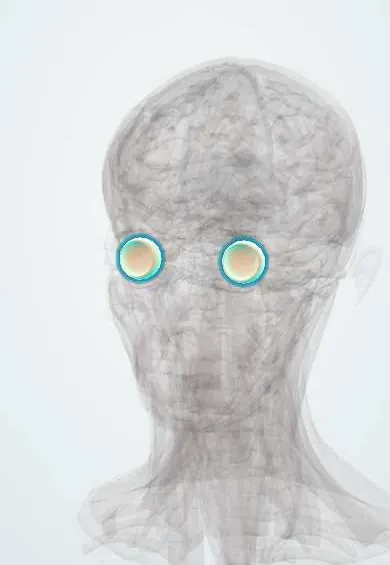
Representative model, for educational purposes only.