Conditions · Infectious and tropical diseases
Toxocariasis (visceral and ocular larva migrans) !
Toxocariasis is an infection by roundworm larvae from dog or cat faeces that wander through the body, mainly the liver, lungs and eye.
Updated 2026-11-01
Structures involved
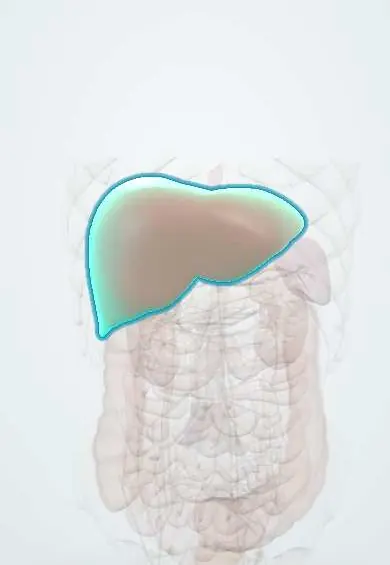
Tap one to see what it is and open it in 3D.
Microorganisms that cause it
Why it happens
- Granulomatous inflammation: caseating vs non-caseating, the causes to know
- White blood cells: types and functions
- Retina: the ten layers, rods and cones
What it is
A zoonotic infection by larvae of the dog roundworm Toxocara canis or cat roundworm Toxocara cati. Humans are accidental hosts: the larvae cannot mature and migrate through tissues, causing visceral larva migrans, ocular larva migrans or silent (covert) infection.
Who gets it
One of the most common zoonotic helminth infections worldwide, more frequent in the tropics, in rural or poor urban areas and in children who play in soil. Serological studies in Colombian children have found high seroprevalence in several communities, linked to free-roaming dogs and contaminated parks. Most infections cause no symptoms.
Causes
- Toxocara canis (most cases) and Toxocara cati
- Swallowing embryonated eggs from soil, sand or hands contaminated with dog or cat faeces
- Rarely, eating raw or undercooked liver or meat containing larvae
- No person-to-person spread
Risk factors
- Young children, especially with pica or geophagia
- Contact with puppies and dogs that are not dewormed
- Playgrounds and sandboxes contaminated by dog and cat faeces
- Poor hand hygiene and rural living
Pathophysiology
Swallowed eggs hatch in the small intestine, and larvae cross the gut wall and travel through the portal and systemic circulation to the liver, lungs, brain, eye and muscles. Because they cannot develop into adult worms in humans, they wander for months and provoke an intense eosinophilic, granulomatous inflammation. In the eye a single larva usually causes a granuloma in the retina or vitreous inflammation, often without systemic signs or eosinophilia.
Classification
- Visceral larva migrans: mainly young children, systemic illness
- Ocular larva migrans: older children and adults, usually one eye
- Covert (common) toxocariasis: mild, non-specific symptoms
- Neurotoxocariasis: rare central nervous system involvement
Symptoms and signs
- Fever, tiredness and loss of appetite
- Cough, wheezing and asthma-like episodes
- Abdominal pain and an enlarged, sometimes tender liver
- Itchy rashes or urticaria
- Ocular form: reduced vision in one eye, squint, red eye or a white pupil reflex (leukocoria)
- Covert form: chronic abdominal pain, headache and cough
Diagnosis
- Clinical
- Suspected in a young child with eosinophilia, hepatomegaly and wheeze who has contact with dogs or soil, or in a child or young adult with a unilateral retinal granuloma.
- Tests
- Marked eosinophilia, leukocytosis and raised IgE in visceral disease. ELISA using Toxocara excretory-secretory antigens (positive results interpreted with the clinical picture, because antibodies persist after old infection; rising paired titres support active disease). In ocular disease serum antibodies may be low, so aqueous or vitreous fluid can be tested. Stool examination is not useful because the larvae do not mature in the gut.
- Imaging
- Dilated fundus examination by an ophthalmologist for retinal granulomas; ocular ultrasound or orbital imaging to separate from retinoblastoma (no calcification). Liver ultrasound may show small hypoechoic lesions; chest X-ray may show transient infiltrates.
Differential diagnosis
- Retinoblastoma (leukocoria in a child)
- Ocular toxoplasmosis and other causes of uveitis
- Asthma and eosinophilic pneumonia
- Strongyloidiasis, ascariasis and other helminth infections with eosinophilia
- Liver abscess and hypereosinophilic syndromes
Goal of treatment
Kill the migrating larvae when there is active disease, control the inflammation that damages organs, and above all protect vision in ocular disease.
Treatment
- Medical
- Visceral disease: an anthelmintic (albendazole, or mebendazole as an alternative); many mild cases settle without treatment.
- Medical
- Corticosteroids, systemic or by the eye, to reduce inflammation in ocular disease and in severe visceral involvement (lungs, heart, brain), usually with an anthelmintic.
- Surgical
- Ocular surgery (vitrectomy, retinal detachment repair) or laser for traction, vitreous inflammation and detachment.
- Follow-up
- Follow-up of eosinophil count and symptoms; regular eye examinations; education on hand washing and deworming pets for the family.
Complications
- Permanent visual loss in the affected eye
- Tractional retinal detachment and endophthalmitis
- Eosinophilic pneumonitis and severe wheeze
- Myocarditis
- Seizures, meningoencephalitis or myelitis
Prognosis
Visceral disease is usually self-limited and resolves over months with low mortality. Ocular disease often leaves lasting visual damage in one eye, even after treatment.
Prevention
- Regular deworming of dogs, cats, puppies and kittens
- Prompt collection of pet faeces and covering of sandboxes
- Hand washing after playing in soil or handling pets, and before eating
- Washing vegetables and avoiding raw or undercooked meat and liver
Test yourself
Think of the answer, then tap the question to see it.
Which organisms cause toxocariasis and how do humans acquire them?
Larvae of Toxocara canis or T. cati, acquired by swallowing eggs from soil contaminated with dog or cat faeces.
What are the classic findings of visceral larva migrans?
A young child with fever, hepatomegaly, wheeze and marked eosinophilia.
Why is stool examination unhelpful?
The larvae never mature into adult worms in humans, so no eggs appear in the stool.
Which serious diagnosis must be ruled out in a child with ocular toxocariasis and leukocoria?
Retinoblastoma.
What is the key preventive measure at home?
Regular deworming of pets plus hand washing after contact with soil or animals.
Related conditions
- Uveitis
- Retinoblastoma
- Ocular toxoplasmosis (retinochoroiditis)
- Endophthalmitis
- Asthma
- Eosinophilic pneumonias (including Löffler syndrome)
- Strongyloidiasis
- Cutaneous larva migrans
- Pyogenic liver abscess
Educational information, not medical advice. For any symptom, see a health professional.
Sources: About Toxocariasis | Toxocariasis | CDC (Centers for Disease Control and Prevention, 2024); Clinical Overview of Toxocariasis | Parasites - Toxocariasis | CDC (Centers for Disease Control and Prevention, 2024).
Spotted a mistake?We are always improving for the community. Tell us what is wrong and our team will review it.Report a mistake
Representative model, for educational purposes only.