Conditions · Metabolism: fatty acids and ketones
Zellweger syndrome (Zellweger spectrum) !
A genetic disorder in which cells cannot build working peroxisomes; it affects brain, liver, eyes and bones from birth.
Updated 2026-11-01
Structures involved
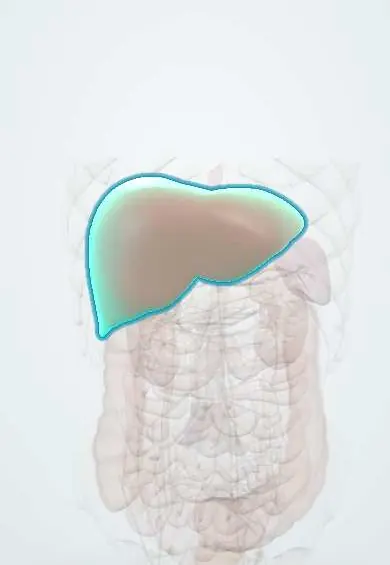
Tap one to see what it is and open it in 3D.
In biochemistry
- Classic bile acid synthesis pathway: Step 5 · Sterol 27-hydroxylase (CYP27A1) and peroxisomal side-chain shortening
- Cell organelles and their metabolism
- Peroxisomal oxidation (β- and α-oxidation)
- Protein targeting and signal sequences
In histology
What it is
A group of peroxisome biogenesis disorders caused by variants in PEX (peroxin) genes. Zellweger syndrome is the severe end; neonatal adrenoleukodystrophy and infantile Refsum disease are milder forms of the same spectrum.
Who gets it
Estimated at 1 in 50,000 people. No specific data for Colombia.
Causes
- Variants in at least 12 PEX genes; PEX1 accounts for most cases
- Autosomal recessive inheritance
Risk factors
- Affected sibling
- Carrier parents (consanguinity raises the risk)
Pathophysiology
Without peroxins, peroxisomal enzymes do not reach the peroxisome and stay inactive in the cytosol. β-Oxidation of very-long-chain fatty acids, α-oxidation of phytanic acid, plasmalogen synthesis (myelin lipids) and bile acid synthesis fail together. Very-long-chain fatty acids build up and, with the lack of plasmalogens, disturb neuronal migration and myelin, injure the liver and cause renal cysts and cartilage calcifications.
Classification
- Zellweger syndrome (severe, neonatal)
- Neonatal adrenoleukodystrophy (intermediate)
- Infantile Refsum disease (mild)
Symptoms and signs
- Severe hypotonia and feeding difficulty in the newborn
- Typical facial features: high forehead, large fontanelle, flat face
- Seizures
- Hepatomegaly and jaundice
- Loss of vision and hearing
Diagnosis
- Clinical
- Suspected with profound neonatal hypotonia, characteristic facial features, seizures and liver failure.
- Tests
- Raised plasma very-long-chain fatty acids (C26:0 and C26/C22 ratio); high phytanic, pristanic and pipecolic acids; low red-cell plasmalogens; PEX gene panel.
- Imaging
- Brain MRI with polymicrogyria and abnormal myelin; X-rays with stippled calcification of the patellae; ultrasound with renal cysts.
Treatment
- Conservative
- Supportive care by a multidisciplinary team (neurology, hepatology, nutrition)
- Medical
- Seizure treatment and fat-soluble vitamin supplements
- Lifestyle
- Nutritional support; in some cases dietary phytanic acid is restricted
- Follow-up
- Checks of vision, hearing, liver and adrenal function
Complications
- Liver failure
- Adrenal insufficiency
- Hard-to-control epilepsy
- Respiratory infections
Prognosis
In the classic form most children die in the first year; milder forms can reach adulthood with disability.
Prevention
- Genetic counselling and prenatal diagnosis in families with a case.
Test yourself
Think of the answer, then tap the question to see it.
Which organelle fails in Zellweger syndrome?
The peroxisome: the peroxins that import its enzymes are missing.
Which biochemical finding is the first test in the Zellweger spectrum?
Raised plasma very-long-chain fatty acids (C26:0).
Why is myelin abnormal in Zellweger syndrome?
The plasmalogens made by the peroxisome are missing and very-long-chain fatty acids build up.
Related conditions
Educational information, not medical advice. For any symptom, see a health professional.
Sources: Zellweger spectrum disorder: MedlinePlus Genetics (MedlinePlus, US National Library of Medicine, 2026); PEX1 gene: MedlinePlus Genetics (MedlinePlus, US National Library of Medicine, 2026); Peroxisomal lipid metabolism (Reactome, 2026).
Spotted a mistake?We are always improving for the community. Tell us what is wrong and our team will review it.Report a mistake
Representative model, for educational purposes only.