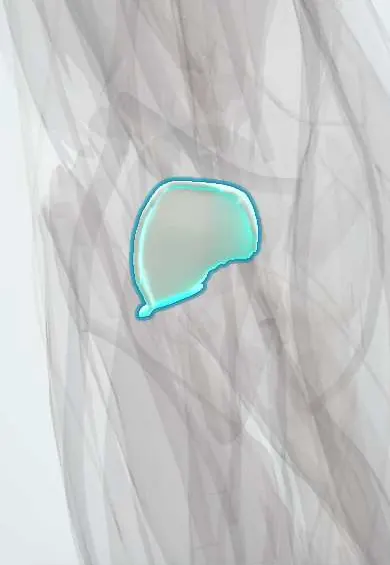
Ulnar notch cartilage !
The ulnar notch cartilage lines the curved notch at the top of the ulna that wraps around the humerus; it makes the elbow hinge glide.
Official name: Cartilage of the trochlear notch
Opens in the Durgical app, no sign-up needed.
What it is
The smooth lining of the ulna's hook that wraps the humerus.
What it does
Makes the elbow hinge glide.
Key facts
- Where
- Trochlear notch of the ulna (olecranon and coronoid process)
- Function
- Hinge surface on the humeral trochlea
Relations
- In front
- Trochlea of the humerus, which the notch grips like a wrench
- Behind
- Olecranon, with the triceps tendon insertion and the olecranon bursa over it
- Below
- Coronoid process, with the brachialis inserting on the ulnar tuberosity just below
- Medial
- Sublime tubercle with the UCL anterior bundle; the ulnar nerve behind, in the cubital tunnel
- Lateral
- Radial notch for the radial head, ringed by the annular ligament
How to find it
The olecranon, the upper lip of the notch, is the bony point at the back of the elbow and can be felt in any position; in flexion its upper surface leaves the fossa and becomes easy to feel. The cartilage itself is seen only at surgery, for example when an olecranon fracture is fixed.
On imaging
A true lateral X-ray shows the arc of the notch, the coronoid tip and any olecranon displacement; CT defines coronoid fragment size and the anteromedial facet. On MRI the cartilage-free waist and the small notches at its edges are pseudodefects, not cartilage injuries.
Clinical notes
- Olecranon fractures enter the joint surface; fixation (tension-band wiring or a plate) aims to restore a smooth notch
- Coronoid fractures are graded by fragment height (Regan–Morrey) and by site (O'Driscoll, which adds the anteromedial facet); a missed anteromedial facet fracture after a varus injury leads to instability and early arthritis
- In throwers, valgus extension overload drives the olecranon tip against the fossa, forming posteromedial osteophytes and wearing the cartilage at the back of the notch
Development
The olecranon ossifies from a secondary centre late in childhood (the 'O' of CRITOE) that may look fragmented; a persistent or stress-widened olecranon physis is seen in young throwers.
Test yourself
Think of the answer, then tap the question to see it.
Which processes form the trochlear notch of the ulna?
The olecranon above and the coronoid process below.
Why does a coronoid fracture with a dislocation make the elbow unstable?
The coronoid is the anterior buttress of the elbow (terrible triad).
Which ligament attaches to the sublime tubercle of the coronoid?
The anterior bundle of the ulnar collateral ligament (UCL) of the elbow.
Educational information, not medical advice. For any symptom, see a health professional.
Its names
- Official Latin (TA2)
- cartilago articularis incisurae trochlearis ulnae TA2 382
- Official Spanish (DeCS)
- Cartílago articular de la escotadura troclear de la ulna
- English (TA2)
- Cartilage of the trochlear notch
Related
Sources: Terminologia Anatomica (TA2); Anatomy, Shoulder and Upper Limb, Elbow Joint; Anatomy of the Human Body (20th ed.): Surface Anatomy of the Upper Extremity (Lea & Febiger (Gray's Anatomy, 1918), 1918) · adapted, Public domain.
Spotted a mistake?We are always improving for the community. Tell us what is wrong and our team will review it.Report a mistake
Representative model, for educational purposes only.