Joints and ligaments · Upper limb
Volar plates (knuckles) !
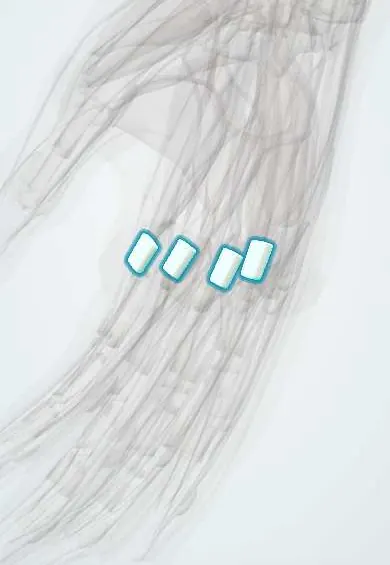
The volar plates of the knuckles are pads on the palm side of the finger knuckles; they limit backward bending and anchor the tendon pulleys.
Official name: Volar (palmar) plates of the MCP joints
Opens in the Durgical app, no sign-up needed.
What it is
Thick pads on the palm side of the knuckles.
What it does
Limit the knuckles bending backward and anchor the pulleys and the deep transverse ligament.
Key facts
- Attaches
- Base of the proximal phalanx; linked by the deep transverse metacarpal ligament
- Function
- Prevent MCP hyperextension; anchor the A1 pulley
- Tight in
- MCP extension
Relations
- In front
- A1 pulley, which arises from it, and the flexor tendons; the deep transverse metacarpal ligament links it to its neighbours
- Behind
- Metacarpal head
- Lateral
- Accessory collateral ligaments inserting on its sides; further out the lumbricals and digital nerves
How to find it
Not felt directly; it lies deep to the flexor tendons near the distal palmar crease for the ring and little fingers and the proximal palmar crease for the index. At the thumb, the two sesamoids carried in the plate can be felt as small hard nodules in front of the first metacarpal head.
Examination
- Hyperextension stress of the MCP compared with the other hand: pain and excess hyperextension suggest a volar plate injury
On imaging
Lateral and oblique X-rays: in a complex dislocation the joint surfaces lie nearly parallel and a sesamoid inside a widened joint space (thumb or index) is a clue to an entrapped plate. Ultrasound and MRI show plate tears.
Clinical notes
- Traction or hyperextension during reduction can turn a simple dislocation into a complex one by pulling the plate into the joint
- Puckering of the palmar skin over the metacarpal head is a sign of a complex dislocation
- Complex dislocations need open reduction, from the back or the palm; in the palmar approach the digital nerves stretched over the metacarpal head are at risk
Development
The thumb sesamoids in this plate ossify around puberty; on a hand X-ray for bone age, the appearance of the ulnar (adductor) sesamoid is used as a sign that the pubertal growth spurt has begun.
Related conditions
Test yourself
Think of the answer, then tap the question to see it.
What makes a dorsal MCP dislocation complex (irreducible)?
The MCP volar plate is trapped between the metacarpal head and the proximal phalanx; the index finger is most often affected.
Which reduction manoeuvre can turn a simple MCP dislocation into a complex one?
Traction or hyperextension, which can pull the volar plate into the joint.
Why can many people hyperextend their knuckles but not their PIP joints?
The MCP volar plate is loosely attached proximally, unlike the PIP plate.
What skin sign suggests a complex MCP dislocation?
Puckering of the palmar skin over the metacarpal head.
Educational information, not medical advice. For any symptom, see a health professional.
Its names
- Official Latin (TA2)
- ligamenta metacarpophalangea palmaria TA2 1837
- Official Spanish (DeCS)
- Ligamentos palmares metacarpofalángicos
- English (TA2)
- Volar (palmar) plates of the MCP joints
- Also called
- volar plate · palmar plate · Palmar metacarpophalangeal ligaments
Related
- A1 pulleys
- Knuckle collateral ligaments
- Deep transverse metacarpal ligament
- 2nd metacarpal
- 3rd metacarpal
- 4th metacarpal
- 5th metacarpal
- Proximal phalanx, middle finger
Sources: Terminologia Anatomica (TA2); Anatomy, Shoulder and Upper Limb, Metacarpophalangeal Joints; Anatomy, Shoulder and Upper Limb, Hand Metacarpal Phalangeal Joint; Anatomy of the Human Body (20th ed.): Surface Anatomy of the Upper Extremity (Lea & Febiger (Gray's Anatomy, 1918), 1918) · adapted, Public domain.
Spotted a mistake?We are always improving for the community. Tell us what is wrong and our team will review it.Report a mistake
Representative model, for educational purposes only.