Conditions · Infectious and tropical diseases
Chancroid !
Chancroid is a sexually transmitted bacterial infection that causes painful genital ulcers and swollen, sometimes draining, groin lymph nodes.
Updated 2026-11-01
Structures involved
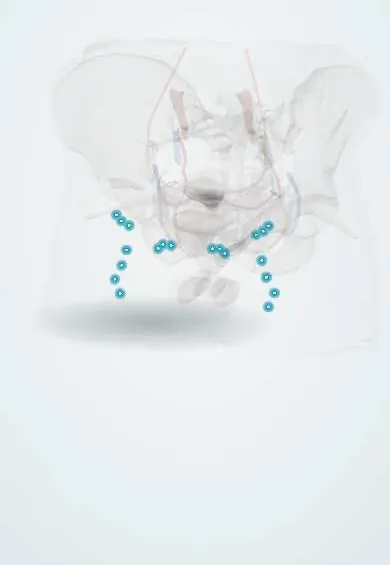
Tap one to see what it is and open it in 3D.
- Superficial inguinal nodes
- Skin of penis
- Labia majora
- Glans penis
- Scrotum
- Labia minora
- Vagina
- Perineal body
Microorganisms that cause it
Why it happens
- Patterns of acute inflammation: serous, fibrinous, purulent, abscess, ulcer
- Outcomes of acute inflammation: resolution, abscess, scar or chronic inflammation
- Lymph node and spleen under the microscope
What it is
A sexually transmitted infection by Haemophilus ducreyi that produces one or more painful, soft genital ulcers, often with tender inguinal lymphadenitis that can turn into a suppurating bubo.
Who gets it
It has become rare worldwide and in Colombia, where most genital ulcers are due to herpes or syphilis. It persists in sporadic outbreaks and in parts of Africa, Asia and the Caribbean, often linked to sex work. Men are diagnosed more often than women. Genital ulcers of any cause raise the risk of acquiring and passing on HIV.
Causes
- Haemophilus ducreyi, a small Gram-negative coccobacillus
- Spread by sexual contact through small breaks in the genital skin or mucosa
- Incubation of a few days to about 10 days
Risk factors
- Unprotected sex with multiple partners or with sex workers
- Sexual contact in or travel to areas where outbreaks occur
- HIV infection (more ulcers, slower healing, more treatment failures)
- Uncircumcised men (slower response to treatment)
Pathophysiology
The bacteria enter through microabrasions and trigger an intense neutrophil and macrophage response. A tender papule becomes a pustule that breaks down into an ulcer with ragged, undermined edges and a necrotic, purulent base. Bacteria drain to the inguinal nodes, which enlarge and may liquefy into a fluctuant bubo that can rupture through the skin.
Classification
- Classic: single or few deep painful ulcers with inguinal lymphadenitis
- Ulcer only, without lymph node involvement (more than half of cases)
- Mixed infection with syphilis or herpes in the same ulcer
Symptoms and signs
- Painful, soft genital ulcer with irregular undermined edges and a grey or yellow purulent base that bleeds easily
- In men usually on the prepuce, coronal sulcus or glans; in women on the labia, vestibule or perineum, often several
- Pain on urination or during sex, especially in women
- Tender, usually one-sided swelling of the inguinal nodes, which may become fluctuant (bubo)
Diagnosis
- Clinical
- A probable diagnosis rests on painful genital ulcers with a typical appearance and inguinal lymphadenopathy, after syphilis and herpes have been ruled out. Because culture is rarely available, treatment usually starts on this clinical picture.
- Tests
- Culture of H. ducreyi on special media (low sensitivity, limited availability) or nucleic acid testing where offered. Testing to exclude syphilis (darkfield or treponemal and non-treponemal serology, repeated after 1–2 weeks of the ulcer) and herpes (PCR of the ulcer). HIV testing for every patient, plus screening for other sexually transmitted infections.
- Imaging
- Not needed; ultrasound can confirm a fluid collection in a bubo before drainage.
Differential diagnosis
- Primary syphilis (painless indurated chancre with clean base)
- Genital herpes (grouped vesicles and shallow multiple erosions)
- Lymphogranuloma venereum (small transient ulcer, then prominent buboes)
- Granuloma inguinale (painless, beefy-red ulcer)
- Behçet disease, trauma or fixed drug eruption
Goal of treatment
Cure the infection quickly, relieve pain, drain large buboes to avoid rupture and scarring, and stop transmission by treating partners and screening for HIV and other infections.
Treatment
- Medical
- Antibiotics effective against H. ducreyi: a macrolide (azithromycin or erythromycin), a third-generation cephalosporin (ceftriaxone) or a fluoroquinolone (ciprofloxacin); single-dose options help adherence.
- Procedure
- Needle aspiration or incision and drainage of large fluctuant buboes, which may need repeating.
- Medical
- Examination and treatment of all sexual partners from the 10 days before symptoms, even without symptoms, and counselling on condom use.
- Follow-up
- Re-examination 3–7 days after starting treatment; pain improves within days and ulcers within about a week, while large ulcers and people living with HIV heal more slowly.
Complications
- Bubo rupture with chronic draining sinuses
- Scarring and phimosis of the foreskin
- Urethral fistula and tissue destruction in neglected cases
- Increased acquisition and transmission of HIV
Prognosis
With correct antibiotics most patients are cured with little scarring. Healing is slower in people with HIV and in large ulcers, and reinfection is possible because infection does not leave immunity.
Prevention
- Consistent condom use and fewer sexual partners
- Early treatment of patients and their partners
- Testing for HIV and syphilis in anyone with a genital ulcer
Test yourself
Think of the answer, then tap the question to see it.
Which organism causes chancroid?
Haemophilus ducreyi, a Gram-negative coccobacillus.
How does the chancroid ulcer differ from a syphilitic chancre?
It is painful, soft, with ragged undermined edges and a purulent base; the syphilitic chancre is painless, indurated and clean.
What lymph node finding is typical of chancroid?
Painful, usually unilateral inguinal lymphadenitis that can form a fluctuant bubo and rupture.
Which test must every patient with chancroid have?
HIV testing, together with testing to rule out syphilis and herpes.
Related conditions
- Syphilis
- Genital herpes (herpes simplex infection)
- HIV infection and AIDS
- Gonorrhoea
- Chlamydia infection
- Yaws and endemic treponematoses
Educational information, not medical advice. For any symptom, see a health professional.
Sources: Chancroid - STI Treatment Guidelines (Centers for Disease Control and Prevention, 2021); Chancroid: MedlinePlus Medical Encyclopedia (MedlinePlus (U.S. National Library of Medicine), 2024).
Spotted a mistake?We are always improving for the community. Tell us what is wrong and our team will review it.Report a mistake
Representative model, for educational purposes only.