Conditions · Metabolism (biochemistry)
GM2 activator deficiency (GM2 gangliosidosis, AB variant) !
An extremely rare GM2 gangliosidosis: the enzymes are normal, but the helper protein that hands them GM2 is missing, so GM2 builds up in the brain.
Updated 2026-11-01
Structures involved
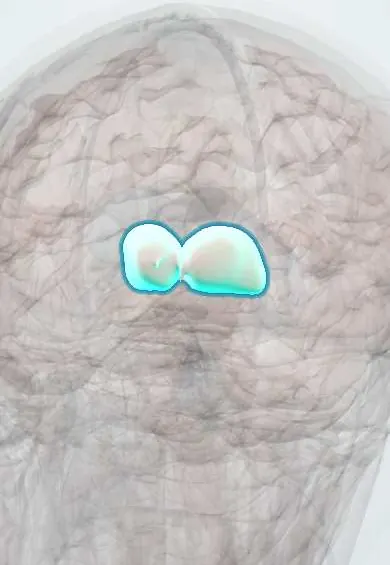
Tap one to see what it is and open it in 3D.
In biochemistry
What it is
An autosomal recessive lysosomal disease caused by GM2A variants; without the GM2 activator protein, hexosaminidase A cannot break down GM2 ganglioside, which accumulates in the central nervous system.
Who gets it
Extremely rare: fewer than 30 cases have been reported worldwide. There are no data for Colombia or Latin America in the sources consulted.
Causes
- Variants in both copies of the GM2A gene
Risk factors
- Both parents carriers
- Consanguinity
Pathophysiology
GM2 ganglioside sits inside the lysosomal membrane, out of the enzyme's reach. The GM2 activator protein lifts it out and presents it to hexosaminidase A. When the activator is missing, the enzymes are intact but GM2 is not broken down; it accumulates in neurons, causing the same picture as Tay–Sachs disease.
Classification
- Acute infantile (most cases)
- Late-onset forms: milder and poorly defined
Symptoms and signs
- Slowing of development and weakness between 4 and 12 months
- Loss of skills such as rolling over, sitting and crawling
- Exaggerated startle to noise
- Seizures, vision loss and intellectual disability
- Cherry-red spot on eye examination
- Later, no response to surroundings
Diagnosis
- Clinical
- A Tay–Sachs-like infant (regression, startle, cherry-red spot) whose hexosaminidase tests come back normal.
- Tests
- Hexosaminidase A and B are normal with the usual artificial substrates, which is the diagnostic trap; GM2A gene testing confirms, and specialised assays with the natural substrate or activator measurement can support it.
- Imaging
- Brain MRI may show thalamic and white-matter changes and later atrophy.
Treatment
- Medical
- No specific treatment; seizures and other symptoms are managed as they appear.
- Procedure
- Gastrostomy feeding if swallowing becomes unsafe.
- Conservative
- Palliative care, physiotherapy and family support.
Complications
- Aspiration pneumonia
- Refractory seizures
- Blindness
Prognosis
Infants with the acute infantile form may survive into early childhood.
Prevention
- Genetic counselling and carrier testing in affected families
- Prenatal diagnosis when both GM2A variants are known
Test yourself
Think of the answer, then tap the question to see it.
Which protein is missing in GM2 activator deficiency?
The GM2 activator, coded by GM2A, which lifts GM2 out of the membrane and presents it to hexosaminidase A.
Why can routine enzyme tests miss GM2 activator deficiency?
Hexosaminidase A and B are themselves normal and work on artificial substrates; only the natural GM2 substrate needs the activator.
Which better-known disease does GM2 activator deficiency resemble clinically?
Tay–Sachs disease: regression, exaggerated startle, seizures and a cherry-red spot in infancy.
Related conditions
Educational information, not medical advice. For any symptom, see a health professional.
Sources: GM2 activator deficiency: MedlinePlus Genetics (MedlinePlus, US National Library of Medicine, 2026); GM2A gene: MedlinePlus Genetics (MedlinePlus, US National Library of Medicine, 2026); Textbook of Biochemistry for Medical Students, 6th ed. (Jaypee Brothers Medical Publishers (Vasudevan DM, Sreekumari S, Vaidyanathan K), 2011).
Spotted a mistake?We are always improving for the community. Tell us what is wrong and our team will review it.Report a mistake
Representative model, for educational purposes only.