Conditions · Hematology and oncology
Inherited platelet function disorders (Glanzmann thrombasthenia, Bernard–Soulier syndrome) !
Inherited conditions in which platelets do not stick or clump normally. They cause easy bruising, nosebleeds, bleeding gums and heavy periods from childhood.
Updated 2026-11-01
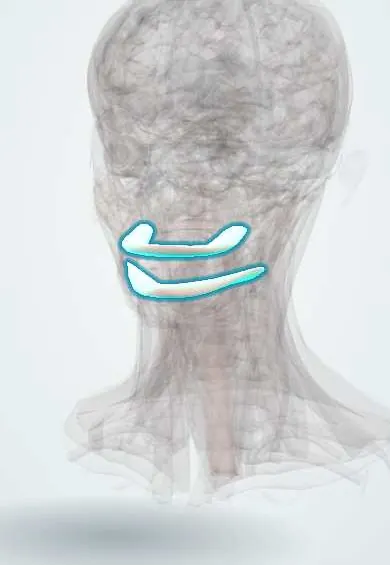
Structures involved
Tap one to see what it is and open it in 3D.
Why it happens
- Mendelian inheritance: autosomal dominant, recessive and X-linked
- Primary hemostasis and platelets
- Coagulation tests: PT/INR, aPTT and platelets
What it is
Rare inherited defects of platelet receptors that impair primary haemostasis. Glanzmann thrombasthenia lacks GPIIb/IIIa (aggregation) with a normal count; Bernard–Soulier syndrome lacks GPIb-IX-V (adhesion to von Willebrand factor), with large, scarce platelets.
Who gets it
Each is estimated at about 1 in a million people, more frequent where marriage between relatives is common. Both are probably underdiagnosed, and Bernard–Soulier syndrome is often first labelled as immune thrombocytopenia.
Causes
- Glanzmann thrombasthenia: variants in ITGA2B or ITGB3, which encode integrin αIIbβ3 (GPIIb/IIIa); autosomal recessive
- Bernard–Soulier syndrome: variants in GP1BA, GP1BB or GP9 (GPIb-IX-V complex); usually autosomal recessive, rarely dominant
Risk factors
- Parents who are blood relatives (consanguinity)
- Family history of a lifelong bleeding tendency
- Aspirin and NSAIDs worsen bleeding
Pathophysiology
After vessel injury, platelets first adhere to exposed collagen through von Willebrand factor bound to GPIb, then link to each other through fibrinogen bridging GPIIb/IIIa. In Bernard–Soulier syndrome adhesion fails; in Glanzmann thrombasthenia aggregation fails. Either way, no stable platelet plug forms, so bleeding is mucocutaneous, while coagulation factors and the PT and aPTT are normal.
Classification
- Glanzmann type I (under 5% receptor), type II (5–20%) and variant (normal amount, non-functional)
- Bernard–Soulier syndrome, biallelic (classic) and monoallelic (mild macrothrombocytopenia)
- Other inherited platelet disorders: storage-pool and release defects, grey platelet syndrome
Symptoms and signs
- Easy bruising and petechiae from infancy
- Frequent and prolonged nosebleeds
- Bleeding gums and prolonged bleeding after tooth extraction
- Heavy menstrual bleeding from menarche
- Excessive bleeding after surgery, trauma or childbirth
- Gastrointestinal bleeding, mainly later in life; joint bleeding is unusual
Diagnosis
- Clinical
- Lifelong mucocutaneous bleeding with a positive family history or consanguinity. A standardised bleeding score helps quantify it. Normal PT and aPTT point to a platelet or von Willebrand problem.
- Tests
- Platelet count and blood smear: normal count and size in Glanzmann; low count with giant platelets in Bernard–Soulier. Light-transmission aggregometry: Glanzmann shows absent aggregation to ADP, collagen, epinephrine and arachidonic acid with a normal ristocetin response; Bernard–Soulier shows absent ristocetin response not corrected by normal plasma. Flow cytometry for CD41/CD61 or CD42 confirms receptor loss, and genetic testing identifies the variant. Von Willebrand studies are normal.
- Imaging
- Not needed for diagnosis; used only to look for internal bleeding.
Differential diagnosis
- Von Willebrand disease (also abnormal ristocetin response, but corrected by normal plasma)
- Immune thrombocytopenia (the main misdiagnosis in Bernard–Soulier)
- Drug-induced platelet dysfunction (aspirin, NSAIDs) and uraemia
- Other inherited macrothrombocytopenias (MYH9-related disease)
- Haemophilia and other coagulation factor deficiencies (deep and joint bleeding)
Goal of treatment
Prevent and control bleeding with local and systemic measures, keep platelet transfusions for serious bleeding or surgery to limit alloimmunisation, and manage heavy menstrual bleeding and iron deficiency.
Treatment
- Conservative
- Local measures for nosebleeds and dental bleeding (pressure, packing, topical haemostatics), good dental hygiene, and avoidance of aspirin, NSAIDs and intramuscular injections.
- Medical
- Antifibrinolytics (tranexamic acid) for mucosal bleeding and dental procedures; hormonal therapy for heavy menstrual bleeding; iron replacement. Desmopressin may help some people with Bernard–Soulier syndrome.
- Acute
- Platelet transfusion for severe bleeding or surgery, preferably HLA-matched and leukocyte-reduced; recombinant activated factor VII when antibodies make platelets ineffective, mainly in Glanzmann thrombasthenia.
- Procedure
- Haematopoietic stem cell transplant has cured some people with severe, life-threatening bleeding.
- Follow-up
- Nursing focus: bleeding precautions, haemoglobin and iron follow-up, haemostatic planning before surgery and delivery, and genetic counselling for families.
Complications
- Iron-deficiency anaemia from chronic blood loss
- Life-threatening haemorrhage after trauma, surgery or childbirth
- Antibodies against GPIIb/IIIa or GPIb after transfusion or pregnancy, making platelets ineffective
- Neonatal alloimmune thrombocytopenia in babies of affected mothers
Prognosis
With careful preventive care most people live a normal lifespan. Spontaneous bleeding often lessens with age, but surgery, childbirth and trauma remain high-risk events.
Test yourself
Think of the answer, then tap the question to see it.
Which platelet receptor is missing in Glanzmann thrombasthenia?
Glycoprotein IIb/IIIa (integrin αIIbβ3), the fibrinogen receptor needed for aggregation.
What platelet count and size are typical of Bernard–Soulier syndrome?
A low count with abnormally large (giant) platelets: macrothrombocytopenia.
How does aggregation testing differ between Glanzmann and Bernard–Soulier?
Glanzmann: no aggregation to ADP, collagen or epinephrine but normal ristocetin; Bernard–Soulier: absent ristocetin response with normal aggregation to the others.
Why are PT and aPTT normal in these disorders?
The defect is in platelet adhesion or aggregation (primary haemostasis), not in coagulation factors.
Which drugs should be avoided in inherited platelet function disorders?
Aspirin and NSAIDs, which further impair platelet function.
Related conditions
- Von Willebrand disease
- Immune thrombocytopenia (ITP)
- Haemophilia A and B
- Epistaxis (nosebleed)
- Abnormal uterine bleeding
- Postpartum haemorrhage
- Upper gastrointestinal bleeding
Educational information, not medical advice. For any symptom, see a health professional.
Sources: Glanzmann thrombasthenia (MedlinePlus Genetics, US National Library of Medicine, 2026); Bernard-Soulier syndrome (MedlinePlus Genetics, US National Library of Medicine, 2026); Bernard-Soulier Syndrome (National Organization for Rare Disorders (NORD), 2024).
Spotted a mistake?We are always improving for the community. Tell us what is wrong and our team will review it.Report a mistake
Representative model, for educational purposes only.