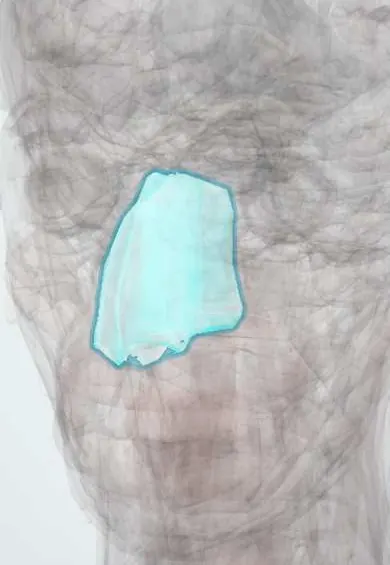
Respiratory system · Head and neck
Nasal cavity !
The nasal cavity is the pair of air passages inside the nose, split by the septum; it warms, moistens and filters air, and its roof holds the smell receptors.
Opens in the Durgical app, no sign-up needed.
What it is
The two air passages inside the nose, separated by the septum, with the conchae on the side walls.
What it does
Warms, moistens and filters air; the roof holds the smell receptors.
Key facts
- Where
- Nostrils to the choanae; septum in the middle, conchae on the side walls
- Blood supply
- Sphenopalatine (Kiesselbach's area with anterior ethmoidal, greater palatine, superior labial)
- Nerve
- Smell: I; general: V1, V2; glands: VII (pterygopalatine ganglion)
- Function
- Warms, humidifies and filters air; smell
Relations
- Above
- Narrow roof formed mainly by the cribriform plate, under the anterior cranial fossa; the nasal bones in front and the sphenoid body behind
- Below
- Hard palate (maxillae and palatine bones), separating it from the mouth
- Medial
- Nasal septum
- Lateral
- Conchae and meatuses, with the maxillary sinus and the orbit beyond the wall
- Behind
- Choanae opening into the nasopharynx; the openings of the auditory tubes and the adenoids just behind
- In front
- Nasal vestibule and nostrils, lined by hair-bearing skin
How to find it
The vestibule and the front of the cavity are seen with a nasal speculum and a light (anterior rhinoscopy); the meatuses, the sinus openings and the nasopharynx are seen with a rigid or flexible endoscope.
Examination
- Anterior rhinoscopy: shows the front of the septum, the inferior concha, septal deviation and polyps
- Cold metal plate (misting) test: the size of the fog patch under each nostril compares airflow between the sides
- Smell testing with standard odour kits assesses olfaction after head trauma or viral infection
On imaging
Coronal sinus CT maps the meatuses and the ostiomeatal complex; MRI is used for tumours and to tell tumour from retained secretions.
Clinical notes
- In children, a one-sided foul-smelling discharge suggests a nasal foreign body
- In adults, one-sided obstruction with bleeding is investigated for a tumour; nasopharyngeal carcinoma can present with blockage, nosebleeds and a middle ear effusion
- Endoscopic endonasal approaches use the cavity as a corridor to the sinuses, the orbit and the skull base
- Lymph from the front of the nose drains to the submandibular nodes; from the back of the nasal cavity and the sinuses, to the retropharyngeal and upper deep cervical nodes, which a posterior tumour reaches first
Anatomical variants
- Concha bullosa: an air cell inside the middle concha, common and usually silent; a large one can narrow the middle meatus and block sinus drainage
- A paradoxical middle concha curves toward the lateral wall instead of the septum and can also narrow the middle meatus
Development
Each cavity forms from a nasal placode that sinks into a pit and deepens until the oronasal membrane ruptures, opening the primitive choanae; persistence of this membrane or bone gives choanal atresia.
Related conditions
- Epistaxis (nosebleed)
- Allergic rhinitis
- Leishmaniasis
- Inherited platelet function disorders (Glanzmann thrombasthenia, Bernard–Soulier syndrome)
- Influenza (flu)
- MRSA and other multidrug-resistant organism infections
- Aspergillosis
- Common cold (acute viral rhinopharyngitis)
- Chronic rhinosinusitis and nasal polyps
- Foreign bodies of the ear and nose
- Juvenile nasopharyngeal angiofibroma
- Selective IgA deficiency
- Eosinophilic granulomatosis with polyangiitis (Churg–Strauss)
Test yourself
Think of the answer, then tap the question to see it.
What opens into each meatus and recess of the lateral wall of the nasal cavity?
Sphenoethmoidal recess: sphenoid sinus. Superior meatus: posterior ethmoid. Middle meatus: frontal, maxillary, anterior ethmoid. Inferior meatus: nasolacrimal duct.
Where does posterior epistaxis in the nasal cavity come from, and how does it differ from anterior bleeding?
From sphenopalatine branches at the back of the cavity; less common than anterior bleeding but heavier and harder to control.
What does a one-sided foul-smelling nasal discharge suggest in a child?
A foreign body in the nasal cavity.
Why is one-sided nasal obstruction with bleeding investigated in an adult?
To exclude a tumour; nasopharyngeal carcinoma can present with blockage, nosebleeds and a middle ear effusion.
Educational information, not medical advice. For any symptom, see a health professional.
Its names
- Official Latin (TA2)
- cavitas nasi TA2 3165
- Official Spanish (DeCS)
- Cavidad Nasal DeCS D009296
- English (TA2)
- Nasal cavity
- Also called
- cavum nasi
Related
Sources: Terminologia Anatomica (TA2); DeCS; Anatomy, Head and Neck, Nasal Cavity; Tratado de anatomía humana (9.ª ed.), tomo II, Libro IV Angiología, sección 5: Linfáticos.
Spotted a mistake?We are always improving for the community. Tell us what is wrong and our team will review it.Report a mistake
Representative model, for educational purposes only.