Conditions · Hematology and oncology
Von Willebrand disease !
The most common inherited bleeding disorder: low or faulty von Willebrand factor causes easy bruising, nosebleeds, gum bleeding and heavy periods.
Updated 2026-11-01
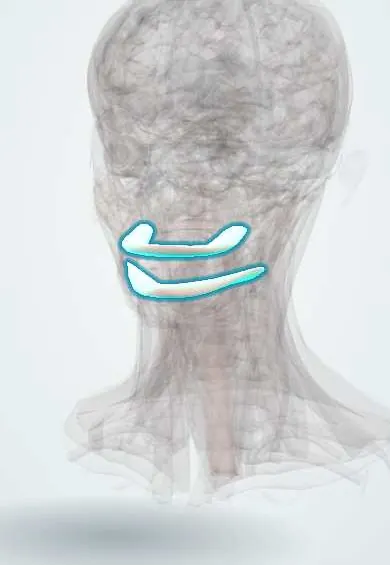
Structures involved
Tap one to see what it is and open it in 3D.
In the clinical exam
Why it happens
- Mendelian inheritance: autosomal dominant, recessive and X-linked
- Hemorrhage: petechiae, purpura, ecchymosis, hematoma, and what blood loss does
- Primary hemostasis and platelets
- Coagulation tests: PT/INR, aPTT and platelets
What it is
An inherited (rarely acquired) bleeding disorder caused by a quantitative or qualitative defect of von Willebrand factor (VWF), a large protein that sticks platelets to injured vessel walls and carries factor VIII in the blood. It causes mainly mucocutaneous bleeding.
Who gets it
Laboratory surveys suggest that about 1% of people have low VWF, but clinically significant disease is much less common. It affects men and women equally, yet women are diagnosed more often because of heavy menstrual bleeding and childbirth. In Colombia and Latin America it is underdiagnosed; national haemophilia and bleeding-disorder programmes include it.
Causes
- Mutations in the VWF gene on chromosome 12, usually autosomal dominant (types 1 and 2)
- Autosomal recessive inheritance in type 3 (virtually no VWF)
- Acquired von Willebrand syndrome: aortic stenosis, ventricular assist devices, hypothyroidism, lymphoproliferative and myeloproliferative disorders
Risk factors
- Family history of bleeding
- Blood group O, which lowers VWF levels
- Conditions linked to the acquired form (severe aortic stenosis, monoclonal gammopathy)
Pathophysiology
VWF links platelet glycoprotein Ib to exposed collagen to form the first platelet plug and protects factor VIII from breakdown. Low or dysfunctional VWF impairs primary haemostasis, giving skin and mucosal bleeding; when VWF is very low, factor VIII also falls and the aPTT may be prolonged, adding deep bleeding similar to haemophilia (type 3).
Classification
- Type 1: partial quantitative deficiency, about three quarters of cases, usually mild
- Type 2: qualitative defect (2A, 2B, 2M, 2N); 2B has increased platelet binding and low platelets, 2N mimics haemophilia A
- Type 3: near-total absence of VWF, severe, with low factor VIII
- Acquired von Willebrand syndrome
Symptoms and signs
- Easy bruising
- Frequent or prolonged nosebleeds
- Gum bleeding after brushing or dental work
- Heavy or prolonged menstrual bleeding, often with iron deficiency
- Prolonged bleeding after surgery, tooth extraction or childbirth
- Joint and muscle bleeding only in type 3
Diagnosis
- Clinical
- A detailed bleeding history (standardised bleeding assessment tools), family history and examination for bruises; consider it in every woman with heavy menstrual bleeding since menarche.
- Tests
- Complete blood count and platelet count; PT normal, aPTT normal or prolonged; VWF antigen, VWF activity (platelet-binding assay, formerly ristocetin cofactor) and factor VIII activity. Multimer analysis and ristocetin-induced platelet aggregation identify the type. Levels vary with stress, pregnancy, oestrogens and inflammation, so tests may need repeating.
- Imaging
- Not needed for diagnosis; pelvic ultrasound to look for structural causes of heavy menstrual bleeding.
Differential diagnosis
- Haemophilia A or B (deep and joint bleeding, prolonged aPTT, X-linked)
- Immune thrombocytopenia and other low-platelet states
- Inherited platelet function disorders
- Antiplatelet drug effect
- Structural gynaecological causes of heavy menstrual bleeding
Goal of treatment
Stop and prevent bleeding by raising VWF and factor VIII levels or supporting clot stability, especially around procedures, menstruation and childbirth.
Treatment
- Medical
- Desmopressin (DDAVP) releases stored VWF and factor VIII; it works in most type 1 cases after a test dose and is avoided in type 2B and ineffective in type 3.
- Medical
- VWF-containing factor concentrates (plasma-derived or recombinant) for type 3, many type 2 cases, major surgery and serious bleeding.
- Medical
- Antifibrinolytics (tranexamic acid) for mucosal bleeding, dental procedures and heavy periods; hormonal treatments for heavy menstrual bleeding; iron for iron deficiency.
- Follow-up
- Nursing priorities: monitor bleeding and vital signs, fluid restriction and sodium checks after desmopressin (risk of hyponatraemia), avoid intramuscular injections, aspirin and NSAIDs, and plan delivery with a haematology team.
Drugs for this condition
Complications
- Iron deficiency anaemia from chronic blood loss
- Postpartum haemorrhage
- Severe bleeding after surgery or trauma
- Joint damage from bleeding in type 3
- Hyponatraemia and seizures from desmopressin without fluid restriction
Prognosis
Life expectancy is normal for most people. Type 1 is usually mild and managed around procedures; type 3 behaves like haemophilia and needs specialised lifelong care.
Prevention
- Prophylaxis before surgery, dental work and delivery
- Genetic counselling
- A medical alert card and avoidance of antiplatelet drugs
Test yourself
Think of the answer, then tap the question to see it.
What are the two main functions of von Willebrand factor?
It sticks platelets to injured vessel walls (via glycoprotein Ib) and carries and protects factor VIII.
Which is the most common type, and what is its first-line treatment?
Type 1, a partial quantitative deficiency, usually treated with desmopressin.
Why is desmopressin avoided in type 2B?
It releases abnormal VWF that binds platelets excessively and can worsen thrombocytopenia.
Which electrolyte must be monitored after desmopressin?
Sodium, because water retention can cause hyponatraemia and seizures.
Which bleeding pattern distinguishes von Willebrand disease from haemophilia?
Mucocutaneous bleeding (nose, gums, menses, bruising) rather than joint and deep muscle bleeding.
Related conditions
- Haemophilia A and B
- Immune thrombocytopenia (ITP)
- Epistaxis (nosebleed)
- Postpartum haemorrhage
- Iron deficiency anaemia
- Disseminated intravascular coagulation
Educational information, not medical advice. For any symptom, see a health professional.
Sources: Von Willebrand disease (MedlinePlus (U.S. National Library of Medicine), 2026).
Spotted a mistake?We are always improving for the community. Tell us what is wrong and our team will review it.Report a mistake
Representative model, for educational purposes only.