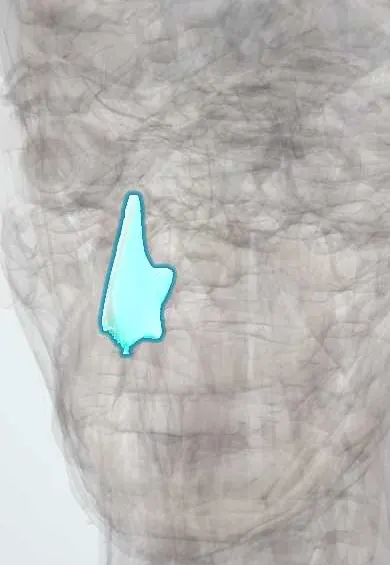
Epistaxis (nosebleed) !
Epistaxis is a nosebleed; most come from small vessels at the front of the nasal septum and stop easily, while bleeds from the back are heavier.
Updated 2026-10-29
Structures involved
Tap one to see what it is and open it in 3D.
- Nasal septum
- Nasal cavity
- Maxillary artery
- Facial artery
- Ophthalmic artery
- External carotid artery
- Inferior nasal conchae
In physiology
Why it happens
- Hemorrhage: petechiae, purpura, ecchymosis, hematoma, and what blood loss does
- The coagulation cascade
- The airway: from nose to bronchioles
What it is
Bleeding from the nose. Most cases are anterior, from Kiesselbach's plexus (Little's area) on the nasal septum, and stop with simple measures; posterior bleeds are less common but heavier.
Who gets it
Very common, especially in children and older adults and in dry or cold air. Most episodes are minor and never reach a doctor; posterior bleeds affect mainly older adults with comorbidities or anticoagulation.
Causes
- Nose picking and minor trauma (most common in children)
- Dry air and mucosal irritation
- Upper respiratory infection, allergic rhinitis
- Facial or nasal trauma
- Anticoagulants and antiplatelet drugs
- Bleeding disorders, hereditary haemorrhagic telangiectasia, tumours (less common)
Risk factors
- Childhood and older age
- Dry climate, heating or air conditioning
- Anticoagulant or antiplatelet therapy
- Nasal corticosteroid sprays used incorrectly
- Septal deviation
- Liver disease, coagulopathy, heavy alcohol use
Pathophysiology
Anterior bleeding comes from Kiesselbach's plexus, where branches of the sphenopalatine, anterior ethmoidal, greater palatine and superior labial (facial) arteries meet on the anterior septum. Posterior bleeding usually comes from branches of the sphenopalatine artery (maxillary artery) and drains into the pharynx. Hypertension is associated with epistaxis, though its causal role is debated.
Classification
- Anterior (most cases; Kiesselbach's plexus)
- Posterior (sphenopalatine artery branches; heavier, harder to control)
- Primary (no clear cause) or secondary (trauma, drugs, coagulopathy, tumour)
Symptoms and signs
- Bleeding from one nostril (anterior) or both, or blood running down the throat (posterior)
- Swallowed blood causing nausea, vomiting of blood or dark stools
- Dizziness or fainting with heavy bleeding
Diagnosis
- Clinical
- Assessment of airway and circulation first, then anterior rhinoscopy after clearing clots to find the bleeding point; nasal endoscopy for posterior or recurrent bleeds. History looks for drugs, trauma and bleeding disorders.
- Tests
- None in minor bleeds. Complete blood count, coagulation tests (INR in patients on vitamin K antagonists) and blood type and screen in heavy or recurrent bleeding.
- Imaging
- Not routine. CT if a tumour or fracture is suspected; angiography when embolisation is planned.
Differential diagnosis
- Haemoptysis (bleeding from the lungs)
- Haematemesis (upper gastrointestinal bleeding)
- Nasal or nasopharyngeal tumour
- Hereditary haemorrhagic telangiectasia
- Coagulopathy
Goal of treatment
Stop the bleeding, keep the patient haemodynamically stable, find and treat the cause and prevent recurrence.
Treatment
- Acute
- First aid: sitting up and leaning forward, continuous firm pressure on the soft part of the nose for 10–15 minutes, and spitting out blood; resuscitation if bleeding is heavy.
- Procedure
- Topical vasoconstrictor and anaesthetic, then chemical (silver nitrate) or electric cautery of a visible bleeding point on one side of the septum.
- Procedure
- Anterior nasal packing (dissolvable or non-dissolvable) when cautery fails; posterior packing or a balloon for posterior bleeds, usually with hospital admission.
- Surgical
- Endoscopic ligation of the sphenopalatine artery for persistent posterior bleeding; angiographic embolisation is an alternative.
- Medical
- Topical tranexamic acid in some protocols, review of anticoagulants with the prescribing team, control of high blood pressure and nasal moisturisers or creams to prevent recurrence.
Complications
- Anaemia and hypovolaemia
- Aspiration of blood
- Sinusitis or toxic shock syndrome with packs
- Septal perforation after repeated cautery
- Recurrent bleeding
Prognosis
Excellent for most anterior bleeds. Posterior bleeds in older patients with comorbidities carry more risk and may need procedures.
Prevention
- Humidifying the air and moisturising the nasal mucosa
- Avoiding nose picking; trimming children's nails
- Correct technique for nasal sprays (aimed away from the septum)
Test yourself
Think of the answer, then tap the question to see it.
Where do most nosebleeds come from?
Kiesselbach's plexus (Little's area) on the anterior nasal septum.
Which artery is the usual source of posterior epistaxis?
Branches of the sphenopalatine artery, from the maxillary artery.
What is the correct first-aid position for epistaxis?
Sitting up and leaning forward with firm pressure on the soft part of the nose, not tilting the head back.
Why should only one side of the septum be cauterised at a time?
Cauterising both sides at once increases the risk of septal perforation.
What should recurrent one-sided epistaxis with nasal obstruction in an adolescent boy suggest?
Juvenile nasopharyngeal angiofibroma; imaging is needed and biopsy is avoided.
Related conditions
Educational information, not medical advice. For any symptom, see a health professional.
Sources: Epistaxis (StatPearls (NCBI Bookshelf), 2022).
Spotted a mistake?We are always improving for the community. Tell us what is wrong and our team will review it.Report a mistake
Representative model, for educational purposes only.