Conditions · Pediatrics and neonatology
Meconium aspiration syndrome !
Breathing problems in a newborn who inhaled meconium (the first stool) in the womb or at birth. It can be mild or life-threatening.
Updated 2026-11-01
Structures involved
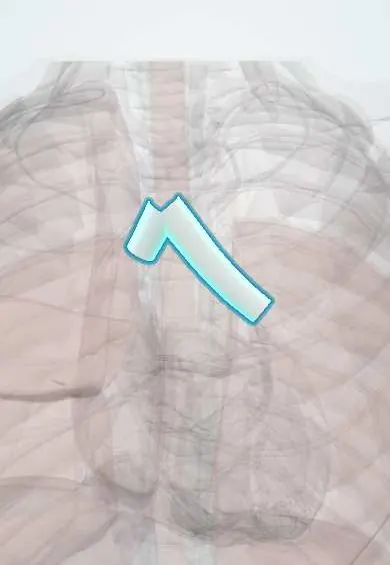
Tap one to see what it is and open it in 3D.
Why it happens
- Neonatal respiratory distress syndrome: surfactant and hyaline membranes
- Surface tension, surfactant and Laplace's law
- Fetal circulation and the transition at birth
- The pulmonary circulation and hypoxic vasoconstriction
What it is
Respiratory distress in a newborn born through meconium-stained amniotic fluid, with compatible chest X-ray findings, that cannot be explained otherwise. Meconium in the airways causes obstruction, chemical pneumonitis and surfactant inactivation.
Who gets it
Mostly seen in term and post-term babies. Meconium-stained fluid is present in a sizeable minority of births, but only a small fraction of these babies develop the syndrome. It remains an important cause of severe neonatal respiratory failure in Latin American units where post-term births and limited perinatal monitoring persist.
Causes
- Fetal stress or hypoxia that triggers passage of meconium into the amniotic fluid
- Fetal gasping in utero or first breaths at birth that draw meconium into the airways
Risk factors
- Post-term pregnancy (over 41 to 42 weeks)
- Fetal distress, abnormal fetal heart rate tracing or placental insufficiency
- Preeclampsia, maternal hypertension or diabetes
- Intrauterine growth restriction and oligohydramnios
- Thick («pea soup») meconium
Pathophysiology
Meconium plugs airways completely (atelectasis) or partially, creating a ball-valve effect with air trapping and a risk of air leak. It inactivates surfactant and causes a chemical inflammatory pneumonitis. Hypoxia and acidosis keep pulmonary vascular resistance high, so persistent pulmonary hypertension with right-to-left shunting often follows.
Classification
- Mild: low oxygen need, short course
- Moderate: oxygen need above about 40% or CPAP
- Severe: requires mechanical ventilation, often with pulmonary hypertension
Symptoms and signs
- Meconium staining of the skin, nails or umbilical cord
- Respiratory distress at birth: tachypnoea, grunting, retractions and cyanosis
- Barrel-shaped chest from air trapping
- Depressed baby (limp, poor respiratory effort) when born after asphyxia
- Crackles on auscultation
Diagnosis
- Clinical
- History of meconium-stained amniotic fluid plus respiratory distress from birth, with no better explanation.
- Tests
- Arterial blood gas (hypoxaemia, respiratory and metabolic acidosis). Pre- and post-ductal pulse oximetry. Blood count and blood culture, because infection may coexist.
- Imaging
- Chest X-ray: patchy, coarse asymmetric infiltrates, hyperinflation with flattened diaphragms, and possible air leak. Echocardiography to assess pulmonary hypertension and exclude heart disease.
Differential diagnosis
- Transient tachypnea of the newborn
- Neonatal pneumonia or sepsis
- Neonatal respiratory distress syndrome
- Persistent pulmonary hypertension of other causes
- Cyanotic congenital heart disease
Goal of treatment
Establish effective ventilation at birth, maintain oxygenation and perfusion, prevent and treat pulmonary hypertension and air leaks.
Treatment
- Acute
- Neonatal resuscitation following current guidelines; routine intrapartum or tracheal suctioning of a vigorous or non-vigorous baby is no longer recommended; airway suction only if obstruction is suspected.
- Medical
- Oxygen, CPAP or mechanical ventilation as needed; surfactant replacement (bolus or lavage) in severe cases.
- Medical
- Inhaled nitric oxide for persistent pulmonary hypertension; inotropes and fluids to support blood pressure; antibiotics while infection is excluded.
- Procedure
- Extracorporeal membrane oxygenation (ECMO) in refractory respiratory failure, where available.
- Follow-up
- Close monitoring of gases, saturations, blood pressure and neurological status; minimal handling and a quiet environment.
Complications
- Persistent pulmonary hypertension of the newborn
- Pneumothorax and other air leaks
- Hypoxic-ischaemic encephalopathy and neurodevelopmental sequelae
- Chronic lung disease and reactive airway disease in childhood
- Death in severe cases
Prognosis
Most babies recover fully. Mortality and long-term disability are concentrated in severe cases with pulmonary hypertension or brain injury from perinatal asphyxia.
Prevention
- Good prenatal care and induction of labour in post-term pregnancy
- Intrapartum fetal heart rate monitoring and timely delivery when there are signs of fetal compromise
Test yourself
Think of the answer, then tap the question to see it.
Which pregnancies have the highest risk of meconium aspiration syndrome?
Post-term pregnancies and those with fetal distress, placental insufficiency or growth restriction.
What are the three main mechanisms of lung injury in meconium aspiration?
Airway obstruction with air trapping (ball-valve), surfactant inactivation and chemical pneumonitis.
Which serious vascular complication often accompanies severe meconium aspiration?
Persistent pulmonary hypertension of the newborn, with right-to-left shunting.
Is routine tracheal suctioning recommended for babies born through meconium-stained fluid?
No. Current resuscitation guidelines advise standard resuscitation and suction only if the airway is obstructed.
Related conditions
- Persistent pulmonary hypertension of the newborn
- Pneumothorax
- Transient tachypnea of the newborn
- Neonatal respiratory distress syndrome (hyaline membrane disease)
- Perinatal asphyxia and hypoxic-ischaemic encephalopathy
- Chorioamnionitis (intra-amniotic infection)
Educational information, not medical advice. For any symptom, see a health professional.
Sources: Meconium aspiration syndrome (MedlinePlus (U.S. National Library of Medicine), 2024).
Spotted a mistake?We are always improving for the community. Tell us what is wrong and our team will review it.Report a mistake
Representative model, for educational purposes only.