Conditions · Pediatrics and neonatology
Pertussis (whooping cough) !
A highly contagious bacterial infection that causes violent coughing fits. It is most dangerous in young babies, in whom it can stop breathing.
Updated 2026-11-01
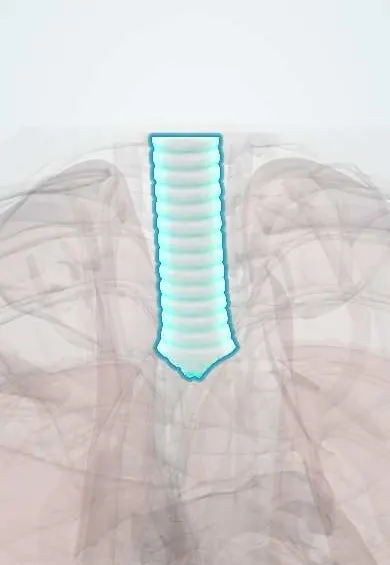
Structures involved
Tap one to see what it is and open it in 3D.
Microorganisms that cause it
In the clinical exam
Why it happens
- Airway defenses, cough and mucociliary clearance
- G protein-coupled receptors and cAMP
- Cilia, microvilli and stereocilia
What it is
Highly contagious respiratory infection caused by Bordetella pertussis, with weeks of paroxysmal coughing fits that may end in an inspiratory whoop or vomiting. It is a vaccine-preventable disease and is most severe in infants under 6 months.
Who gets it
Outbreaks still occur in Latin America and Colombia despite vaccination, because immunity from the vaccine and the infection wanes over time. Most deaths occur in infants too young to be fully vaccinated, often infected by older siblings or adults with a persistent cough.
Causes
- Bordetella pertussis, a gram-negative coccobacillus
- Spread by respiratory droplets; very contagious within households
- Bordetella parapertussis causes a milder similar illness
Risk factors
- Age under 6 months, especially under 3 months
- Incomplete vaccination or no maternal vaccination in pregnancy
- Waning immunity in adolescents and adults
- Prematurity and underlying heart or lung disease
- Household contact with someone with a long-lasting cough
Pathophysiology
The bacteria attach to ciliated epithelium of the airways and release toxins (pertussis toxin, tracheal cytotoxin, adenylate cyclase) that paralyse cilia, damage the epithelium and impair local defence. Pertussis toxin also causes the marked lymphocytosis. Thick secretions trigger violent coughing paroxysms; in infants this leads to apnoea, hypoxia and, in severe cases, pulmonary hypertension.
Classification
- Catarrhal stage (1–2 weeks): cold-like symptoms, the most contagious stage
- Paroxysmal stage (2–6 weeks or more): coughing fits, whoop, post-tussive vomiting
- Convalescent stage (weeks to months): gradual decline of the cough
Symptoms and signs
- Runny nose, mild cough and little or no fever at first
- Paroxysms of rapid coughs, worse at night, followed by a high-pitched inspiratory whoop
- Vomiting and exhaustion after coughing fits; the child may look well between fits
- Infants: apnoea, cyanosis or choking spells, often without a whoop
- Adolescents and adults: prolonged cough lasting weeks («100-day cough»)
Diagnosis
- Clinical
- Suspected with a cough of 2 weeks or more with paroxysms, whoop or post-tussive vomiting, or with apnoea or cyanosis in an infant, especially if there is a contact with a prolonged cough.
- Tests
- Nasopharyngeal swab for PCR (best in the first 3–4 weeks of cough) and culture; serology in later stages. Blood count shows leucocytosis with lymphocytosis.
- Imaging
- Chest X-ray is often normal or shows perihilar infiltrates; it helps detect pneumonia or pneumothorax.
Differential diagnosis
- Bronchiolitis and other viral infections
- Foreign body aspiration
- Chlamydia trachomatis pneumonia in young infants
- Asthma or cough-variant asthma
- Tuberculosis
Goal of treatment
Shorten contagiousness, prevent spread to vulnerable infants, and support breathing and nutrition in severe cases.
Treatment
- Medical
- Macrolide antibiotics (azithromycin is preferred in infants under 1 month because erythromycin is linked to pyloric stenosis); trimethoprim-sulfamethoxazole is an alternative after early infancy.
- Medical
- Post-exposure antibiotic prophylaxis for household contacts and high-risk contacts, regardless of vaccination status.
- Acute
- Hospital care for young infants: oxygen, suction of secretions, feeding support and, in critical cases, ventilation; droplet isolation.
- Follow-up
- Continuous cardiorespiratory monitoring for apnoea, bradycardia and desaturation during coughing fits.
Complications
- Apnoea and sudden death in infants
- Pneumonia, the main cause of death
- Pulmonary hypertension in young infants
- Seizures and encephalopathy
- Weight loss, dehydration, rib fractures, hernias and subconjunctival haemorrhage from coughing
Prognosis
Older children and adults recover, although the cough may last months. Young infants carry the highest risk of hospitalisation and death; early treatment does not shorten the cough much once paroxysms start but reduces transmission.
Prevention
- Childhood vaccination with acellular or whole-cell pertussis vaccine in the routine schedule, with boosters
- Maternal Tdap vaccination in every pregnancy to protect the newborn
- Vaccination of people in close contact with infants
- Prophylaxis of contacts and isolation of cases
Test yourself
Think of the answer, then tap the question to see it.
What are the three clinical stages of pertussis?
Catarrhal, paroxysmal and convalescent.
How may pertussis present in a young infant?
With apnoea, cyanosis or choking spells, often without the typical whoop.
Which blood finding is typical of pertussis?
Leucocytosis with marked lymphocytosis, caused by pertussis toxin.
Which antibiotic is preferred in infants under 1 month with pertussis, and why?
Azithromycin, because erythromycin in early infancy is associated with hypertrophic pyloric stenosis.
What is the main strategy to protect newborns from pertussis?
Vaccinating the mother with Tdap during every pregnancy, plus timely infant vaccination.
Related conditions
Educational information, not medical advice. For any symptom, see a health professional.
Sources: Pertussis: MedlinePlus Medical Encyclopedia (MedlinePlus, US National Library of Medicine, 2026); Clinical Features of Pertussis (Centers for Disease Control and Prevention (CDC), 2025).
Spotted a mistake?We are always improving for the community. Tell us what is wrong and our team will review it.Report a mistake
Representative model, for educational purposes only.