Phimosis !
Phimosis is a foreskin too tight to pull back over the glans of the penis; it is normal in young boys and becomes a problem when scarring prevents it.
Updated 2026-10-29
Structures involved
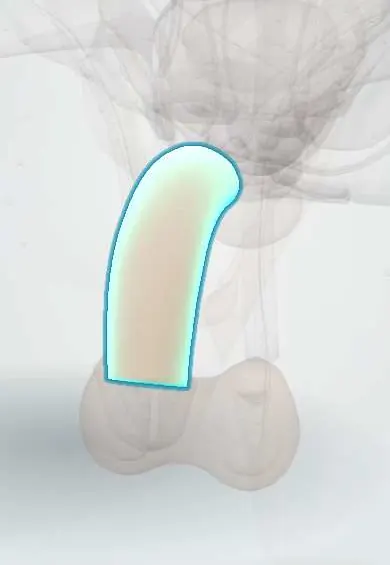
Tap one to see what it is and open it in 3D.
What it is
Inability to retract the foreskin (prepuce) over the glans penis. It is normal (physiological) in young boys and becomes pathological when scarring prevents retraction.
Who gets it
Physiological phimosis is the rule at birth and resolves gradually through childhood, with most foreskins retractable by adolescence. Pathological phimosis is less common and is seen in older boys and adults, often with diabetes or lichen sclerosus.
Causes
- Physiological: normal adhesions between the inner foreskin and glans in young boys
- Lichen sclerosus (balanitis xerotica obliterans) causing a white, scarred ring
- Repeated balanoposthitis (inflammation of glans and foreskin)
- Forcible retraction causing small tears and scarring
- Poor hygiene and, in adults, poorly controlled diabetes
Risk factors
- Diabetes mellitus
- Recurrent balanitis or balanoposthitis
- Forced retraction in childhood
- Lichen sclerosus
- Obesity
Pathophysiology
In infancy the inner layer of the foreskin is fused to the glans; the adhesions separate gradually with erections and keratinisation. In pathological phimosis, inflammation or lichen sclerosus scars the preputial opening into a tight, inelastic ring that does not retract.
Classification
- Physiological or pathological
- Grading scales describe how far the foreskin can be retracted
Symptoms and signs
- Foreskin that does not retract over the glans
- Ballooning of the foreskin when urinating (common and harmless in physiological phimosis)
- White, scarred or cracked rim of foreskin in pathological phimosis
- Pain, redness or discharge in balanoposthitis
- Painful erections or intercourse in adults
- Thin stream or straining in severe cases
Diagnosis
- Clinical
- Clinical diagnosis by gentle examination, distinguishing physiological from scarred phimosis and looking for lichen sclerosus or infection.
- Tests
- Urinalysis and culture if urinary infection is suspected; glucose or HbA1c in adults; histology of the excised foreskin or a biopsy when lichen sclerosus or cancer is suspected.
- Imaging
- Not needed in most cases.
Differential diagnosis
- Physiological non-retractile foreskin
- Paraphimosis
- Balanitis or balanoposthitis
- Lichen sclerosus
- Penile cancer
Goal of treatment
Allow retraction for hygiene, urination and sexual function, treat infection or lichen sclerosus and avoid unnecessary surgery in physiological phimosis.
Treatment
- Conservative
- Reassurance and normal hygiene in physiological phimosis; forced retraction is avoided.
- Medical
- Topical corticosteroid applied for several weeks with gentle stretching, effective in many children and some adults; antimicrobials for balanoposthitis.
- Surgical
- Circumcision (especially with lichen sclerosus or failed medical treatment) or foreskin-preserving preputioplasty.
- Acute
- Paraphimosis is reduced urgently after compression and analgesia; a dorsal slit is performed if reduction fails.
Complications
- Balanoposthitis
- Paraphimosis
- Urinary tract infection and, rarely, urinary retention
- Painful erections and sexual difficulties
- Higher risk of penile cancer with chronic phimosis in adults
Prognosis
Physiological phimosis resolves on its own in most boys. Pathological phimosis usually responds to topical steroids or surgery; lichen sclerosus needs long-term follow-up.
Prevention
- Avoiding forced retraction of the foreskin in children
- Regular genital hygiene and good diabetes control
Test yourself
Think of the answer, then tap the question to see it.
Is a non-retractile foreskin in a three-year-old boy abnormal?
No. Physiological phimosis is normal in young boys and resolves gradually in most by adolescence.
What is the first-line medical treatment for pathological phimosis?
A topical corticosteroid applied for several weeks with gentle stretching.
Which skin disease causes a white, scarred ring in pathological phimosis?
Lichen sclerosus (balanitis xerotica obliterans).
What is paraphimosis and why is it urgent?
A retracted foreskin stuck behind the glans; the swelling can compromise blood flow to the glans.
Related conditions
Educational information, not medical advice. For any symptom, see a health professional.
Sources: Phimosis (StatPearls (NCBI Bookshelf), 2023).
Spotted a mistake?We are always improving for the community. Tell us what is wrong and our team will review it.Report a mistake
Representative model, for educational purposes only.