Conditions · Vitamins and minerals
Wilson disease !
A genetic disease in which the liver cannot get rid of copper: it builds up and damages the liver, brain and eyes.
Updated 2026-11-01
Structures involved
Tap one to see what it is and open it in 3D.
In biochemistry
In histology
In the clinical exam
In physiology
Why it happens
- Oxidative stress and free-radical injury
- Special stains in diagnosis: Congo red, Prussian blue, PAS, Ziehl–Neelsen, Gram
What it is
An autosomal recessive copper transport disorder caused by ATP7B mutations that prevent copper excretion into bile and its incorporation into ceruloplasmin. Also called hepatolenticular degeneration.
Who gets it
It affects about 1 in 30,000 people worldwide. It usually appears between ages 5 and 35: the liver form predominates in children and the neuropsychiatric form in young adults.
Causes
- Biallelic mutations of the ATP7B gene (chromosome 13)
Risk factors
- Siblings of an affected person (25% risk)
- Consanguinity
Pathophysiology
ATP7B, a copper-transporting ATPase of the hepatocyte, does not work: copper cannot reach bile or ceruloplasmin. It accumulates in the liver and generates free radicals that cause hepatitis, steatosis and cirrhosis. When the liver is saturated, free copper spills into blood (it can cause haemolysis) and is deposited in the basal ganglia (putamen), Descemet's membrane of the cornea (Kayser-Fleischer rings) and the renal tubules. Empty ceruloplasmin is degraded, which is why it is low.
Classification
- Hepatic: chronic hepatitis, cirrhosis, acute liver failure
- Neurological: tremor, dystonia, parkinsonism, dysarthria
- Psychiatric: personality change, depression, psychosis
- Presymptomatic (found in siblings)
Symptoms and signs
- Jaundice, tiredness, abdominal pain, ascites
- Tremor ('wing-beating'), rigidity, slow or abnormal movements
- Difficulty speaking and swallowing, drooling
- Behaviour change, poor school performance, depression
- A golden-brown ring at the edge of the cornea
Diagnosis
- Clinical
- Suspect it in any child or young adult with unexplained liver disease, a movement disorder or psychiatric change; Leipzig score.
- Tests
- Low serum ceruloplasmin, high 24-hour urine copper, high liver copper on biopsy; ATP7B genetic testing; liver tests, blood count (Coombs-negative haemolysis).
- Imaging
- Slit-lamp exam: Kayser-Fleischer rings. Brain MRI: high signal in the putamen and thalamus, 'face of the giant panda' sign in the midbrain.
Treatment
- Medical
- Lifelong copper chelators (penicillamine or trientine) that increase urinary copper loss
- Medical
- Zinc salts for maintenance or in people without symptoms: they block gut copper absorption
- Lifestyle
- Avoid very copper-rich foods (organ meats, shellfish, chocolate, nuts) in the initial phase
- Surgical
- Liver transplantation for acute liver failure or decompensated cirrhosis
- Follow-up
- Periodic urine copper, liver tests and blood count; screening of siblings
Complications
- Cirrhosis and portal hypertension
- Acute liver failure
- Permanent neurological disability
- Haemolytic anaemia, renal tubular damage (Fanconi syndrome)
Prognosis
With lifelong treatment started early, life expectancy can be near normal; stopping treatment can cause liver failure.
Prevention
- Screening of siblings and first-degree relatives to treat before symptoms
- Genetic counselling
Test yourself
Think of the answer, then tap the question to see it.
Which gene fails in Wilson disease and what does it do?
ATP7B, which excretes copper from the hepatocyte into bile and loads it onto ceruloplasmin.
Why is ceruloplasmin low?
Without ATP7B copper is not bound to apoceruloplasmin, which is degraded quickly.
What are Kayser-Fleischer rings?
Copper deposits in Descemet's membrane at the edge of the cornea; nearly always present in the neurological form.
Why does zinc help in Wilson disease?
It induces metallothionein in enterocytes, which traps dietary copper and removes it when gut cells are shed.
Which brain structures are mainly affected?
The basal ganglia, especially the putamen, causing tremor, dystonia and parkinsonism.
Related conditions
Educational information, not medical advice. For any symptom, see a health professional.
Sources: Wilson disease: MedlinePlus Genetics (MedlinePlus, US National Library of Medicine, 2026); Wilson disease: MedlinePlus Medical Encyclopedia (MedlinePlus, US National Library of Medicine, 2026); ATP7B gene: MedlinePlus Genetics (MedlinePlus, US National Library of Medicine, 2026); Ceruloplasmin Test: MedlinePlus Medical Test (MedlinePlus, US National Library of Medicine, 2026); ATP7B: Copper-transporting ATPase 2 (human) (UniProt, 2026); Textbook of Biochemistry for Medical Students, 6th ed. (Jaypee Brothers Medical Publishers (Vasudevan DM, Sreekumari S, Vaidyanathan K), 2011).
Spotted a mistake?We are always improving for the community. Tell us what is wrong and our team will review it.Report a mistake
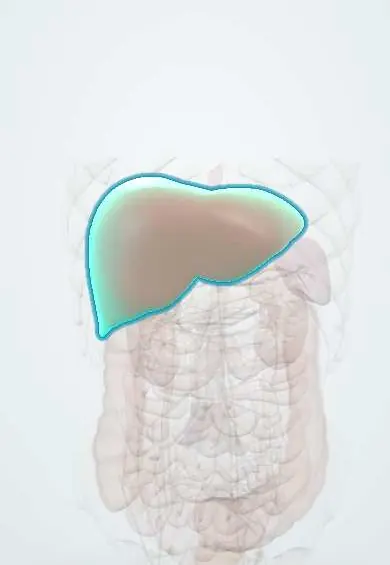
Representative model, for educational purposes only.