
Adie tonic pupil
One pupil is larger and reacts poorly to light but slowly to near focus. Usually benign, but syphilis (Argyll Robertson pupil) must be ruled out.
What it is
An Adie tonic pupil is a dilated pupil from damage to the ciliary ganglion or short ciliary nerves, reacting poorly to light but slowly and sustainedly to near (light-near dissociation). It is usually idiopathic, in young women; the key differential is the small, irregular Argyll Robertson pupil of neurosyphilis.
Who gets it
Most common in women aged 20-40; usually unilateral at first, becoming bilateral over years in some.
Causes
- Idiopathic (most cases), possibly post-viral
- Orbital trauma, surgery or laser
- Herpes zoster, syphilis or other infections
- Diabetes and other autonomic neuropathies
Risk factors
- Female sex and young adulthood
- Viral illness
- Orbital trauma or surgery
- Diabetes or autonomic neuropathy
Pathophysiology
Injury to the ciliary ganglion damages parasympathetic fibres. Fibres for accommodation outnumber those for the pupil, and during regeneration many accommodative fibres reinnervate the iris sphincter. The pupil then constricts better to near than to light, and denervation makes it supersensitive to dilute pilocarpine.
Classification
- Adie tonic pupil (isolated)
- Holmes-Adie syndrome (with reduced deep tendon reflexes)
- Ross syndrome (with segmental anhidrosis)
- Argyll Robertson pupil (differential: small, irregular, bilateral light-near dissociation from neurosyphilis)
Symptoms and signs
- One pupil larger than the other, noticed by the patient or others
- Glare in bright light
- Blurred near vision from poor accommodation
- Often no symptoms
Diagnosis
- Clinical
- Slit-lamp shows segmental sphincter palsy with vermiform movements; poor light reaction with slow tonic near reaction and slow redilation; normal eye movements and lids.
- Tests
- Dilute pilocarpine test: the tonic pupil constricts (denervation supersensitivity); syphilis serology (treponemal and non-treponemal) in bilateral cases or with Argyll Robertson features; reflexes checked.
- Imaging
- Not needed for a typical isolated tonic pupil; urgent CT or MR angiography if any third nerve signs are present.
Differential diagnosis
- Argyll Robertson pupil (neurosyphilis)
- Third nerve palsy
- Pharmacological mydriasis (no response to dilute or standard pilocarpine)
- Physiological anisocoria
- Horner syndrome (the small pupil is abnormal)
Abnormal pupil reactions: Adie pupil vs its look-alikes
| Feature | Adie tonic pupil | Argyll Robertson pupil | Third nerve palsy | Pharmacological mydriasis |
|---|---|---|---|---|
| Size and side | Large, usually one eye | Small, irregular, both eyes | Large, one eye | Large, one eye, often fully dilated |
| Light reaction | Poor, segmental | Poor or absent | Poor or absent | Absent |
| Near reaction | Slow and sustained (light-near dissociation) | Brisk (light-near dissociation) | Poor | Absent |
| Lids and eye movements | Normal | Normal | Ptosis, eye down and out | Normal |
| Pilocarpine | Constricts even to dilute drops (supersensitivity) | Not used for diagnosis | Constricts to full strength | No constriction, even to full strength |
| Key next step | Reassure; check reflexes; serology if bilateral | Treponemal and non-treponemal serology, CSF | Urgent CT or MR angiography | Ask about drops, patches or plants |
Goal of treatment
Confirm the benign diagnosis, exclude dangerous causes and relieve glare and near blur.
Treatment
- Conservative
- Reassurance; reading glasses for near blur and tinted lenses for glare.
- Medical
- Dilute pilocarpine drops for selected patients with symptoms; antibiotic treatment of neurosyphilis through infectious disease specialists when found.
- Follow-up
- Follow-up; the pupil tends to become smaller over the years.
Complications
- Persistent near blur
- Involvement of the other eye over time
Common traps
- The larger pupil is always the abnormal one: in Horner syndrome the small pupil is abnormal; compare the anisocoria in light and dark, and if it is greater in bright light, the large pupil is failing to constrict
- Light-near dissociation means neurosyphilis: Adie pupils show it too, but they are large and usually one-sided, while Argyll Robertson pupils are small, irregular and both-sided; syphilis serology settles it
- A dilated, poorly reactive pupil is benign if the patient feels well: ptosis, diplopia or headache with a dilated pupil means a third nerve palsy until an aneurysm is excluded with urgent CT or MR angiography
- A dilated pupil that ignores full-strength pilocarpine is an Adie pupil: a tonic pupil constricts to dilute and full-strength pilocarpine; no response to full strength suggests pharmacological mydriasis
- An Adie pupil stays large for life: over the years it tends to become smaller, sometimes smaller than the other pupil, while remaining tonic
Prognosis
Benign; accommodation often recovers over months, while the pupil gradually becomes smaller and remains tonic.
Test yourself
Think of the answer, then tap the question to see it.
A 32-year-old woman notices one large pupil that barely reacts to light but slowly constricts on near focus; lids and eye movements are normal. Diagnosis?
Adie tonic pupil: parasympathetic denervation at the ciliary ganglion with aberrant regeneration. Confirm with dilute pilocarpine and check the tendon reflexes.
Why does an Adie pupil react better to near than to light?
Accommodation fibres far outnumber pupil fibres; during regrowth many reach the iris sphincter by mistake, so near effort drives the pupil.
Both pupils are small, irregular and react to near but not to light. Which test is essential?
Treponemal and non-treponemal serology for neurosyphilis (Argyll Robertson pupils), with CSF examination if positive.
A fixed dilated pupil does not constrict even with full-strength pilocarpine. What does this suggest?
Pharmacological blockade, for example contact with an anticholinergic drop, patch or plant; a denervated pupil would constrict.
A dilated pupil comes with ptosis and a severe headache. Why is this not an Adie pupil, and what next?
Ptosis and headache point to a third nerve palsy, possibly from a posterior communicating artery aneurysm: urgent CT or MR angiography.
In neurology
Connections
Educational information, not medical advice. For any symptom, see a health professional.
Sources: Adie Syndrome (StatPearls Publishing (NCBI Bookshelf), 2026); Argyll Robertson Pupil (StatPearls Publishing (NCBI Bookshelf), 2024).
Spotted a mistake?We are always improving for the community. Tell us what is wrong and our team will review it.Report a mistake
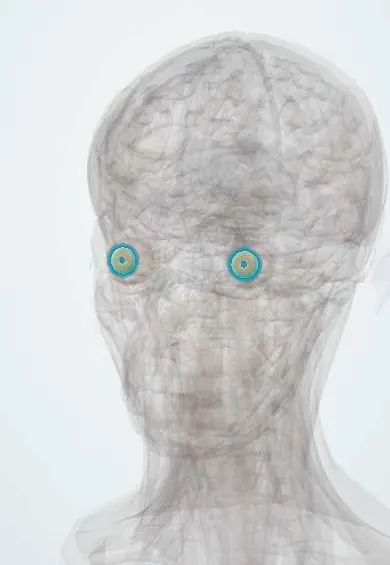
Representative model, for educational purposes only.