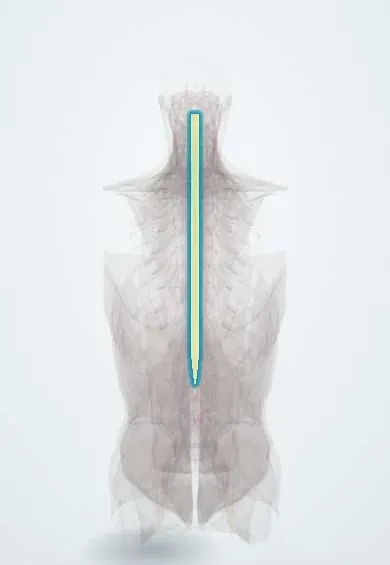
Autonomic dysreflexia !
A sudden, dangerous rise in blood pressure in people with spinal cord injury at T6 or above, set off by a stimulus below the injury such as a full bladder.
Updated 2026-11-01
Structures involved
Tap one to see what it is and open it in 3D.
Why it happens
What it is
A medical emergency in people with spinal cord injury, usually at or above T6, in which a harmful stimulus below the injury triggers an uncontrolled sympathetic reflex and a sudden, severe rise in blood pressure.
Who gets it
Occurs in a large share of people with cervical or high thoracic spinal cord injury, usually after the spinal shock phase. In Colombia spinal cord injury is often caused by traffic accidents, falls and violence, mostly in young men.
Causes
- Bladder distension: blocked or kinked catheter, urinary retention, infection or stones (most common)
- Bowel distension: constipation or faecal impaction
- Skin: pressure injuries, ingrown toenails, burns, tight clothing
- Others: fractures, sexual activity, menstruation, labour, and medical procedures such as cystoscopy
Risk factors
- Complete spinal cord injury at T6 or above
- Time after the spinal shock phase has passed
- Neurogenic bladder and bowel
- Pressure injuries
Pathophysiology
A stimulus below the injury activates spinal sympathetic neurons, causing widespread vasoconstriction in the splanchnic and lower-body circulation. Inhibitory signals from the brain cannot cross the injured cord, so blood pressure keeps rising. Baroreceptors trigger a vagal response that slows the heart and dilates vessels above the injury, producing flushing, sweating and headache above the level of the lesion.
Symptoms and signs
- Sudden pounding headache
- Blood pressure 20–40 mmHg above the person's usual baseline (baseline is often low)
- Flushing and sweating above the level of injury
- Pale, cold skin and goose bumps below the injury
- Slow pulse (bradycardia)
- Nasal congestion, blurred vision and anxiety
Diagnosis
- Clinical
- Clinical: a sudden rise in blood pressure with typical symptoms in a person with spinal cord injury at or above T6. A systematic search for the trigger starts with the bladder, then the bowel, then the skin.
- Tests
- Repeated blood pressure measurements every few minutes; urinalysis and culture, ECG when there is arrhythmia or chest pain.
- Imaging
- Not needed for the acute episode; studies such as bladder ultrasound or X-ray look for hidden triggers (stones, retention, fractures).
Differential diagnosis
- Essential hypertension or pain-related hypertension
- Pheochromocytoma
- Migraine or other primary headache
- Pre-eclampsia in a pregnant woman with spinal cord injury
- Drug-induced hypertension
Goal of treatment
Lower blood pressure quickly by sitting the person up and removing the trigger, preventing stroke and other complications, and preventing recurrence.
Treatment
- Acute
- Sit the person upright with the legs lowered and loosen tight clothing, abdominal binders and stockings.
- Acute
- Check the bladder first: empty it or unblock or replace the catheter (with anaesthetic lubricant); then check for faecal impaction and skin triggers.
- Medical
- If blood pressure stays high after these measures, fast-acting antihypertensives such as topical nitrates or oral nifedipine or captopril are used per protocol.
- Follow-up
- Blood pressure every few minutes during the episode and for hours after, watching for rebound hypotension.
- Conservative
- Prevention: regular bladder and bowel programmes, pressure-injury care, and education of the person and caregivers to recognise and treat episodes.
Complications
- Haemorrhagic stroke
- Seizures and hypertensive encephalopathy
- Myocardial ischaemia, arrhythmias and pulmonary oedema
- Retinal haemorrhage
- Death
Prognosis
Episodes usually resolve quickly when the trigger is removed. Recurrence is common, and good bladder, bowel and skin care plus education greatly reduce risk.
Prevention
- Scheduled bladder catheterisation and catheter care
- Regular bowel programme to avoid constipation
- Daily skin inspection and pressure relief
- Prophylactic measures before procedures and in labour
Test yourself
Think of the answer, then tap the question to see it.
At what level of spinal cord injury does autonomic dysreflexia usually occur?
At or above T6, above the splanchnic sympathetic outflow.
What is the most common trigger of autonomic dysreflexia?
Bladder distension, for example from a blocked or kinked catheter.
What is the first nursing action in autonomic dysreflexia?
Sit the person upright with the legs down, loosen tight clothing, then find and remove the trigger, starting with the bladder.
Why is there bradycardia and flushing above the injury?
Baroreceptors sense the high pressure and trigger a vagal response and vasodilation, which only act above the cord lesion.
Which serious complication of autonomic dysreflexia must be prevented?
Haemorrhagic stroke from the sudden severe hypertension.
Related conditions
- Spinal cord injury
- Neurogenic bladder
- Pressure injury (pressure ulcer)
- Intracerebral haemorrhage
- Phaeochromocytoma
Educational information, not medical advice. For any symptom, see a health professional.
Sources: Autonomic Dysreflexia (Model Systems Knowledge Translation Center (MSKTC), 2026).
Spotted a mistake?We are always improving for the community. Tell us what is wrong and our team will review it.Report a mistake
Representative model, for educational purposes only.