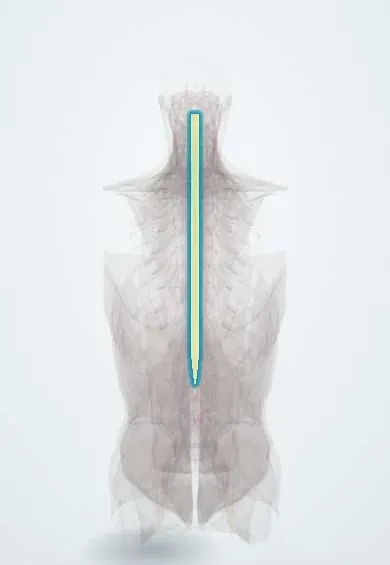
Spinal cord injury !
A spinal cord injury is damage to the spinal cord, usually from trauma; it can cause weakness, paralysis and loss of feeling below the injury.
Updated 2026-10-29
Structures involved
Tap one to see what it is and open it in 3D.
- Spinal cord
- Grey matter of the cord
- Anterior spinal artery
- C4 vertebra
- C5 vertebra
- C6 vertebra
- T12 vertebra
- L1 vertebra
- Sympathetic trunk
In histology
- Gray and white matter, cerebellar cortex, meninges
- Nerve injury and regeneration (Wallerian degeneration)
In the clinical exam
- Deep tendon reflexes and their grading
- Sensory examination: modalities and dermatomes
- Babinski sign
- Hoffmann sign and clonus
- Upper vs lower motor neuron syndrome
- Spinal cord syndromes: complete, Brown-Séquard, central, anterior
In physiology
- Defecation and continence
- Somatosensory pathways: dorsal column and anterolateral
- Spinal cord reflexes
- Motor cortex and the corticospinal tract
- Upper versus lower motor neuron lesions
- The autonomic nervous system: organization
- Sensory receptors, coding and neuronal circuits
- Muscle spindle and Golgi tendon organ
- Micturition and the bladder reflex
Why it happens
- Patterns of necrosis: coagulative, liquefactive, caseous, fat, fibrinoid, gangrenous
- Nervous control of the circulation and the CNS ischemic response
What it is
Damage to the spinal cord, usually from trauma, that disrupts motor, sensory and autonomic function below the level of injury. It can be complete or incomplete and is graded with the ASIA Impairment Scale.
Who gets it
Mostly affects young men, with a second peak in older adults after falls. In Colombia and Latin America, traffic accidents (especially motorcycles), falls and gunshot wounds are major causes.
Causes
- Traffic accidents, including motorcycle crashes
- Falls, especially in older adults with cervical spondylosis
- Violence, including gunshot and stab wounds
- Sports and diving into shallow water
- Non-traumatic causes: tumours, infection, disc disease, vascular events
Risk factors
- Young male sex
- Motorcycle use and not wearing protective equipment
- Alcohol and drug use
- Older age with spondylosis or stenosis of the cervical canal
- Ankylosing spondylitis (rigid, fragile spine)
Pathophysiology
The primary injury is mechanical: compression, contusion, distraction or laceration of the cord. A secondary injury follows over hours to days, with ischaemia, oedema, inflammation and cell death that extend the damage. Limiting this secondary injury is the reason for early immobilisation, blood pressure support and oxygenation.
Classification
- ASIA Impairment Scale (AIS): A complete; B sensory incomplete; C and D motor incomplete; E normal
- Complete: no motor or sensory function in the lowest sacral segments (S4–S5)
- Central cord syndrome: arms weaker than legs, often after hyperextension in an older person with spondylosis
- Brown-Séquard syndrome: hemisection, with ipsilateral weakness and loss of proprioception and contralateral loss of pain and temperature
- Anterior cord syndrome: loss of motor function and pain and temperature, with preserved proprioception and vibration
- Tetraplegia (cervical) or paraplegia (thoracic, lumbar or sacral)
Symptoms and signs
- Weakness or paralysis below the level of injury
- Loss or change of sensation with a sensory level
- Loss of bladder and bowel control
- Neck or back pain after trauma
- Breathing difficulty in high cervical injuries (diaphragm supplied by C3–C5)
- Hypotension with bradycardia (neurogenic shock) in cervical and high thoracic injuries
Diagnosis
- Clinical
- Primary trauma survey, then the standardised ASIA neurological examination (key muscles, dermatomes and sacral sparing) to set the level and completeness. Spinal shock, a temporary loss of all reflexes below the injury, can mask the picture until it resolves.
- Tests
- Arterial blood gases and respiratory function in cervical injuries. Routine trauma labs.
- Imaging
- CT of the spine is the first study in trauma. MRI shows the cord, ligaments, discs and haematoma, and helps when deficits are not explained by CT. Clinical decision rules guide who needs cervical imaging.
Differential diagnosis
- Cauda equina syndrome
- Traumatic brain injury
- Brachial plexus injury
- Spinal epidural haematoma or abscess
- Transverse myelitis
Goal of treatment
Prevent further damage by immobilisation and by keeping blood pressure and oxygenation adequate, decompress and stabilise the spine when needed, and start rehabilitation early.
Treatment
- Acute
- Spinal immobilisation as a principle in suspected injury, with ATLS-style airway, breathing and circulation care; early intubation if breathing fails. Practice on collars and boards varies.
- Medical
- Vasopressors and fluids to keep perfusion in neurogenic shock; anticholinergic drugs for symptomatic bradycardia. Use of high-dose corticosteroids is controversial and not routine in many guidelines.
- Surgical
- Decompression and stabilisation (fusion) for cord compression or unstable fractures, often early.
- Follow-up
- Intensive care monitoring of breathing, heart rate and blood pressure; prevention of venous thrombosis, pressure ulcers and bladder overdistension.
- Rehabilitation
- Multidisciplinary rehabilitation for mobility, self-care, bladder and bowel management and community reintegration.
Complications
- Respiratory failure and pneumonia
- Neurogenic shock and autonomic dysreflexia (injuries at T6 or above)
- Deep vein thrombosis and pulmonary embolism
- Pressure ulcers
- Neurogenic bladder and bowel, urinary infections
- Spasticity, contractures, chronic pain and depression
Prognosis
Depends mostly on level and completeness. Complete injuries (AIS A) recover little motor function; incomplete injuries, especially central cord syndrome and Brown-Séquard syndrome, have a better outlook. Most recovery happens in the first months.
Prevention
- Helmet use on motorcycles, seat belts and road safety measures
- Fall prevention in older adults
- Not diving into shallow or unknown water
Test yourself
Think of the answer, then tap the question to see it.
What does AIS A mean on the ASIA Impairment Scale?
A complete injury: no motor or sensory function preserved in the sacral segments S4–S5.
What is the difference between spinal shock and neurogenic shock?
Spinal shock is a temporary loss of reflexes below the injury. Neurogenic shock is hypotension with bradycardia from loss of sympathetic tone.
Which incomplete cord syndrome is typical after neck hyperextension in an older person with spondylosis?
Central cord syndrome: weakness greater in the arms than in the legs.
What are the findings in Brown-Séquard syndrome?
Ipsilateral weakness and loss of proprioception and vibration, with contralateral loss of pain and temperature below the lesion.
Which functions are preserved in anterior cord syndrome?
Proprioception and vibration (dorsal columns); motor function and pain and temperature are lost.
Related conditions
- Cauda equina syndrome
- Cervical Spondylosis
- Osteoporotic vertebral compression fracture
- Cervical radiculopathy
- Traumatic brain injury
- Brachial plexus injury
- Mandible fracture
- Priapism
Educational information, not medical advice. For any symptom, see a health professional.
Sources: Spinal Cord Injuries (StatPearls (NCBI Bookshelf), 2025).
Spotted a mistake?We are always improving for the community. Tell us what is wrong and our team will review it.Report a mistake
Representative model, for educational purposes only.