Conditions · Pediatrics and neonatology
Croup (laryngotracheobronchitis) !
A viral infection of young children that swells the airway below the vocal cords, causing a barking cough, hoarseness and noisy breathing.
Updated 2026-11-01
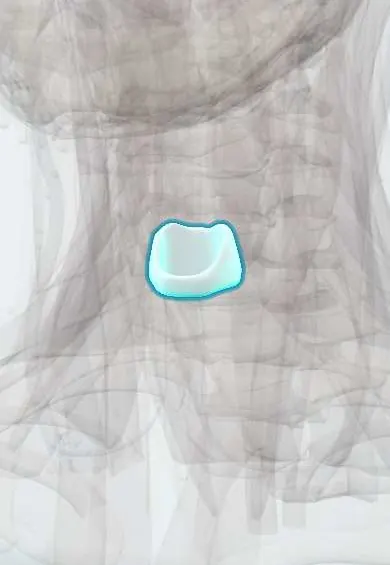
Structures involved
Tap one to see what it is and open it in 3D.
Microorganisms that cause it
In the clinical exam
- Adventitious sounds: crackles, wheezes, rhonchi, stridor and pleural rub
- Bronchial obstruction syndrome
- Respiratory distress and respiratory failure: the signs
Why it happens
- Vascular changes in acute inflammation: vasodilation, leakage, exudate vs transudate
- Airway resistance
- The airway: from nose to bronchioles
What it is
Acute viral inflammation of the larynx and trachea, mainly in children aged 6 months to 3 years, with subglottic swelling that produces a barking (seal-like) cough, hoarseness and inspiratory stridor.
Who gets it
The most common cause of acute stridor in children, slightly more frequent in boys. It peaks in the second year of life and occurs year round, with seasonal increases linked to parainfluenza circulation.
Causes
- Parainfluenza virus (especially type 1), the classic cause
- RSV, influenza, adenovirus, rhinovirus, human metapneumovirus and SARS-CoV-2
- Measles in unvaccinated children
Risk factors
- Age 6 months to 3 years
- Male sex
- Previous episodes or a narrow subglottis
- Underlying airway narrowing (subglottic stenosis, haemangioma)
Pathophysiology
The virus inflames the laryngeal and tracheal mucosa. The subglottis, enclosed by the complete ring of the cricoid cartilage, is the narrowest part of the child's airway, so small amounts of oedema greatly reduce its diameter and airflow. Turbulent flow through this segment produces stridor and the barking cough.
Classification
- Mild: barking cough, no stridor at rest
- Moderate: stridor at rest, mild retractions, no agitation
- Severe: marked stridor and retractions, agitation
- Impending respiratory failure: fatigue, decreased consciousness, cyanosis (the Westley score grades severity)
Symptoms and signs
- Runny nose and low-grade fever for 1–2 days
- Barking cough and hoarse voice, typically worse at night
- Inspiratory stridor, especially when crying or agitated
- Chest retractions in more severe cases
- Child usually looks well, without drooling
Diagnosis
- Clinical
- Clinical diagnosis based on the barking cough, stridor and hoarseness after a viral prodrome in a young child. Severity is graded with a score such as Westley; the child should be kept calm and examined without upsetting them.
- Tests
- Usually none. Pulse oximetry; viral testing only for surveillance.
- Imaging
- Not routinely needed. A frontal neck X-ray may show subglottic narrowing (the «steeple sign») and is reserved for atypical cases.
Differential diagnosis
- Acute epiglottitis
- Bacterial tracheitis
- Foreign body in the airway or oesophagus
- Retropharyngeal or peritonsillar abscess
- Allergic angioedema or anaphylaxis
Goal of treatment
Reduce subglottic swelling, keep the child calm and oxygenated, and identify the few who need airway support.
Treatment
- Conservative
- The child is kept calm, ideally in the carer's arms; mild cases recover at home with fluids and fever control.
- Medical
- A single dose of an oral corticosteroid (dexamethasone) is given for all degrees of severity, including mild croup.
- Acute
- Nebulised epinephrine for moderate to severe croup gives rapid but short relief; oxygen if hypoxaemic and airway management in a controlled setting if failure is imminent.
- Follow-up
- Observation for a few hours after nebulised epinephrine because symptoms can return; pulse oximetry.
Complications
- Respiratory failure needing intubation (uncommon)
- Secondary bacterial tracheitis or pneumonia
- Dehydration
- Recurrent croup
Prognosis
Self-limiting; most cases improve within 2–3 days and resolve within a week. Fewer than 1 in 20 children need admission, and intubation is rare.
Prevention
- Handwashing and respiratory hygiene
- Routine vaccination, including influenza and measles
Test yourself
Think of the answer, then tap the question to see it.
Which virus most often causes croup?
Parainfluenza virus, especially type 1.
What is the classic X-ray sign of croup?
The steeple sign: tapering subglottic narrowing on a frontal neck X-ray.
Which drug class is given in all severities of croup?
A systemic corticosteroid (dexamethasone), usually a single oral dose.
Why is the subglottis the critical site in croup?
It is the narrowest part of a child's airway, surrounded by the rigid complete cricoid ring, so a little oedema greatly narrows it.
Related conditions
Educational information, not medical advice. For any symptom, see a health professional.
Sources: Croup: MedlinePlus Medical Encyclopedia (MedlinePlus, US National Library of Medicine, 2026).
Spotted a mistake?We are always improving for the community. Tell us what is wrong and our team will review it.Report a mistake
Representative model, for educational purposes only.