Conditions · Pediatrics and neonatology
Foreign body aspiration in children !
When a child breathes a small object or food, such as a peanut, into the airway. It can block breathing and needs urgent removal.
Updated 2026-11-01
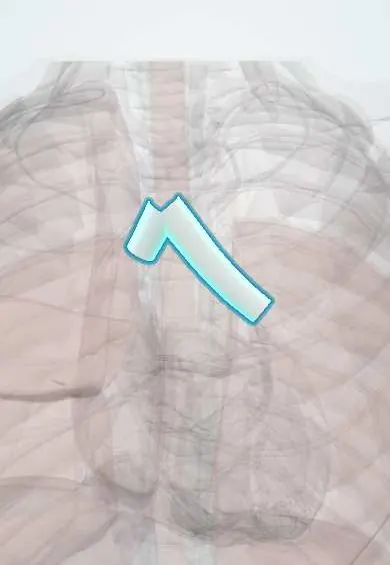
Structures involved
Tap one to see what it is and open it in 3D.
Why it happens
What it is
Entry of a solid object, most often food such as nuts or seeds, into the larynx, trachea or bronchi. It ranges from sudden complete obstruction (an emergency) to a partial bronchial blockage that may go unnoticed for days or weeks.
Who gets it
Most cases occur in children under 3 years, and over three quarters in those under 2. Nuts and seeds are the most frequent objects in most countries; small toys and plastic parts are common in some Latin American series. It remains an important preventable cause of accidental death in young children.
Causes
- Food: peanuts and other nuts, seeds, grains, popcorn, pieces of fruit or hot dog
- Small toy parts, coins, beads, pen caps and balloons
- Aspiration while eating, playing, running, laughing or crying
Risk factors
- Age under 3 years: no molars to grind food, immature swallowing and habit of putting objects in the mouth
- Male sex
- Lack of supervision during meals or play
- Older siblings' small toys within reach
- Neurological disorders affecting swallowing
Pathophysiology
Objects that pass the larynx usually lodge in a main bronchus, more often the right, which is wider and more vertical. A ball-valve effect lets air in but not out, causing hyperinflation of the affected lung; complete blockage causes collapse. Organic material such as nuts provokes intense inflammation, and a retained object leads to recurrent pneumonia and bronchiectasis.
Classification
- Laryngeal or tracheal: severe distress, stridor, risk of complete obstruction
- Bronchial: cough, unilateral wheeze, reduced breath sounds
- Acute (witnessed choking) or delayed (recurrent or persistent pneumonia in the same lobe)
Symptoms and signs
- Sudden choking or coughing episode while eating or playing, often witnessed
- Persistent cough
- Unilateral wheeze and reduced breath sounds on one side
- Stridor or hoarseness when the object is in the larynx or trachea
- Later: fever and pneumonia that does not resolve or recurs in the same place
Diagnosis
- Clinical
- A history of a choking episode is the most important clue; examination may show unilateral wheeze or reduced air entry, but can be normal. A suggestive history justifies bronchoscopy even with normal findings.
- Tests
- Rigid bronchoscopy confirms the diagnosis and removes the object; flexible bronchoscopy may be used to look when the history is unclear. Pulse oximetry.
- Imaging
- Chest X-ray: most objects are radiolucent; indirect signs are unilateral air trapping (hyperlucency, mediastinal shift on expiration or lateral decubitus films), atelectasis or consolidation. CT can help in doubtful stable cases.
Differential diagnosis
- Asthma or viral-induced wheeze
- Croup
- Bronchiolitis
- Pneumonia
- Oesophageal foreign body compressing the trachea
Goal of treatment
Relieve life-threatening obstruction immediately, then remove the object completely and safely before complications develop.
Treatment
- Acute
- Complete obstruction in a conscious child: in infants under 1 year, back blows and chest thrusts; in older children, abdominal thrusts (Heimlich manoeuvre); CPR if unconscious. Blind finger sweeps are avoided.
- Procedure
- Removal by rigid bronchoscopy under general anaesthesia, the standard of care; flexible bronchoscopy in selected cases.
- Medical
- Antibiotics for associated pneumonia; occasionally corticosteroids for airway oedema after removal.
- Follow-up
- Observation after removal for airway oedema, pneumothorax or residual fragments, and follow-up for recurrent infection.
Complications
- Hypoxic brain injury or death from complete obstruction
- Recurrent pneumonia, lung abscess and bronchiectasis with delayed diagnosis
- Atelectasis and air trapping
- Pneumothorax or pneumomediastinum
- Airway injury or bleeding during removal
Prognosis
Excellent when the object is removed early. Delayed diagnosis, common when the episode was not witnessed, increases the risk of chronic lung damage.
Prevention
- Not giving nuts, popcorn, hard sweets or whole grapes to children under 3–4 years, and cutting food into small pieces
- Supervised meals, with the child seated while eating
- Small objects, coins, button batteries and balloons kept out of reach; age-appropriate toys
- Training of carers in choking first aid
Test yourself
Think of the answer, then tap the question to see it.
Which main bronchus most often receives an aspirated foreign body, and why?
The right main bronchus, because it is wider and more vertical than the left.
What is the procedure of choice to remove an airway foreign body in a child?
Rigid bronchoscopy under general anaesthesia.
Why can a chest X-ray be normal in foreign body aspiration?
Most aspirated objects (food, plastic) are radiolucent; indirect signs such as unilateral air trapping may be absent.
What first-aid manoeuvres are used for complete choking in an infant under 1 year?
Alternating back blows and chest thrusts; abdominal thrusts are used in older children.
Related conditions
Educational information, not medical advice. For any symptom, see a health professional.
Sources: A Five-Year Review on Pediatric Foreign Body Aspiration (International Archives of Otorhinolaryngology, 2020); The characteristics of foreign bodies aspirated by children across different continents: A comparative review (Pediatric Pulmonology, 2022); Choking - adult or child over 1 year: MedlinePlus Medical Encyclopedia (MedlinePlus, US National Library of Medicine, 2026).
Spotted a mistake?We are always improving for the community. Tell us what is wrong and our team will review it.Report a mistake
Representative model, for educational purposes only.