Conditions · Metabolism: mitochondria and energy
Cyanide poisoning !
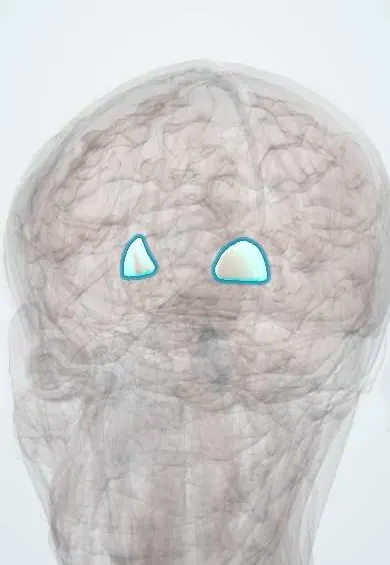
Cyanide blocks mitochondrial complex IV: cells cannot use oxygen, and the brain and heart fail first.
Updated 2026-11-01
Structures involved
Tap one to see what it is and open it in 3D.
In biochemistry
- Electron transport chain and oxidative phosphorylation: Step 3 · Complex IV (cytochrome c oxidase)
- Cytochrome c oxidase (complex IV)
In physiology
Why it happens
- Causes of cell injury
- Mechanisms of cell injury: ATP, mitochondria, calcium, membranes and DNA
- Chemical (toxic) cell injury: direct and after metabolism
- Air pollution and occupational exposures
What it is
Acute poisoning by cyanide (gas, salts or compounds that release it) that stops cellular respiration within minutes and causes severe lactic acidosis.
Who gets it
Uncommon but very lethal. In Colombia and Latin America the main sources are smoke from enclosed fires, cyanide used in gold mining, electroplating and deliberate ingestion; poorly processed bitter cassava contains cyanogenic glycosides.
Causes
- Smoke inhalation in fires (plastics, foams, wool and silk release hydrogen cyanide)
- Occupational exposure: gold mining, electroplating, jewellery, laboratories
- Ingestion of cyanide salts (suicide attempt or homicide)
- Cyanogenic plants: poorly processed bitter cassava, fruit seeds such as apricot kernels (amygdalin)
- Prolonged sodium nitroprusside infusion
Risk factors
- Fires in enclosed spaces
- Working with cyanide without protection
- Diet based on poorly processed bitter cassava
- Long nitroprusside infusions
Pathophysiology
Cyanide binds the heme a₃ iron of cytochrome c oxidase (complex IV) and stops electron flow to O₂. Without the respiratory chain there is no gradient and no mitochondrial ATP; NADH builds up and pyruvate is diverted to lactate. Tissues do not extract oxygen: venous blood stays highly oxygenated and pulse oximetry is normal. The brain and heart, the biggest ATP users, fail first. The body removes part of it with rhodanese, which joins it to sulfur to form thiocyanate.
Classification
- Severe acute (massive inhalation or ingestion)
- Mild to moderate acute
- Chronic (dietary or occupational): neuropathy, ataxia, thyroid problems
Symptoms and signs
- Headache, dizziness, anxiety and confusion
- Fast breathing at first, then respiratory depression
- Nausea and vomiting
- Seizures and coma
- Early tachycardia, then bradycardia, hypotension and arrhythmias
- Pink skin; the bitter-almond smell is not always noticed
Diagnosis
- Clinical
- Suspected from the setting (smoke, work, ingestion) and sudden collapse with acidosis; treatment starts without waiting for confirmation.
- Tests
- Arterial and venous blood gases (narrow arteriovenous O₂ difference), lactate, anion gap, carboxyhemoglobin and methemoglobin by co-oximetry, electrolytes, troponin, electrocardiogram; blood cyanide levels come back late and confirm afterwards.
- Imaging
- Chest X-ray after smoke inhalation; later brain MRI may show basal ganglia lesions.
Treatment
- Acute
- Removal from the source, decontamination and 100% oxygen; airway and circulatory support.
- Medical
- Antidote: intravenous hydroxocobalamin, which binds cyanide to form cyanocobalamin, excreted in urine.
- Medical
- Sodium thiosulfate: gives sulfur to rhodanese, which converts cyanide to thiocyanate.
- Medical
- Nitrites (classic regimen): they form methemoglobin, which traps cyanide; avoided in fire smoke because they worsen O₂ transport.
- Follow-up
- Serial lactate, blood gases and continuous cardiac monitoring.
Drugs for this condition
Complications
- Cardiorespiratory arrest
- Hypoxic brain injury
- Delayed parkinsonism from basal ganglia damage
- Multiple organ failure
Prognosis
Without fast treatment the severe form kills within minutes to hours; with an early antidote many patients recover, though neurological sequelae can remain.
Prevention
- Protection and ventilation in mining and industry
- Smoke detectors and evacuation plans
- Processing bitter cassava (soaking, fermenting, cooking) before eating it
- Watching the duration of nitroprusside infusions
Test yourself
Think of the answer, then tap the question to see it.
Why is pulse oximetry normal in cyanide poisoning?
Hemoglobin is still loaded with O₂; the problem is that mitochondria cannot use it because complex IV is blocked.
How does hydroxocobalamin work in cyanide poisoning?
It binds cyanide to form cyanocobalamin (vitamin B12), which is excreted in urine.
Which body enzyme detoxifies cyanide, and what does it need?
Rhodanese; it uses sulfur (hence thiosulfate) and forms thiocyanate.
Why are nitrites avoided in fire victims?
They make methemoglobin, which on top of the smoke's carboxyhemoglobin cuts oxygen transport even more.
Related conditions
Educational information, not medical advice. For any symptom, see a health professional.
Sources: Hydrogen Cyanide (CID 768) (PubChem, NCBI, 2026) · Public domain; 3AG4: Bovine Heart Cytochrome c Oxidase in the Cyanide Ion-bound Fully Reduced State at 100 K (RCSB Protein Data Bank, 2026); Methemoglobinemia - acquired: MedlinePlus Medical Encyclopedia (MedlinePlus, US National Library of Medicine, 2026); Textbook of Biochemistry for Medical Students, 6th ed. (Jaypee Brothers Medical Publishers (Vasudevan DM, Sreekumari S, Vaidyanathan K), 2011).
Spotted a mistake?We are always improving for the community. Tell us what is wrong and our team will review it.Report a mistake
Representative model, for educational purposes only.