Conditions · Metabolism: mitochondria and energy
Leigh syndrome !
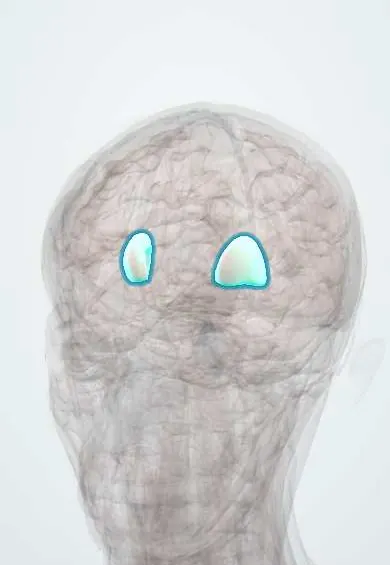
Leigh syndrome is a severe childhood mitochondrial disease that damages the basal ganglia and brainstem and makes children lose skills they had learned.
Updated 2026-11-01
Structures involved
Tap one to see what it is and open it in 3D.
- Putamen
- Caudate nucleus
- Midbrain
- Pons
- Medulla oblongata
- Globus pallidus
- Substantia nigra
- Thalamus
- Cerebellum
In biochemistry
- Electron transport chain and oxidative phosphorylation: Step 4 · ATP synthase (complex V)
- Complex I (NADH dehydrogenase)
- Complex III (cytochrome bc₁)
- Cytochrome c oxidase (complex IV)
- ATP synthase (complex V)
In histology
Why it happens
- Mechanisms of cell injury: ATP, mitochondria, calcium, membranes and DNA
- Nonclassic inheritance: repeat expansions, mitochondrial genes, imprinting, mosaicism
What it is
Subacute necrotising encephalopathy: symmetrical lesions of the basal ganglia and brainstem from failed energy production, usually starting before age 2.
Who gets it
It affects at least 1 in 40,000 newborns, with much higher rates in some isolated populations. It is the most common presentation of mitochondrial disease in childhood; there are no figures for Colombia.
Causes
- Variants in more than 110 genes, nearly all in oxidative phosphorylation or pyruvate metabolism
- Nuclear DNA in about 80%: complex I genes (NDUF), SURF1 (complex IV assembly), PDHA1 (pyruvate dehydrogenase), among others
- Mitochondrial DNA in about 20%: for example MT-ATP6 (m.8993T>G) and MT-ND genes
Risk factors
- Consanguinity (autosomal recessive forms)
- A mother carrying a mitochondrial DNA variant
- Decompensations triggered by infections, fever or fasting
Pathophysiology
Failure of a respiratory complex, ATP synthase or pyruvate dehydrogenase lowers the ATP that neurons and glia need; pyruvate and NADH build up and lactate appears in blood and cerebrospinal fluid. The areas with the highest energy demand (putamen, caudate nucleus, brainstem) undergo focal necrosis, gliosis and capillary proliferation, with bilateral symmetrical lesions. Brainstem damage explains the abnormal breathing rhythm and eye movements.
Symptoms and signs
- Loss of motor and language skills already acquired (regression)
- Hypotonia, poor sucking and swallowing, vomiting, poor weight gain
- Ataxia, dystonia and spasticity
- Nystagmus, strabismus, ophthalmoplegia and optic atrophy
- Irregular breathing, apneas
- Peripheral neuropathy and sometimes cardiomyopathy
Diagnosis
- Clinical
- Developmental regression with basal ganglia and brainstem signs in an infant or young child.
- Tests
- Lactate and pyruvate in blood and cerebrospinal fluid, amino acids and organic acids; gene panel or exome with mitochondrial DNA analysis; muscle or skin biopsy with respiratory complex assays when genetics is inconclusive.
- Imaging
- Brain MRI: bilateral symmetrical T2 lesions of the putamen, caudate nuclei and brainstem; spectroscopy shows a lactate peak.
Treatment
- Medical
- Early trial of thiamine and biotin: some Leigh-like forms (for example, SLC19A3) respond very well.
- Medical
- Ketogenic diet in pyruvate dehydrogenase deficiency; coenzyme Q₁₀ in defects of its synthesis.
- Acute
- Management of decompensations: hydration, correction of acidosis, treatment of infections and respiratory support.
- Medical
- Avoiding drugs toxic to mitochondria, such as valproate, and prolonged fasting.
- Rehabilitation
- Physiotherapy, nutritional support (sometimes gastrostomy) and palliative care as needed.
Complications
- Respiratory failure
- Aspiration and malnutrition
- Epilepsy
- Cardiomyopathy
- Death in childhood
Prognosis
Almost always progressive; many children die in the first years from respiratory failure. Late-onset forms and treatable ones (thiamine and biotin responsive) do better.
Test yourself
Think of the answer, then tap the question to see it.
Which brain areas are damaged in Leigh syndrome?
The basal ganglia (putamen, caudate) and the brainstem, bilaterally and symmetrically.
Which complex IV assembly gene is a classic cause of Leigh syndrome?
SURF1.
Why are thiamine and biotin tried in a child with Leigh-like lesions?
Some look-alike forms, such as the SLC19A3 transporter defect, respond very well and are treatable.
About what share of Leigh syndrome cases is due to mitochondrial DNA?
About 20%; the rest come from nuclear DNA genes.
Related conditions
- MELAS (mitochondrial encephalomyopathy, lactic acidosis and stroke-like episodes)
- Leber hereditary optic neuropathy (LHON)
- Pyruvate dehydrogenase deficiency
- Lactic acidosis
Educational information, not medical advice. For any symptom, see a health professional.
Sources: Leigh syndrome: MedlinePlus Genetics (MedlinePlus, US National Library of Medicine, 2026); SURF1 gene: MedlinePlus Genetics (MedlinePlus, US National Library of Medicine, 2026); MT-ATP6 gene: MedlinePlus Genetics (MedlinePlus, US National Library of Medicine, 2026); Mitochondrial Diseases: MedlinePlus (MedlinePlus, US National Library of Medicine, 2026).
Spotted a mistake?We are always improving for the community. Tell us what is wrong and our team will review it.Report a mistake
Representative model, for educational purposes only.