Dementia with Lewy bodies !
A dementia with fluctuating attention, vivid visual hallucinations, acted-out dreams and parkinsonism. It is the second most common degenerative dementia.
Updated 2026-11-01
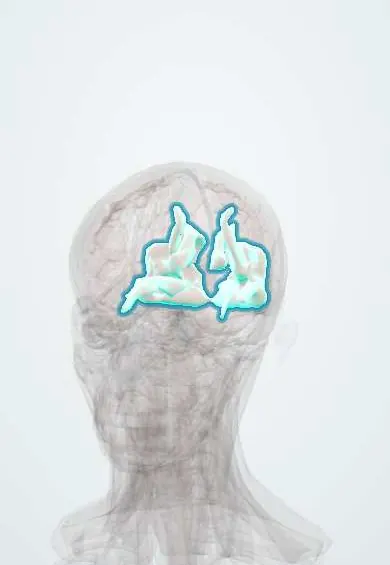
Structures involved
Tap one to see what it is and open it in 3D.
Why it happens
- Intracellular accumulations: cholesterol, proteins, hyaline, glycogen
- The main neurotransmitters
- Protein structure and folding
- The neuron and synapse
What it is
A progressive degenerative dementia caused by abnormal alpha-synuclein deposits (Lewy bodies) in the cortex and brainstem. Cognitive decline starts before or within a year of parkinsonism, which separates it from Parkinson disease dementia.
Who gets it
After Alzheimer disease it is one of the most common causes of degenerative dementia in older adults, usually starting after 60 and slightly more often in men. It is probably under-diagnosed in Latin America, where it is often labelled as Alzheimer disease or Parkinson disease.
Causes
- Aggregation of misfolded alpha-synuclein forming Lewy bodies and Lewy neurites in neurons
- Mostly sporadic; rare familial cases (e.g. variants in SNCA, and GBA variants as a risk factor)
- Frequent coexisting Alzheimer-type pathology (amyloid plaques)
Risk factors
- Age over 60
- Male sex
- Family history of dementia or Parkinson disease
- REM sleep behaviour disorder, which can precede the disease by years
Pathophysiology
Alpha-synuclein aggregates spread through the brainstem, limbic system (including the cingulate gyrus) and neocortex. Loss of cholinergic neurons is more severe than in Alzheimer disease, which explains the fluctuations and hallucinations and the good response to cholinesterase inhibitors. Loss of dopaminergic neurons in the substantia nigra causes parkinsonism, and reduced occipital metabolism relates to the visual symptoms.
Classification
- Probable: dementia plus two or more core features, or one core feature plus an indicative biomarker
- Possible: dementia plus one core feature, or an indicative biomarker only
- One-year rule: dementia before or within one year of parkinsonism (dementia with Lewy bodies) versus dementia years after established Parkinson disease (Parkinson disease dementia)
Symptoms and signs
- Progressive cognitive decline with marked attention, executive and visuospatial deficits; memory relatively preserved early
- Fluctuating cognition and alertness, with staring spells and episodes of daytime drowsiness
- Recurrent, well-formed visual hallucinations, often of people or animals
- REM sleep behaviour disorder (acting out dreams)
- Parkinsonism: rigidity, slowness and gait instability, often symmetric, with less tremor
- Autonomic problems: orthostatic hypotension, fainting, constipation and urinary incontinence; loss of smell
Diagnosis
- Clinical
- Clinical diagnosis based on dementia plus the four core features: fluctuating cognition, visual hallucinations, REM sleep behaviour disorder and parkinsonism. Cognitive testing shows worse attention and visuospatial function (e.g. copying figures) than memory. Certainty only comes from autopsy.
- Tests
- Blood tests exclude reversible causes (vitamin B12, thyroid function, glucose, electrolytes, syphilis serology). Polysomnography confirming REM sleep without atonia is a supportive biomarker.
- Imaging
- CT or MRI excludes other causes; medial temporal lobes are relatively preserved compared with Alzheimer disease. Dopamine transporter SPECT (DaT scan) shows reduced uptake in the basal ganglia, and cardiac MIBG scintigraphy shows sympathetic denervation; FDG-PET may show occipital hypometabolism.
Differential diagnosis
- Alzheimer disease
- Parkinson disease dementia (parkinsonism precedes dementia by more than a year)
- Delirium
- Vascular dementia
- Progressive supranuclear palsy and multiple system atrophy
- Creutzfeldt-Jakob disease
Goal of treatment
Treat cognitive, psychiatric, motor and autonomic symptoms while avoiding drugs that worsen the disease (especially typical antipsychotics), keep the person safe, and support caregivers.
Treatment
- Medical
- Cholinesterase inhibitors (e.g. rivastigmine, donepezil) are the main drugs; they can improve attention, fluctuations and hallucinations.
- Medical
- Levodopa may help parkinsonism in some patients but can worsen hallucinations. Typical antipsychotics are avoided because of severe sensitivity; if psychosis must be treated, low-potency atypical agents such as quetiapine or clozapine are used with caution.
- Medical
- Treatment of orthostatic hypotension, constipation, depression and sleep disorders; melatonin or clonazepam for REM sleep behaviour disorder.
- Conservative
- Fall prevention, a calm and familiar environment with good lighting, physiotherapy, speech and swallowing therapy, and caregiver education and support.
- Follow-up
- Regular review of cognition, falls, blood pressure lying and standing, swallowing and all medicines, especially new sedatives or antipsychotics.
Complications
- Falls and fractures
- Aspiration pneumonia from swallowing problems
- Severe reactions to antipsychotics
- Delirium with intercurrent illness
- Loss of independence and caregiver burden
Prognosis
A progressive disease that usually advances faster than Alzheimer disease, with average survival of several years after diagnosis. Death is often caused by pneumonia, falls or general decline.
Test yourself
Think of the answer, then tap the question to see it.
What are the four core clinical features of dementia with Lewy bodies?
Fluctuating cognition, recurrent well-formed visual hallucinations, REM sleep behaviour disorder and parkinsonism.
Which drug class must be avoided in dementia with Lewy bodies, and why?
Typical antipsychotics: patients are extremely sensitive and may develop severe rigidity, confusion or neuroleptic malignant syndrome.
How is dementia with Lewy bodies separated from Parkinson disease dementia?
By the one-year rule: in dementia with Lewy bodies, dementia starts before or within one year of parkinsonism.
Which imaging test supports the diagnosis by showing reduced dopamine transporter uptake in the basal ganglia?
Dopamine transporter SPECT (DaT scan).
Which drug class is the first-line treatment for cognitive symptoms and hallucinations?
Cholinesterase inhibitors such as rivastigmine or donepezil.
Related conditions
- Parkinson disease
- Alzheimer disease
- Dementia (major neurocognitive disorder)
- Delirium
- Neuroleptic malignant syndrome
- Frontotemporal dementia
- Vascular dementia
Educational information, not medical advice. For any symptom, see a health professional.
Sources: Dementia with Lewy bodies: MedlinePlus Genetics (MedlinePlus (U.S. National Library of Medicine), 2026); Dementia with Lewy Bodies and Parkinson Disease Dementia (MSD Manual Professional Edition, 2026).
Spotted a mistake?We are always improving for the community. Tell us what is wrong and our team will review it.Report a mistake
Representative model, for educational purposes only.