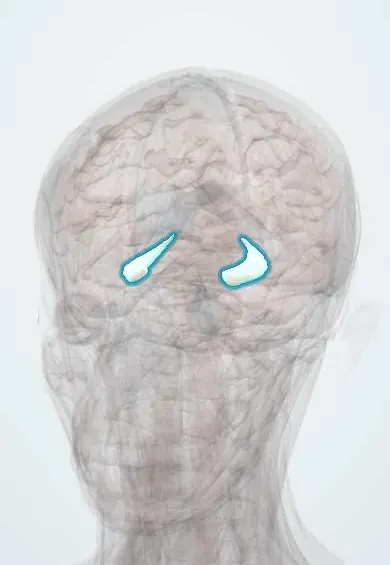
Dementia (major neurocognitive disorder) !
Dementia is a lasting decline in memory and other thinking skills that is bad enough to interfere with daily life. It is not a normal part of ageing.
Updated 2026-11-01
Structures involved
Tap one to see what it is and open it in 3D.
- Hippocampus
- Frontal lobe
- White matter
- Temporal lobe
- Parietal lobe
- Lateral ventricles
- Amygdala
- Cingulate gyrus
In the clinical exam
- Comprehensive geriatric assessment: function, cognition, falls
- Mental status: orientation, attention and screening tests
- Parkinsonian syndrome
Why it happens
- Intracellular accumulations: cholesterol, proteins, hyaline, glycogen
- How organs age: normal changes vs disease
- Learning and memory
- The neuron and synapse
What it is
An acquired, usually progressive decline in one or more cognitive domains (memory, language, executive function, attention, visuospatial or social cognition) from a previous level, severe enough to interfere with independence in daily activities, and not explained by delirium or another mental disorder. DSM-5 calls it major neurocognitive disorder.
Who gets it
About 57 million people lived with dementia worldwide in 2021, most in low- and middle-income countries, with close to 10 million new cases a year. Latin America is ageing fast and much of the care falls on family carers, mostly women. Alzheimer disease causes most cases; in Colombia the Antioquia families with the PSEN1 E280A mutation are a well-known model of early-onset familial Alzheimer disease.
Causes
- Alzheimer disease (most common, about 60 to 70% of cases)
- Vascular dementia, alone or mixed with Alzheimer disease
- Dementia with Lewy bodies and Parkinson disease dementia
- Frontotemporal dementia
- Potentially reversible contributors: hypothyroidism, vitamin B12 deficiency, normal pressure hydrocephalus, depression, drugs, chronic subdural haematoma, neurosyphilis and HIV
Risk factors
- Age, the main risk factor
- Family history and genetic factors such as the APOE e4 allele
- Hypertension, diabetes, obesity and smoking in midlife
- Hearing loss and uncorrected vision loss
- Low education, physical inactivity, social isolation and depression
- Harmful alcohol use, head injury and air pollution
Pathophysiology
Different diseases destroy neurons and their connections in specific networks. In Alzheimer disease amyloid plaques and tau tangles start in the hippocampus and medial temporal lobe, so recent memory fails first; vascular injury damages white-matter pathways and slows thinking; frontotemporal degeneration affects behaviour and language. Cognitive reserve delays symptoms, but once networks fail, decline in daily function follows.
Classification
- Mild, moderate and severe, by dependence in daily activities
- Early onset (before 65) versus late onset
- By cause: Alzheimer, vascular, Lewy body, frontotemporal, mixed and other
Symptoms and signs
- Short-term memory loss: repeating questions, misplacing things, forgetting recent events
- Word-finding difficulty and trouble following conversations
- Poor judgement, difficulty planning, managing money or medicines
- Getting lost in familiar places and disorientation in time
- Behavioural and psychological symptoms (BPSD): apathy, depression, agitation, delusions, hallucinations and sleep disturbance
- Wandering, and in late stages dependence for eating, continence and walking
Diagnosis
- Clinical
- History from the patient and an informant showing decline from a previous level and impact on daily activities; functional scales; brief cognitive tests such as the Mini-Mental State Examination or the Montreal Cognitive Assessment; screening for depression and delirium (Confusion Assessment Method). Key distinction: delirium is acute and fluctuating with inattention, dementia is gradual with preserved alertness, and depression gives poor effort and subjective complaints.
- Tests
- Blood tests for reversible contributors: blood count, electrolytes and calcium, glucose, kidney and liver function, TSH, vitamin B12, and syphilis and HIV serology when indicated. Cerebrospinal fluid biomarkers in selected cases.
- Imaging
- Brain CT or MRI to look for vascular lesions, tumour, subdural haematoma or hydrocephalus and to show patterns of atrophy (hippocampal atrophy in Alzheimer disease); PET in specialised settings.
Differential diagnosis
- Delirium
- Depression (pseudodementia)
- Mild cognitive impairment
- Age-associated memory change
- Medication effects, especially anticholinergic drugs
Goal of treatment
Treat reversible contributors, slow symptoms where possible, keep the person safe and as independent as possible, manage behavioural symptoms and support the caregiver; plan ahead for decisions and end-of-life care.
Treatment
- Medical
- Cholinesterase inhibitors (donepezil, rivastigmine, galantamine) for mild to moderate Alzheimer disease and Lewy body dementia; memantine (an NMDA antagonist) in moderate to severe disease. Control of vascular risk factors.
- Conservative
- Behavioural symptoms are approached first without drugs: find triggers such as pain, constipation or infection, keep routines, adapt the environment and communication. Antipsychotics only for severe distress or danger, briefly, because they raise stroke and death risk; avoided in Lewy body dementia.
- Lifestyle
- Physical activity, cognitive and social stimulation, hearing aids and treatment of sensory loss, and a safe home with measures against wandering.
- Follow-up
- Nursing priorities: safety (falls, wandering, driving, medication handling), nutrition and hydration, continence, skin care, and screening for caregiver burden; review of anticholinergic and sedative drugs.
- Rehabilitation
- Occupational therapy to adapt daily tasks; speech therapy for communication and swallowing in later stages.
Complications
- Falls and hip fracture
- Delirium triggered by illness, surgery or new drugs
- Malnutrition, dysphagia and aspiration pneumonia
- Pressure injury and urinary incontinence
- Elder abuse or neglect, and caregiver depression and burnout
Prognosis
Most dementias progress over years to total dependence; survival after diagnosis is often several years and varies with age and cause. Death usually follows pneumonia or other infections in advanced stages. Early planning and good support improve quality of life for both patient and family.
Prevention
- Control of blood pressure, diabetes and other vascular risk factors
- Physical activity, not smoking and limiting alcohol
- Treating hearing loss and staying socially and mentally active
Test yourself
Think of the answer, then tap the question to see it.
What defines dementia (major neurocognitive disorder) as opposed to mild cognitive impairment?
The cognitive decline is severe enough to interfere with independence in everyday activities; in mild cognitive impairment function is preserved.
How is delirium distinguished from dementia at the bedside?
Delirium starts acutely, fluctuates and has inattention and altered consciousness; dementia is gradual with normal alertness until late stages.
Which blood tests screen for potentially reversible contributors to cognitive decline?
TSH, vitamin B12, blood count, electrolytes and calcium, glucose, kidney and liver function, and syphilis or HIV serology when indicated.
What classic triad suggests normal pressure hydrocephalus?
Gait disturbance, urinary incontinence and cognitive decline, with enlarged ventricles on imaging.
Why are antipsychotics used with great caution for behavioural symptoms of dementia?
They increase the risk of stroke and death in older people with dementia, and cause severe sensitivity reactions in Lewy body dementia.
Related conditions
- Alzheimer disease
- Mild cognitive impairment
- Hydrocephalus
- Hypothyroidism
- Megaloblastic anaemia (B12 or folate deficiency)
- Parkinson disease
- Falls in older adults
Educational information, not medical advice. For any symptom, see a health professional.
Sources: Dementia (World Health Organization, 2025); Dementia (MedlinePlus (U.S. National Library of Medicine), 2025).
Spotted a mistake?We are always improving for the community. Tell us what is wrong and our team will review it.Report a mistake
Representative model, for educational purposes only.