Gambling disorder !
Persistent, harmful gambling that the person cannot control, chasing losses despite serious money, family and work problems.
Updated 2026-11-01
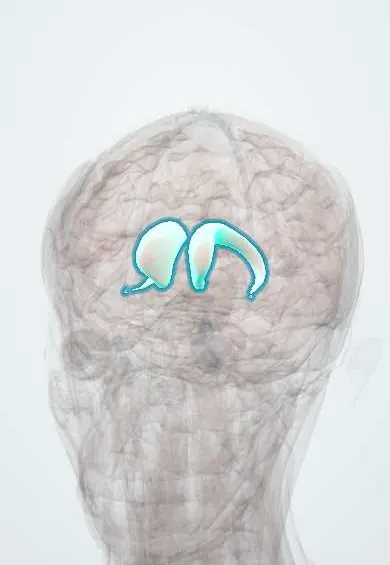
Structures involved
Tap one to see what it is and open it in 3D.
What it is
A behavioural addiction defined by persistent and recurrent problematic gambling that causes significant distress or impairment. It is the only non-substance addictive disorder in DSM-5-TR. The person needs to bet more to feel excitement, chases losses, lies to hide gambling and relies on others to pay debts.
Who gets it
Affects about 0.5 to 1% of adults worldwide, and more men than women. Online betting and sports betting apps have increased access, including among adolescents. In Colombia, legal online betting expanded rapidly in the last decade and there is growing concern about gambling in young people.
Causes
- Reward-system dysfunction similar to substance addiction
- Genetic vulnerability shared with substance use disorders
- Early and easy exposure to gambling, including online betting
- Cognitive distortions such as the illusion of control and the «gambler's fallacy»
Risk factors
- Male sex and onset in adolescence
- Substance use disorders, ADHD or mood disorders
- Impulsivity and novelty seeking
- Family history of gambling or addiction
- Dopamine agonist treatment (Parkinson disease, restless legs syndrome)
- Financial stress and easy access to betting
Pathophysiology
Unpredictable wins activate the mesolimbic dopamine pathway (ventral striatum and caudate), strengthening the behaviour more than predictable rewards. «Near misses» activate the same reward circuits as wins. Reduced prefrontal control weakens the ability to stop, so craving, tolerance and «chasing» develop as in substance addiction.
Classification
- Severity by number of criteria: mild (4–5), moderate (6–7), severe (8–9)
- Episodic or persistent
- In early or sustained remission
Symptoms and signs
- Needing to gamble with increasing amounts of money to feel excitement
- Restlessness or irritability when trying to cut down
- Repeated failed attempts to control or stop gambling
- Preoccupation with gambling
- Gambling when feeling distressed
- Returning to win back losses («chasing»)
- Lying to conceal gambling
- Jeopardising relationships, job or studies
- Relying on others for money to relieve debts
Diagnosis
- Clinical
- Clinical diagnosis: at least 4 of 9 DSM-5-TR criteria in a 12-month period, not better explained by a manic episode. Screening tools such as the brief Lie/Bet questionnaire or the South Oaks Gambling Screen help. Always assess suicide risk, substance use, mood and medications such as dopamine agonists.
- Tests
- No laboratory test diagnoses it. Tests only to assess coexisting substance use or medical problems.
- Imaging
- Not needed.
Differential diagnosis
- Social or professional gambling without loss of control
- Gambling during a manic episode (bipolar disorder)
- Impulse-control problems induced by dopamine agonists
- Antisocial personality disorder
- Frontal lobe lesions or frontotemporal dementia
Goal of treatment
Stop or control gambling, repair financial and family harm, prevent relapse and treat coexisting disorders and suicide risk.
Treatment
- Conservative
- Cognitive behavioural therapy, the treatment with the best evidence, addressing distortions and triggers
- Conservative
- Motivational interviewing, peer self-help groups (Gamblers Anonymous) and family involvement
- Medical
- Opioid antagonists (naltrexone) have the most evidence among medicines; treat coexisting depression, ADHD or substance use
- Lifestyle
- Practical measures: self-exclusion from betting sites and casinos, limiting access to money and debt counselling
- Follow-up
- Follow-up of relapse, suicide risk and stopping or reducing dopamine agonists when they are the cause
Complications
- Debt, bankruptcy and loss of job or studies
- Family conflict, divorce and domestic violence
- Crime and legal problems
- Depression, anxiety and substance use
- Suicide attempts
Prognosis
Chronic with frequent relapse, but many patients improve with treatment, and some recover naturally. Early treatment and family support improve the outlook.
Prevention
- Limiting access and advertising of betting to minors
- Education of adolescents and families about online betting
- Warning patients about compulsive behaviours when starting dopamine agonists
Test yourself
Think of the answer, then tap the question to see it.
Which is the only non-substance addictive disorder included in DSM-5-TR?
Gambling disorder.
Which medication class can cause pathological gambling in Parkinson disease?
Dopamine agonists (for example pramipexole and ropinirole).
What does «chasing losses» mean?
Returning to gamble after losing money in order to win it back.
What is the psychological treatment with the best evidence for gambling disorder?
Cognitive behavioural therapy.
Related conditions
- Alcohol use disorder
- Tobacco use disorder
- Stimulant use disorder (cocaine, amphetamines)
- Major depressive disorder
- Bipolar disorder
- Attention-deficit/hyperactivity disorder (ADHD)
- Suicidal behaviour and suicide risk
- Parkinson disease
- Restless legs syndrome
- Personality disorders (clusters A, B and C)
Educational information, not medical advice. For any symptom, see a health professional.
Sources: Compulsive gambling: MedlinePlus Medical Encyclopedia (MedlinePlus (U.S. National Library of Medicine), 2026).
Spotted a mistake?We are always improving for the community. Tell us what is wrong and our team will review it.Report a mistake
Representative model, for educational purposes only.