Conditions · Gastroenterology and hepatology
Ménétrier disease (hypertrophic protein-losing gastropathy) !
Ménétrier disease is a rare stomach disorder with giant, thick folds that leak protein and make little acid. It raises the risk of stomach cancer.
Updated 2026-11-01
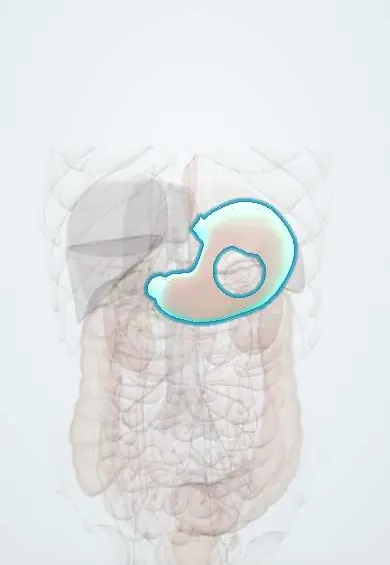
Structures involved
Tap one to see what it is and open it in 3D.
Why it happens
- Hyperplasia: physiologic and pathologic
- Gastric acid secretion
- Receptor tyrosine kinases
- Stomach: gastric glands, parietal and chief cells
What it is
A rare acquired hyperplastic gastropathy in which overgrowth of the mucus-producing (foveolar) cells creates giant folds in the body and fundus of the stomach, with loss of acid-producing glands and leakage of protein into the stomach. It is not a true gastritis because inflammation is minimal.
Who gets it
Very rare, with under about a thousand cases reported worldwide. Adults usually present between 40 and 60 years, more often men. In children it is mostly linked to cytomegalovirus and tends to resolve on its own.
Causes
- Excess transforming growth factor-alpha (TGF-α) overstimulating the epidermal growth factor receptor (EGFR) in the gastric mucosa
- Cytomegalovirus infection in most childhood cases
- Possible association with Helicobacter pylori in some adults (not proven to be causal)
- Rare familial cases
Risk factors
- Middle age (40 to 60 years)
- Male sex
- Cytomegalovirus infection (children)
- Helicobacter pylori infection (some adults)
Pathophysiology
Overactive EGFR signalling drives massive proliferation of the surface mucous cells, so gastric pits lengthen and folds become giant and tortuous, mainly in the body and fundus with sparing of the antrum. Parietal and chief cells are lost, causing low or absent acid (hypochlorhydria). Tight junctions between cells become leaky, so plasma proteins pass into the gastric lumen, producing hypoalbuminaemia and oedema.
Classification
- Childhood form: usually CMV-related and self-limited
- Adult form: chronic, progressive and premalignant
Symptoms and signs
- Epigastric pain (the most common symptom)
- Nausea, vomiting and loss of appetite
- Weight loss
- Peripheral oedema of the legs from low albumin
- Diarrhoea
- Some people have no symptoms
Diagnosis
- Clinical
- Suspected in an adult with epigastric pain, weight loss and oedema who has low albumin without liver or kidney disease.
- Tests
- Upper endoscopy shows giant folds in the body and fundus with antral sparing; deep, large biopsies (sometimes snare or full-thickness) show foveolar hyperplasia with loss of oxyntic glands and little inflammation. Labs: low serum albumin, low gastric acid output, testing for H. pylori and CMV; gastrin to exclude Zollinger–Ellison syndrome.
- Imaging
- Barium study or CT shows thickened gastric folds and wall; endoscopic ultrasound measures mucosal thickening and helps separate it from infiltrating cancer or lymphoma.
Differential diagnosis
- Zollinger–Ellison syndrome (giant folds with high acid and high gastrin)
- Gastric lymphoma
- Diffusely infiltrating gastric carcinoma (linitis plastica)
- Infections causing large folds (CMV, tuberculosis, syphilis, histoplasmosis)
- Gastric polyposis syndromes and multiple hyperplastic polyps
- Other causes of protein-losing enteropathy or hypoalbuminaemia (nephrotic syndrome, cirrhosis)
Goal of treatment
Relieve symptoms, correct protein and nutritional loss, treat any triggering infection, and watch for gastric cancer.
Treatment
- Conservative
- High-protein diet, vitamin and mineral replacement, and intravenous albumin for severe hypoalbuminaemia.
- Medical
- Eradication of Helicobacter pylori when present; antiviral therapy may be used in selected children with CMV; proton pump inhibitors or a somatostatin analogue for symptoms.
- Medical
- EGFR-blocking monoclonal antibody therapy has improved symptoms, albumin and mucosal appearance in adults with persistent disease.
- Follow-up
- Serial albumin and nutritional status, and periodic surveillance endoscopy with biopsies because of cancer risk.
- Surgical
- Total gastrectomy for intractable symptoms, severe protein loss, bleeding, or dysplasia or cancer.
Complications
- Severe hypoalbuminaemia with oedema and ascites
- Gastric adenocarcinoma
- Upper GI bleeding
- Malnutrition and weight loss
- Thromboembolism
- Gastric outlet problems such as gastroduodenal intussusception (rare)
Prognosis
In children it usually resolves within weeks to months. In adults it tends to be chronic and progressive; outcome depends on control of protein loss and early detection of cancer, and gastrectomy is curative but has its own long-term effects.
Test yourself
Think of the answer, then tap the question to see it.
What is the classic triad of findings in Ménétrier disease?
Giant gastric folds in the body and fundus, hypoalbuminaemia from protein loss, and low gastric acid (hypochlorhydria).
Which growth-factor pathway is overactive in Ménétrier disease?
TGF-α overstimulating the epidermal growth factor receptor (EGFR), driving foveolar cell hyperplasia.
How does Zollinger–Ellison syndrome differ from Ménétrier disease, though both have large folds?
Zollinger–Ellison has high gastrin and acid hypersecretion with ulcers; Ménétrier has low acid and protein loss.
Which virus is the usual cause of Ménétrier disease in children?
Cytomegalovirus (CMV); the childhood form is usually self-limited.
Why do adults with Ménétrier disease need periodic endoscopy?
Because it is premalignant, with a higher risk of gastric adenocarcinoma.
Related conditions
- Gastric cancer
- Helicobacter pylori gastritis
- Zollinger-Ellison syndrome (gastrinoma)
- Cytomegalovirus infection
- Peptic ulcer disease
- Nephrotic syndrome
Educational information, not medical advice. For any symptom, see a health professional.
Sources: Menetrier Disease (National Organization for Rare Disorders (NORD), 2026).
Spotted a mistake?We are always improving for the community. Tell us what is wrong and our team will review it.Report a mistake
Representative model, for educational purposes only.