Conditions · Infectious and tropical diseases
Cytomegalovirus infection !
CMV is a common herpesvirus that is usually silent but can blind or injure the gut of immunosuppressed people and harm a baby before birth.
Updated 2026-11-01
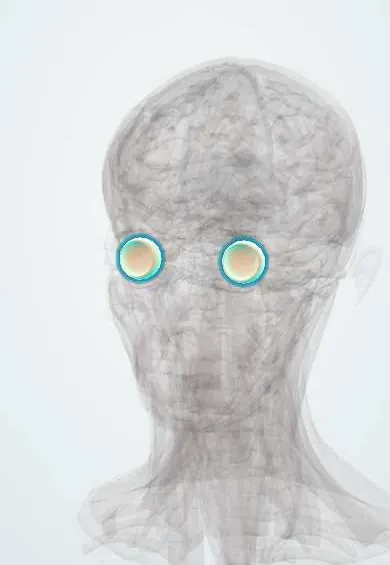
Structures involved
Tap one to see what it is and open it in 3D.
Why it happens
What it is
Infection by cytomegalovirus (human herpesvirus 5), which stays latent for life after primary infection. It is usually mild in healthy people, but causes retinitis, colitis, oesophagitis and pneumonitis in the immunosuppressed and is the most common congenital viral infection.
Who gets it
Most adults in Latin America have been infected by early adulthood. Severe disease is seen in advanced HIV, in solid-organ and stem-cell transplant recipients and in congenitally infected newborns; congenital CMV is a leading non-genetic cause of sensorineural hearing loss.
Causes
- Cytomegalovirus, a beta-herpesvirus
- Spread through saliva, urine, genital secretions, breast milk and blood
- Transplanted organs and blood transfusion
- Transplacental passage, more severe after primary infection in pregnancy
Risk factors
- Advanced HIV with CD4 counts below 50 cells/µL
- Solid-organ or stem-cell transplant (seronegative recipient of a seropositive donor has the highest risk)
- Intense immunosuppression, including treatment of rejection
- Close contact with young children during pregnancy
Pathophysiology
After primary infection, the virus remains latent in monocytes and other cells, controlled by T-cell immunity. When that control fails, the virus reactivates and replicates in endothelial and epithelial cells, producing enlarged cells with intranuclear inclusions ("owl's eye"). In the retina this causes a spreading, haemorrhagic necrotising retinitis; in the gut, ulcers of the oesophagus and colon; in the lung, interstitial pneumonitis. In the fetus, the virus damages the brain, inner ear and liver.
Classification
- Primary infection in an immunocompetent host (mononucleosis-like)
- Disease in the immunosuppressed: retinitis, gastrointestinal, pneumonitis, hepatitis, encephalitis
- Congenital CMV
Symptoms and signs
- Usually none; or prolonged fever, fatigue and mild hepatitis with a negative heterophile test
- Retinitis: floaters, blurred vision, visual field loss, often painless
- Oesophagitis: severe pain on swallowing; colitis: diarrhoea, abdominal pain, bleeding
- Pneumonitis: fever, dry cough and breathlessness, especially after transplant
- Congenital: petechiae, jaundice, hepatosplenomegaly, microcephaly; hearing loss may appear later
Diagnosis
- Clinical
- CMV retinitis is diagnosed by dilated fundus examination: yellow-white necrosis with haemorrhages along vessels ("pizza pie" appearance). Tissue disease needs evidence in the organ, not just virus in the blood.
- Tests
- Quantitative PCR in blood for monitoring transplant recipients; biopsy of oesophagus or colon showing inclusion bodies and immunostaining; PCR of vitreous or CSF. Newborns: PCR of saliva or urine within the first 2–3 weeks of life. Serology (IgM, IgG avidity) in pregnancy.
- Imaging
- Endoscopy shows large shallow ulcers; chest imaging shows interstitial infiltrates in pneumonitis; cranial ultrasound in the newborn shows periventricular calcifications.
Differential diagnosis
- Infectious mononucleosis (EBV)
- Toxoplasmosis (retinochoroiditis, congenital infection)
- Herpes simplex or Candida oesophagitis
- Inflammatory bowel disease flare
- Pneumocystis pneumonia
Goal of treatment
Stop viral replication in sight- or life-threatening disease, prevent disease in high-risk patients, and restore immune control.
Treatment
- Medical
- Antivirals: ganciclovir intravenously or its oral prodrug valganciclovir; foscarnet or cidofovir for resistance or marrow intolerance. Newer drugs such as letermovir (prophylaxis) and maribavir are used in transplant care.
- Medical
- Antiretroviral therapy in HIV and, after transplant, reduction of immunosuppression when possible; symptomatic newborns with congenital CMV may receive antivirals to improve hearing and development.
- Follow-up
- Prophylaxis or pre-emptive therapy guided by regular blood PCR after transplant; dilated eye exams in advanced HIV.
- Follow-up
- Blood counts (neutropenia with ganciclovir), kidney function and electrolytes (foscarnet, cidofovir); hearing and vision checks for children with congenital CMV.
Drugs for this condition
Complications
- Blindness and retinal detachment
- Colonic perforation and haemorrhage
- Graft loss and death after transplant
- Congenital: sensorineural hearing loss, intellectual disability, seizures, vision loss
Prognosis
Healthy people recover without sequelae. Outcomes in the immunosuppressed depend on early treatment and immune recovery; retinitis that is not controlled leads to blindness. Most congenitally infected newborns are well, but those with signs at birth often have lasting problems.
Prevention
- Hygiene in pregnancy: hand washing and not sharing utensils with young children
- CMV-negative or leucodepleted blood for at-risk recipients
- Donor–recipient serostatus matching and post-transplant prophylaxis
Test yourself
Think of the answer, then tap the question to see it.
Below which CD4 count does CMV retinitis typically occur in HIV?
Below about 50 cells/µL.
What is the histological hallmark of CMV infection?
Enlarged cells with intranuclear "owl's eye" inclusions.
Which adverse effect must be monitored with ganciclovir?
Bone marrow suppression, especially neutropenia.
What is the most common long-term problem of congenital CMV?
Sensorineural hearing loss.
Related conditions
- HIV infection and AIDS
- Congenital (TORCH) infections: syphilis, toxoplasmosis, CMV and Zika
- Infectious mononucleosis
- Infectious and pill-induced oesophagitis (Candida, HSV, CMV)
- Pneumocystis pneumonia (PCP)
- Toxoplasmosis
- Ulcerative colitis
- Viral hepatitis
- Retinal detachment
Educational information, not medical advice. For any symptom, see a health professional.
Sources: About Cytomegalovirus | Cytomegalovirus (CMV) and Congenital CMV Infection | CDC (Centers for Disease Control and Prevention, 2024); Clinical Overview of CMV and Congenital CMV | Cytomegalovirus (CMV) and Congenital CMV Infection | CDC (Centers for Disease Control and Prevention, 2024).
Spotted a mistake?We are always improving for the community. Tell us what is wrong and our team will review it.Report a mistake
Representative model, for educational purposes only.