Conditions · Obstetrics and gynecology
Menopause and climacteric syndrome !
Menopause is the last menstrual period, when the ovaries stop working. The years around it bring hot flushes, sleep and mood changes, and bone loss.
Updated 2026-11-01
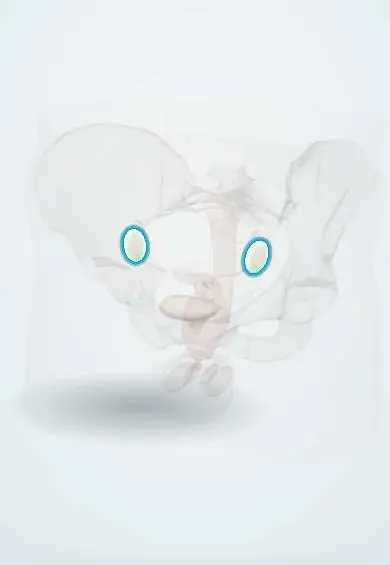
Structures involved
Tap one to see what it is and open it in 3D.
Why it happens
What it is
Menopause is the permanent end of menstruation caused by loss of ovarian follicular activity, confirmed retrospectively after 12 months without periods. The climacteric is the wider transition around it, and climacteric syndrome is the set of symptoms that can accompany it.
Who gets it
Natural menopause usually occurs between 45 and 55 years; Latin American studies suggest an average age around the late 40s, slightly earlier than in high-income countries. With longer life expectancy, women in Colombia live about a third of their lives after menopause, so its long-term effects on bone and heart health matter for public health.
Causes
- Natural depletion of ovarian follicles with age
- Surgical: removal of both ovaries
- Iatrogenic: chemotherapy or pelvic radiotherapy
- Premature menopause before 40 (see primary ovarian insufficiency)
Risk factors
- Smoking (earlier menopause)
- Family history of early menopause
- Low body weight
- Previous ovarian surgery or cancer treatment
Pathophysiology
As follicles run out, inhibin and oestradiol fall and the pituitary raises FSH, then LH, through loss of negative feedback. Cycles become irregular and anovulatory during perimenopause until menstruation stops. Low oestrogen alters hypothalamic thermoregulation (hot flushes), thins the vaginal and urinary epithelium, accelerates bone resorption and removes a favourable effect on lipids and blood vessels.
Classification
- Perimenopause (menopausal transition)
- Menopause (final menstrual period)
- Postmenopause (early and late)
- Natural, surgical or induced menopause
- Premature (before 40) and early (40 to 45) menopause
Symptoms and signs
- Irregular periods, then amenorrhoea
- Hot flushes and night sweats (vasomotor symptoms)
- Sleep disturbance
- Mood changes, irritability, poor concentration
- Vaginal dryness and pain with intercourse
- Urinary urgency and recurrent urinary infections
- Joint pain and lower libido
Diagnosis
- Clinical
- Clinical in a woman over 45 with typical symptoms and 12 months without periods; laboratory tests are usually unnecessary.
- Tests
- FSH (high) and oestradiol (low) only in selected cases, such as women under 45 or suspected premature ovarian insufficiency. TSH and a pregnancy test when the picture is unclear. Lipids, glucose and cardiovascular risk assessment as part of midlife care.
- Imaging
- Bone densitometry (DXA) to assess osteoporosis according to age and risk; transvaginal ultrasound if there is postmenopausal bleeding.
Differential diagnosis
- Pregnancy
- Thyroid disease (hyperthyroidism)
- Hyperprolactinaemia
- Primary ovarian insufficiency
- Depression or anxiety disorder
- Medication side effects (flushing)
Goal of treatment
Relieve troublesome symptoms, protect bone and cardiovascular health, and support quality of life, choosing the safest option for each woman after weighing benefits and risks.
Treatment
- Lifestyle
- Regular exercise, healthy weight, not smoking, limiting alcohol and caffeine, cool environment and sleep hygiene; adequate calcium and vitamin D for bone health.
- Medical
- Menopausal hormone therapy is the most effective treatment for vasomotor symptoms: oestrogen alone after hysterectomy, oestrogen plus a progestogen when the uterus is present, ideally started before 60 or within 10 years of menopause.
- Medical
- Non-hormonal options when hormones are contraindicated or declined: SSRIs or SNRIs, gabapentin, and neurokinin-3 receptor antagonists such as fezolinetant.
- Medical
- Low-dose vaginal oestrogen or vaginal moisturisers and lubricants for genitourinary symptoms.
- Follow-up
- Periodic review of the need to continue therapy, breast and cervical screening, blood pressure, and bone density according to risk.
Complications
- Osteoporosis and fragility fractures
- Increased cardiovascular risk
- Genitourinary syndrome of menopause
- Sleep and mood disorders
- Hormone therapy risks: venous thromboembolism, stroke, breast cancer with long combined use
Prognosis
Vasomotor symptoms usually last several years and then fade, though some women have them much longer. Genitourinary changes tend to persist without treatment. Long-term health depends mostly on bone and cardiovascular prevention.
Prevention
- Bone health: physical activity, calcium, vitamin D, no smoking
- Cardiovascular risk control (blood pressure, lipids, glucose, weight)
- Evaluation of any postmenopausal bleeding
Test yourself
Think of the answer, then tap the question to see it.
How is natural menopause defined?
Twelve consecutive months without menstruation, with no other cause, due to loss of ovarian follicular function.
Which pituitary hormone rises first and most in menopause?
FSH, because inhibin and oestradiol from the ovarian follicles fall.
Why must a progestogen be added to oestrogen therapy in a woman with a uterus?
To prevent endometrial hyperplasia and endometrial cancer caused by unopposed oestrogen.
What are three contraindications to menopausal hormone therapy?
Breast or endometrial cancer, unexplained vaginal bleeding, and history of venous thromboembolism, stroke or coronary disease (also active liver disease).
What symptom after menopause always needs evaluation?
Postmenopausal vaginal bleeding, to exclude endometrial hyperplasia or cancer.
Related conditions
- Osteoporosis
- Genitourinary syndrome of menopause (atrophic vaginitis)
- Primary ovarian insufficiency
- Endometrial hyperplasia
- Endometrial cancer
- Stable angina
- Major depressive disorder
- Abnormal uterine bleeding
Educational information, not medical advice. For any symptom, see a health professional.
Sources: Menopause (World Health Organization, 2024); Menopause (MedlinePlus (U.S. National Library of Medicine), 2024).
Spotted a mistake?We are always improving for the community. Tell us what is wrong and our team will review it.Report a mistake
Representative model, for educational purposes only.