Conditions · Obstetrics and gynecology
Genitourinary syndrome of menopause (atrophic vaginitis) !
After menopause, low oestrogen thins the vagina, vulva and urethra, causing dryness, painful sex, urinary urgency and infections.
Updated 2026-11-01
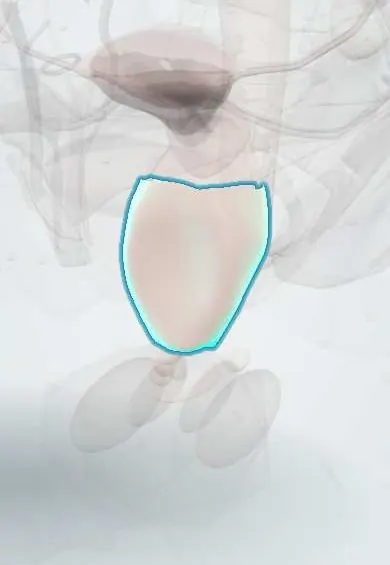
Structures involved
Tap one to see what it is and open it in 3D.
Why it happens
What it is
A chronic, progressive set of vulvovaginal, sexual and urinary symptoms and signs caused by oestrogen deficiency acting on the vulva, vagina, urethra and bladder; it replaces the older terms atrophic vaginitis and vulvovaginal atrophy.
Who gets it
Affects about half of postmenopausal women and, unlike hot flushes, worsens with time. It is under-reported and under-treated because many women do not mention it. It also affects younger women with low oestrogen (breastfeeding, cancer treatment, ovarian insufficiency).
Causes
- Natural menopause
- Surgical removal of both ovaries
- Primary ovarian insufficiency
- Anti-oestrogen cancer treatments (aromatase inhibitors), pelvic radiation and chemotherapy
- Breastfeeding and GnRH-agonist therapy (temporary)
Risk factors
- Time since menopause
- Smoking
- No vaginal childbirth
- Lack of sexual activity
- Treatment for breast cancer
Pathophysiology
The vulva, vagina, urethra and bladder trigone are rich in oestrogen receptors. When oestrogen falls, the vaginal epithelium thins and loses glycogen and its folds (rugae), blood flow and secretions decrease, and elastic tissue is replaced by connective tissue. With less glycogen, lactobacilli decline, vaginal pH rises above 4.5 and the vagina becomes more prone to infection and irritation. The urethral mucosa thins, which favours urgency, dysuria and recurrent urinary tract infections.
Classification
- Genital symptoms (dryness, burning, irritation)
- Sexual symptoms (lack of lubrication, dyspareunia, post-coital bleeding)
- Urinary symptoms (urgency, dysuria, recurrent infections)
Symptoms and signs
- Vaginal dryness, burning and itching
- Pain and lack of lubrication during intercourse
- Light bleeding after intercourse
- Urinary urgency, frequency and burning
- Recurrent urinary tract infections
- Pale, thin, dry vaginal mucosa with loss of folds on examination
Diagnosis
- Clinical
- Clinical diagnosis based on typical symptoms in a hypo-oestrogenic woman and examination showing pale, thin, dry, friable mucosa with loss of rugae, narrowing of the introitus and urethral caruncle.
- Tests
- Vaginal pH above 4.5 and a lower maturation index support the diagnosis; wet mount and cultures exclude infection; urinalysis and urine culture for urinary symptoms. Endometrial assessment for any postmenopausal bleeding.
- Imaging
- Not required. Transvaginal ultrasound if there is postmenopausal bleeding to assess the endometrium.
Differential diagnosis
- Vulvovaginal candidiasis, bacterial vaginosis and trichomoniasis
- Vulvar lichen sclerosus and lichen planus
- Contact or irritant dermatitis
- Vulvar intraepithelial neoplasia or vulvar cancer
- Interstitial cystitis or overactive bladder
Goal of treatment
Relieve symptoms, restore vaginal tissue health and sexual comfort, and reduce recurrent urinary infections, using the least systemic exposure needed.
Treatment
- Conservative
- First line: non-hormonal water- or silicone-based lubricants during intercourse and regular vaginal moisturisers; avoid irritating soaps and douches.
- Medical
- Low-dose vaginal oestrogen (cream, tablet or ring) is the most effective treatment; systemic absorption is minimal and a progestin is generally not needed.
- Medical
- Alternatives: vaginal prasterone (DHEA) or oral ospemifene; in breast cancer survivors, hormonal options are discussed with the oncology team.
- Rehabilitation
- Pelvic floor physiotherapy and vaginal dilators for dyspareunia and introital narrowing.
- Follow-up
- Review symptom response and investigate any postmenopausal bleeding; treatment is usually long term because symptoms recur when it stops.
Complications
- Recurrent urinary tract infections
- Dyspareunia and sexual dysfunction
- Vaginal stenosis and introital narrowing
- Urethral caruncle and prolapse of the urethral mucosa
- Reduced quality of life and relationship strain
Prognosis
Without treatment the condition persists and progresses. Symptoms usually improve within weeks of vaginal oestrogen or moisturisers but return if treatment stops.
Prevention
- Regular sexual activity or use of dilators, and early recognition at routine menopause visits
Test yourself
Think of the answer, then tap the question to see it.
What is the most effective treatment for moderate to severe genitourinary syndrome of menopause?
Low-dose vaginal oestrogen.
What happens to vaginal pH and why?
It rises above 4.5 because loss of glycogen reduces lactobacilli and lactic acid.
Which urinary problem increases in this condition?
Recurrent urinary tract infections (also urgency and dysuria).
A postmenopausal woman with vaginal atrophy reports bleeding. What must be done before attributing it to atrophy?
Evaluate the endometrium (transvaginal ultrasound and/or biopsy) to exclude endometrial cancer.
Related conditions
- Menopause and climacteric syndrome
- Urinary tract infection (acute cystitis)
- Overactive bladder and urge incontinence
- Stress urinary incontinence
- Pelvic organ prolapse
- Vulvar lichen sclerosus and vulvar cancer
- Vulvovaginal candidiasis
- Bacterial vaginosis
- Endometrial cancer
- Primary ovarian insufficiency
- Breast cancer
Educational information, not medical advice. For any symptom, see a health professional.
Sources: Vaginal dryness: MedlinePlus Medical Encyclopedia (MedlinePlus (U.S. National Library of Medicine), 2024).
Spotted a mistake?We are always improving for the community. Tell us what is wrong and our team will review it.Report a mistake
Representative model, for educational purposes only.