Cardiovascular system · Pelvis
Ureter under the uterine artery !
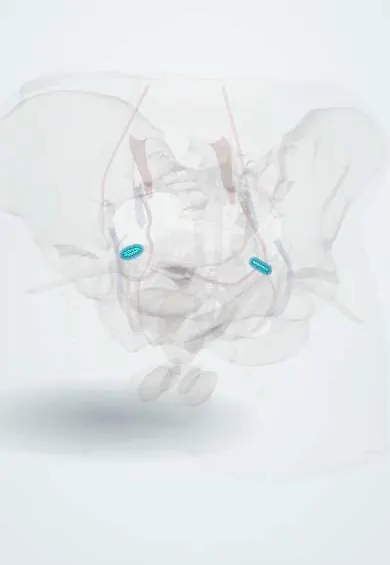
Beside the cervix the ureter passes under the uterine artery; this crossing is the most common place for the ureter to be injured in a hysterectomy.
Official name: Crossing of the ureter under the uterine artery
Opens in the Durgical app, no sign-up needed.
What it is
The point beside the cervix where the ureter passes under the uterine artery, about 1.5-2 cm to the side of the cervix. Surgeons remember it as 'water under the bridge': the water (urine in the ureter) runs under the bridge (the artery).
What it does
The most common place for the ureter to be injured in a hysterectomy. The surgeon finds the ureter first and clamps the artery close to the uterus, above it.
Key facts
- Where
- Base of the broad ligament (cardinal ligament), about 1.5–2 cm lateral to the supravaginal cervix and above the lateral vaginal fornix
- Attaches
- Uterine artery passes over (anterior and superior to) the ureter on its way to the uterus; the ureter then runs forward to the bladder
- Function
- 'Water under the bridge': the commonest site of ureteric injury in hysterectomy; the artery is clamped close to the uterus
Relations
- Above
- The uterine artery and its veins, arching over the ureter from lateral to medial
- Medial
- The supravaginal cervix, toward which the artery heads
- Below
- The lateral vaginal fornix
- Lateral
- The pelvic side wall with the internal iliac vessels, where the uterine artery arises
- Course
- Beyond the crossing the ureter runs forward and medially through a tunnel in the cardinal ligament, beside the lateral vaginal fornix, to the base of the bladder
How to find it
Not palpable. At surgery the peritoneum of the broad ligament is opened and the ureter is followed down from the pelvic brim on the medial leaf of the broad ligament until the uterine artery is seen arching over it.
On imaging
On contrast CT or MR urography the ureter is followed down the pelvic side wall toward the bladder; on CT angiography the uterine artery is seen arching medially over it beside the cervix. Ureteric injury after hysterectomy shows on CT urography as contrast leaking near the vaginal cuff, or as hydronephrosis with the ureter blocked at this level.
Common problems
- Injury (clamped, cut or burned) during pelvic surgery, sometimes noticed only days later as pain, fever or urine leaking.
How it is diagnosed
Seen directly in surgery; CT urography if an injury is suspected afterwards.
Treatment
- Identified and protected at the 'vessels' step of a hysterectomy.
Clinical notes
- In radical hysterectomy the ureter is freed from its tunnel (unroofed) so the parametrium can be removed, which raises the risk of fistula and narrowing
- Injury can be a ligature, a crush, a cut or heat damage from energy devices; heat damage tends to show only after several days
- On the vaginal route the bladder is pushed up off the cervix to carry the ureters away from the clamps
- After a difficult hysterectomy, cystoscopy at the end of the operation checks for a jet of urine from each ureteric orifice; a missing jet suggests the ureter was tied or kinked
- When the pelvis is badly distorted, ureteric catheters placed before the operation can help the surgeon feel and find the ureter, though they do not remove the risk of injury
Test yourself
Think of the answer, then tap the question to see it.
Where does the ureter pass under the uterine artery?
About 1.5–2 cm lateral to the cervix, near the lateral vaginal fornix («water under the bridge»).
How does the surgeon avoid the ureter when clamping the uterine artery in hysterectomy?
The ureter is identified first and the artery is clamped close to the uterus, above the ureter.
Which type of ureteric injury at the crossing tends to show only after several days?
Heat damage from energy devices; ligature, crush or cut injuries may also go unnoticed at surgery.
What is the male equivalent of the uterine artery crossing over the ureter?
The ductus deferens crossing over the ureter just before the ureter enters the bladder.
Educational information, not medical advice. For any symptom, see a health professional.
Its names
- Official Spanish (DeCS)
- Cruce del uréter bajo la arteria uterina
- English (TA2)
- Crossing of the ureter under the uterine artery
Related
Sources: Anatomy, Abdomen and Pelvis Ureter.
Spotted a mistake?We are always improving for the community. Tell us what is wrong and our team will review it.Report a mistake
Representative model, for educational purposes only.