Conditions · Pediatrics and neonatology
Apnoea of prematurity !
Pauses in breathing in babies born early because the brain's breathing centre is still immature. It usually ends by the original due date.
Updated 2026-11-01
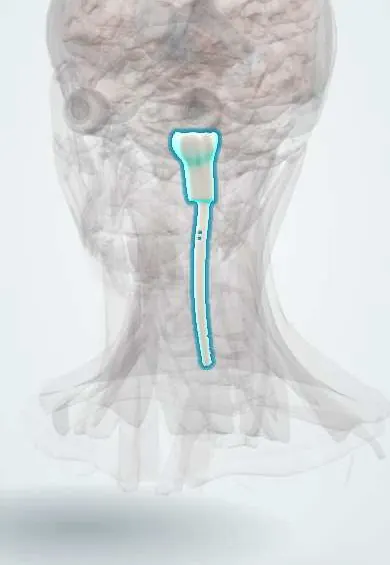
Structures involved
Tap one to see what it is and open it in 3D.
Why it happens
- Sudden infant death syndrome: what is known
- Prematurity and fetal growth restriction
- Control of breathing, chemoreceptors and lung reflexes
- Newborn physiology and fetal maturation
What it is
Breathing pauses of 20 seconds or more, or shorter pauses with bradycardia or desaturation, in an infant born before 37 weeks, caused by immaturity of the brainstem respiratory control. It is a diagnosis of exclusion.
Who gets it
Almost universal in babies born before 28 weeks and common up to 34 weeks; frequency falls as gestational age rises. It is one of the most frequent problems in neonatal units in Colombia and worldwide.
Causes
- Immature respiratory centers in the medulla and pons
- Blunted response to high CO2 and paradoxical depression of breathing with low oxygen
- Exaggerated inhibitory reflexes from the larynx
- Airway collapse from weak upper-airway muscle tone
Risk factors
- Lower gestational age
- Intercurrent illness: sepsis, anemia, intraventricular hemorrhage
- Hypothermia or temperature swings
- Neck flexion and airway obstruction from positioning
- Maternal opioids or sedatives
Pathophysiology
Brainstem networks that set breathing rhythm are not fully myelinated or connected, so central drive falters, especially in active sleep. Apneas may be central (no effort), obstructive (effort against a closed airway) or, most often, mixed. Resulting hypoxemia triggers bradycardia.
Classification
- Central: no respiratory effort
- Obstructive: effort without airflow
- Mixed: central and obstructive components, the most common type
Symptoms and signs
- Pauses in breathing detected by monitors
- Bradycardia and falling oxygen saturation
- Cyanosis or pallor during episodes
- Episodes more common during sleep and feeds
- Periodic breathing between episodes
Diagnosis
- Clinical
- Confirmed by cardiorespiratory monitoring in a preterm infant after secondary causes are excluded.
- Tests
- Blood count, glucose, electrolytes, blood gases, and cultures if infection is possible.
- Imaging
- Cranial ultrasound to look for intraventricular hemorrhage when the pattern changes; other imaging only if a secondary cause is suspected.
Differential diagnosis
- Neonatal sepsis or meningitis
- Intraventricular hemorrhage or seizures
- Hypoglycemia, hypocalcemia or hypothermia
- Anemia
- Maternal drug exposure
Goal of treatment
Reduce the number and severity of episodes, keep oxygen levels stable, and treat any secondary cause until the brainstem matures.
Treatment
- Follow-up
- Continuous cardiorespiratory monitoring and pulse oximetry in the neonatal unit; nursing response to alarms.
- Conservative
- Gentle tactile stimulation during episodes, neutral head and neck position, and a stable thermal environment.
- Medical
- Methylxanthines, mainly caffeine, stimulate the respiratory center and reduce apnea and the need for ventilation.
- Acute
- Nasal CPAP or high-flow nasal cannula, and bag-mask or mechanical ventilation for severe episodes.
- Follow-up
- Before discharge, an apnea-free period off caffeine is usually observed; home monitoring is used only in selected infants.
Complications
- Hypoxemia with possible effects on neurodevelopment when episodes are frequent
- Need for prolonged respiratory support
- Longer hospital stay
- Persistent apnea beyond term in the most premature infants
Prognosis
It usually resolves by 36–40 weeks postmenstrual age, later in extremely preterm babies or those with chronic lung disease. It is not considered a direct cause of SIDS.
Test yourself
Think of the answer, then tap the question to see it.
How long must a breathing pause last to count as apnea in a preterm infant?
20 seconds or more, or shorter if it comes with bradycardia or desaturation.
Which drug class is the mainstay of treatment for apnea of prematurity?
Methylxanthines, mainly caffeine.
What is the most common type of apnea of prematurity?
Mixed apnea, with central and obstructive components.
Why is apnea in a term infant concerning?
It is not apnea of prematurity and suggests a secondary cause such as sepsis, seizures or brain injury.
Related conditions
- Prematurity and its complications
- Bronchopulmonary dysplasia
- Intraventricular haemorrhage of prematurity
- Neonatal sepsis
- Neonatal hypoglycaemia (including infant of a diabetic mother)
- Gastro-oesophageal reflux disease (GERD)
- Sudden infant death syndrome (SIDS)
Educational information, not medical advice. For any symptom, see a health professional.
Sources: Apnea of prematurity (MedlinePlus Medical Encyclopedia (U.S. National Library of Medicine), 2025).
Spotted a mistake?We are always improving for the community. Tell us what is wrong and our team will review it.Report a mistake
Representative model, for educational purposes only.