Gastro-oesophageal reflux disease (GERD) !
Gastroesophageal reflux disease (GERD) is when stomach contents flow back into the esophagus, causing heartburn, regurgitation or damage to its lining.
Updated 2026-10-29
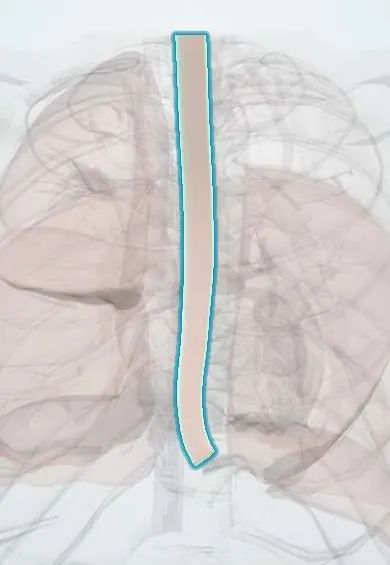
Structures involved
Tap one to see what it is and open it in 3D.
In biochemistry
In histology
- Epithelium: classification (the table to know)
- Simple, stratified, pseudostratified and transitional epithelium
- Cell adaptations: hypertrophy, hyperplasia, atrophy, metaplasia
- Esophagus and the Barrett change
In physiology
Why it happens
- Metaplasia
- Obesity: leptin, adipokines and its consequences
- Precancerous conditions: when chronic inflammation, metaplasia or hyperplasia raise the risk
What it is
Condition in which reflux of stomach contents into the oesophagus causes troublesome symptoms, such as heartburn and regurgitation, and/or mucosal damage (oesophagitis).
Who gets it
One of the most common digestive disorders in adults worldwide and in Latin America. Prevalence rises with obesity.
Causes
- Transient relaxations of the lower oesophageal sphincter
- Low resting sphincter pressure
- Hiatus hernia
- Impaired oesophageal clearance and delayed gastric emptying
Risk factors
- Obesity, especially central
- Pregnancy
- Smoking and alcohol
- Large, fatty or late meals
- Drugs that relax the sphincter (e.g. calcium channel blockers, nitrates, anticholinergics)
- Hiatus hernia
Pathophysiology
The lower oesophageal sphincter and the crural diaphragm normally form an anti-reflux barrier. When the barrier fails, acid and pepsin reach the oesophagus and injure the mucosa. Chronic injury can cause erosive oesophagitis, stricture, or Barrett oesophagus, in which squamous lining is replaced by intestinal-type columnar epithelium.
Classification
- Non-erosive reflux disease (NERD)
- Erosive oesophagitis (graded endoscopically, e.g. Los Angeles classification)
- Barrett oesophagus
- Extra-oesophageal manifestations (cough, laryngitis, asthma)
Symptoms and signs
- Heartburn: retrosternal burning after meals or lying down
- Regurgitation of sour fluid
- Non-cardiac chest pain
- Chronic cough, hoarseness or throat clearing
- Worsening of asthma
- Dental erosion
Diagnosis
- Clinical
- Typical heartburn and regurgitation allow a clinical diagnosis; response to a trial of acid suppression supports it. Chest pain needs cardiac causes excluded first.
- Tests
- Endoscopy with biopsy when alarm features are present, symptoms persist or Barrett oesophagus is suspected. Ambulatory pH or pH-impedance monitoring and oesophageal manometry before surgery or in unclear cases. ECG when chest pain is present.
- Imaging
- Barium swallow can show hiatus hernia or stricture; it is not used to diagnose reflux itself.
Differential diagnosis
- Angina or acute coronary syndrome
- Peptic ulcer disease
- Eosinophilic oesophagitis
- Achalasia and other motility disorders
- Oesophageal cancer
- Functional heartburn
Goal of treatment
Relieve symptoms, heal oesophagitis, prevent complications such as stricture and Barrett oesophagus, and use the lowest effective acid suppression.
Treatment
- Lifestyle
- Weight loss, raising the head of the bed, avoiding late meals and personal trigger foods, and stopping smoking.
- Medical
- Proton pump inhibitors as the most effective therapy, for a defined course and then the lowest effective dose or on demand.
- Medical
- H2-receptor antagonists, antacids or alginates for mild or intermittent symptoms.
- Procedure
- Endoscopic surveillance of Barrett oesophagus; endoscopic treatment of dysplasia or dilation of strictures.
- Surgical
- Anti-reflux surgery (laparoscopic fundoplication) for selected patients with proven reflux who do not respond or do not want long-term drugs.
Drugs for this condition
- Metoclopramide
- Famotidine
- Cimetidine
- Pantoprazole
- Calcium carbonate
- Aluminium hydroxide
- Magnesium hydroxide
- Esomeprazole
- Lansoprazole
- Omeprazole
Complications
- Erosive oesophagitis and bleeding
- Peptic stricture with dysphagia
- Barrett oesophagus
- Oesophageal adenocarcinoma
- Aspiration, chronic cough and asthma worsening
Prognosis
Usually a chronic, relapsing condition that is well controlled with lifestyle measures and acid suppression. Only a small minority with Barrett oesophagus progress to adenocarcinoma.
Prevention
- Healthy weight
- Avoiding smoking and excess alcohol
- Not lying down soon after meals
Test yourself
Think of the answer, then tap the question to see it.
What structure forms the main anti-reflux barrier between oesophagus and stomach?
The lower oesophageal sphincter, reinforced by the crural diaphragm at the hiatus.
What is Barrett oesophagus?
Replacement of normal squamous lining of the distal oesophagus by intestinal-type columnar epithelium, a precursor of adenocarcinoma.
Which three alarm features in a patient with reflux call for endoscopy?
Dysphagia, unintentional weight loss and signs of GI bleeding or anaemia; persistent vomiting is another.
Which drug class is the most effective at healing erosive oesophagitis?
Proton pump inhibitors.
Related conditions
- Asthma
- Myocardial Infarction (Heart Attack)
- Stable angina
- Obesity
- Peptic ulcer disease
- Achalasia
- Oesophageal cancer
- Gallstones (cholelithiasis)
Educational information, not medical advice. For any symptom, see a health professional.
Sources: Gastroesophageal Reflux Disease (GERD) (StatPearls (NCBI Bookshelf), 2025).
Spotted a mistake?We are always improving for the community. Tell us what is wrong and our team will review it.Report a mistake
Representative model, for educational purposes only.