Body dysmorphic disorder, hoarding disorder and trichotillomania !
Obsessive-compulsive related disorders: preoccupation with imagined flaws in appearance, inability to discard things, and repetitive hair pulling.
Updated 2026-11-01
Structures involved
Tap one to see what it is and open it in 3D.
What it is
This page groups the main obsessive-compulsive related disorders. Body dysmorphic disorder (BDD) is preoccupation with perceived defects in appearance that others do not see or find slight, with repetitive checking or grooming. Hoarding disorder is persistent difficulty discarding possessions, whatever their value, leading to clutter that blocks the use of living spaces. Trichotillomania (hair-pulling disorder) is recurrent pulling out of one's own hair with hair loss and repeated failed attempts to stop; excoriation (skin-picking) disorder is closely related.
Who gets it
BDD affects about 2% of the population and is much more frequent among patients seeking dermatology or cosmetic procedures. Hoarding disorder affects around 2 to 6%, increases with age and is often brought to attention by family, neighbours or social services. Trichotillomania affects about 1 to 2%, usually starting around puberty, and is more frequent in females. In Colombia, the growth of cosmetic surgery and aesthetic procedures makes recognising BDD important for doctors.
Causes
- Genetic overlap with OCD; these disorders cluster in families
- Abnormal visual processing with excessive focus on detail (BDD)
- Difficulties with decision-making, categorising and emotional attachment to objects (hoarding)
- Hair pulling as a way to regulate tension, boredom or negative emotion (trichotillomania)
- Teasing or bullying about appearance and childhood adversity
Risk factors
- Personal or family history of OCD or related disorders
- Depression, social anxiety and perfectionism
- Older age, living alone and stressful losses (hoarding)
- Adolescence and female sex (trichotillomania and BDD)
Pathophysiology
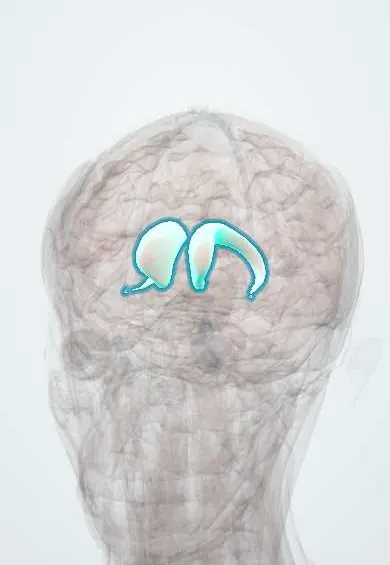
As in OCD, these disorders involve dysfunction of cortico-striato-thalamo-cortical loops linking the orbitofrontal and anterior cingulate cortex with the caudate nucleus and thalamus, giving persistent intrusive concerns and difficulty stopping repetitive behaviours. Body-focused repetitive behaviours such as hair pulling also involve habit circuits in the putamen and reward-related relief. The amygdala contributes to the anxiety and shame that drive avoidance.
Classification
- Body dysmorphic disorder, with muscle dysmorphia specifier (belief that the body is too small or not muscular enough) and insight specifier (good, poor, or absent with delusional beliefs)
- Hoarding disorder, with or without excessive acquisition, and with an insight specifier; animal hoarding is a recognised variant
- Trichotillomania (hair-pulling disorder)
- Excoriation (skin-picking) disorder
Symptoms and signs
- BDD: hours a day thinking about a 'flaw' (skin, nose, hair, body shape), mirror checking or avoidance, camouflaging, comparing, skin picking and reassurance seeking
- BDD: repeated requests for dermatological or cosmetic procedures, with little satisfaction afterwards
- Hoarding: rooms that cannot be used for their purpose, distress at the idea of discarding, excessive buying or collecting of free items
- Trichotillomania: patchy hair loss from the scalp, eyebrows or eyelashes, with broken hairs of different lengths
- Trichotillomania: tension before pulling and relief after, sometimes chewing or swallowing hair (trichophagia)
- Shame, secrecy, social avoidance and depression in all three
Diagnosis
- Clinical
- Clinical diagnosis using DSM criteria, with tactful screening questions about appearance concerns in dermatology, cosmetic and psychiatric settings. Insight should be graded. Home visits or photographs help assess clutter in hoarding. In trichotillomania, examination shows irregular patches of hair loss with hairs of varying length; dermoscopy is helpful.
- Tests
- No laboratory test is diagnostic. In uncertain hair loss, a scalp biopsy may show traumatised follicles; fungal tests or a biopsy exclude tinea capitis or other alopecias when needed.
- Imaging
- Abdominal imaging or endoscopy if a trichobezoar is suspected; otherwise imaging is not needed.
Differential diagnosis
- Normal appearance concerns, eating disorders (anorexia nervosa) and social anxiety disorder
- Obsessive-compulsive disorder
- Psychotic disorders (delusional beliefs about appearance)
- Collecting as a hobby, dementia or psychosis with accumulation of objects
- Alopecia areata (smooth patches, exclamation-mark hairs) and tinea capitis
- Tourette syndrome and stereotypies (repetitive movements)
Goal of treatment
Reduce preoccupation and repetitive behaviours, restore function and safety, and avoid unnecessary cosmetic procedures.
Treatment
- Conservative
- Cognitive behavioural therapy with exposure and response prevention, adapted to BDD (mirror retraining, reducing checking and camouflage).
- Conservative
- Cognitive behavioural therapy for hoarding with practice in sorting and discarding, plus help with organising the home and community support.
- Conservative
- Habit reversal training (awareness, competing response, stimulus control) for trichotillomania and skin picking.
- Medical
- First-line drug class for BDD: selective serotonin reuptake inhibitors (SSRIs), often needing longer trials than in depression; clomipramine is an alternative.
- Medical
- Medication evidence in hoarding and trichotillomania is limited; SSRIs are used for coexisting depression or OCD, and N-acetylcysteine has been studied for hair pulling with mixed results.
- Follow-up
- Monitoring of suicide risk, insight, home safety and, in hair eaters, gastrointestinal symptoms.
Complications
- Depression and suicide (BDD)
- Unnecessary or repeated cosmetic procedures with poor satisfaction
- Fires, falls, infestations and eviction (hoarding)
- Permanent hair loss, scalp infection and trichobezoar with bowel obstruction (trichotillomania)
- Social isolation and loss of work or study
Prognosis
These disorders tend to be chronic without treatment. Many patients improve with targeted cognitive behavioural therapy and SSRIs; poor insight, especially in hoarding, makes treatment harder.
Test yourself
Think of the answer, then tap the question to see it.
Why do cosmetic procedures rarely help patients with BDD?
The problem is the perception and preoccupation, not the appearance; concern often shifts to another feature or persists.
What is the first-line drug class for body dysmorphic disorder?
SSRIs, often at higher-range dosing and for longer trials than in depression.
What is the first-line psychological treatment for trichotillomania?
Habit reversal training.
A teenager with patchy hair loss presents with epigastric pain and an epigastric mass. What should be suspected?
A trichobezoar from swallowing pulled hair (trichophagia).
How is hoarding disorder different from collecting?
Hoarding causes distress and clutter that prevents normal use of living spaces; collecting is organised and does not impair function.
Related conditions
- Obsessive-compulsive disorder (OCD)
- Major depressive disorder
- Suicidal behaviour and suicide risk
- Anorexia nervosa
- Social anxiety disorder and specific phobia
- Tourette syndrome and tic disorders
- Personality disorders (clusters A, B and C)
- Generalized anxiety disorder
Educational information, not medical advice. For any symptom, see a health professional.
Sources: Body dysmorphic disorder (BDD) (NHS (National Health Service, UK), 2025); Hoarding disorder (NHS (National Health Service, UK), 2025); Trichotillomania (MedlinePlus (U.S. National Library of Medicine), 2025).
Spotted a mistake?We are always improving for the community. Tell us what is wrong and our team will review it.Report a mistake
Representative model, for educational purposes only.