Conditions · Metabolism (biochemistry)
Fabry disease !
In Fabry disease a lipid builds up in blood vessels, kidneys, heart and nerves: it causes hand and foot pain and, over the years, organ failure.
Updated 2026-11-01
Structures involved
Tap one to see what it is and open it in 3D.
In biochemistry
- Lysosomal ganglioside breakdown: Step 4 · β-Galactosidase (galactocerebrosidase GALC or GLB1) with saposins
- Sphingolipids and sphingolipidoses
- Lysosomal storage diseases
- α-Galactosidase A
- Globotriaosylceramide (Gb3)
Why it happens
What it is
An X-linked sphingolipidosis caused by α-galactosidase A deficiency (GLA gene); globotriaosylceramide (Gb3) accumulates.
Who gets it
Estimated at 1 in 1,000 to 9,000 people; milder late-onset forms are probably more common than the classic form. It affects males and also female carriers, with variable severity.
Causes
- Variants of the GLA gene on the X chromosome
Risk factors
- Carrier mother (50% risk for each child)
- Affected father (all his daughters inherit the variant)
Pathophysiology
Without α-galactosidase A, Gb3 and lyso-Gb3 accumulate in endothelium, vascular smooth muscle, podocytes, cardiomyocytes and dorsal root ganglia. Small nerve fibre damage gives neuropathic pain and hypohidrosis; podocyte damage gives proteinuria and kidney failure; myocardial storage gives ventricular hypertrophy, fibrosis and arrhythmias; vascular damage gives early strokes. In women, random X inactivation explains the variability.
Classification
- Classic: males with little or no enzyme activity, onset in childhood
- Late-onset: residual activity, mainly cardiac or renal disease in adulthood
- Heterozygous women: from no symptoms to a classic picture
Symptoms and signs
- Burning pain in hands and feet (acroparaesthesia), sometimes in crises with fever or exercise
- Reduced sweating and heat intolerance
- Dark red papules in the swimsuit area (angiokeratomas)
- Abdominal pain and diarrhoea
- Foamy urine from proteinuria
- Palpitations and breathlessness over the years
Diagnosis
- Clinical
- Childhood acroparaesthesia, angiokeratomas and hypohidrosis; slit-lamp examination shows cornea verticillata; an X-linked family history.
- Tests
- In males, low α-galactosidase A activity in plasma, leukocytes or dried blood spots; in females, GLA gene testing; plasma lyso-Gb3; urinalysis and albumin/creatinine ratio; kidney function; ECG with short PR, hypertrophy or blocks; kidney or heart biopsy in doubtful cases.
- Imaging
- Echocardiogram with ventricular hypertrophy; cardiac MRI with low native T1 and inferolateral late enhancement; brain MRI with white matter lesions.
Treatment
- Medical
- Intravenous enzyme replacement with recombinant α-galactosidase A.
- Medical
- An oral chaperone (migalastat) for patients whose variants respond to it.
- Medical
- ACE inhibitors or angiotensin receptor blockers for proteinuria, and drugs for neuropathic pain.
- Procedure
- Dialysis or kidney transplant for kidney failure; pacemaker or implantable defibrillator for severe arrhythmias.
- Follow-up
- Regular kidney, heart and neurological follow-up, and testing of at-risk relatives.
Complications
- End-stage chronic kidney disease
- Hypertrophic cardiomyopathy, arrhythmias and heart failure
- Early stroke
- Hearing loss
Prognosis
Untreated, life expectancy in males with the classic form is shortened by kidney, heart or cerebrovascular failure. Early treatment delays organ damage.
Test yourself
Think of the answer, then tap the question to see it.
Which enzyme is missing in Fabry disease, and how is it inherited?
α-Galactosidase A (GLA gene); X-linked inheritance.
Why is enzyme measurement not enough to diagnose a woman with Fabry disease?
Random X inactivation can leave her activity normal; genetic testing is needed.
Which early triad suggests Fabry disease in a child?
Burning pain in hands and feet, reduced sweating and angiokeratomas.
Which slit-lamp finding is typical of Fabry disease?
Cornea verticillata: whorl-like opacities in the corneal epithelium.
Related conditions
Educational information, not medical advice. For any symptom, see a health professional.
Sources: Fabry disease: MedlinePlus Genetics (MedlinePlus, US National Library of Medicine, 2026); GLA gene: MedlinePlus Genetics (MedlinePlus, US National Library of Medicine, 2026); Textbook of Biochemistry for Medical Students, 6th ed. (Jaypee Brothers Medical Publishers (Vasudevan DM, Sreekumari S, Vaidyanathan K), 2011).
Spotted a mistake?We are always improving for the community. Tell us what is wrong and our team will review it.Report a mistake
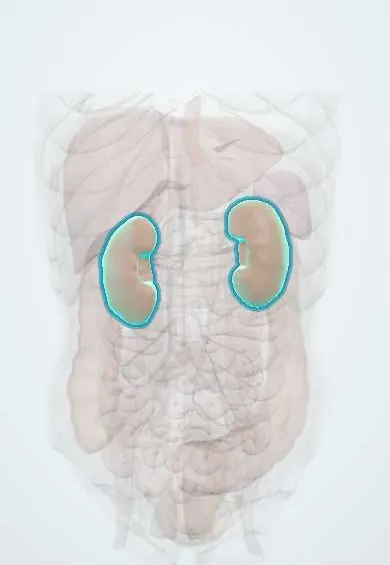
Representative model, for educational purposes only.