Conditions · Metabolism (biochemistry)
Familial hypertriglyceridaemia !
An inherited tendency to high VLDL triglycerides. Silent at first, but alcohol, diabetes or some drugs can push levels high enough to cause pancreatitis.
Updated 2026-11-01
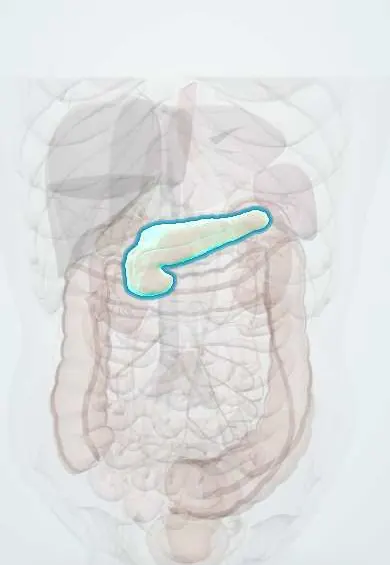
Structures involved
Tap one to see what it is and open it in 3D.
In biochemistry
What it is
A common inherited disorder with raised VLDL triglycerides (Fredrickson type IV) and often low HDL; it can turn into type V (VLDL plus chylomicrons) when other factors are added.
Who gets it
A common familial disorder that often only shows in adulthood; its frequency rises with obesity, diabetes and alcohol use. No Colombian prevalence figures are published.
Causes
- Polygenic or familial genetic predisposition
- Hepatic overproduction of triglyceride-rich VLDL and/or slower VLDL clearance
Risk factors
- Obesity and insulin resistance
- Uncontrolled diabetes
- Alcohol
- Oestrogens, corticosteroids, thiazides, β-blockers and retinoids
- Hypothyroidism and kidney disease
- Diets high in sugars and refined carbohydrates
Pathophysiology
The liver packs more triglyceride into VLDL, often driven by insulin resistance and fatty acid flux from adipose tissue, and lipoprotein lipase cannot clear the excess quickly. VLDL accumulates (type IV) and HDL falls. When a second factor (alcohol, uncontrolled diabetes, oestrogens) is added, LPL is saturated, chylomicrons also persist (type V) and triglycerides can exceed about 1,000 mg/dL, when free fatty acids released in the pancreas can trigger acute pancreatitis.
Classification
- Moderate form: VLDL ↑ (type IV)
- Severe form: VLDL + chylomicrons ↑ (type V), with pancreatitis risk
Symptoms and signs
- Often no symptoms
- Eruptive xanthomas (small yellow papules) when triglycerides are very high
- Abdominal pain from pancreatitis
Diagnosis
- Clinical
- Raised triglycerides in the patient and relatives, usually with normal or low LDL and low HDL, after secondary causes are excluded.
- Tests
- Fasting lipid profile (high triglycerides and VLDL, low HDL), glucose or HbA1c, TSH, kidney and liver tests, urine protein; lipase and amylase if pancreatitis is suspected.
- Imaging
- Abdominal ultrasound or CT when pancreatitis is suspected; ultrasound may also show fatty liver.
Treatment
- Lifestyle
- Avoiding alcohol and reducing sugars, refined carbohydrates and total energy intake; weight loss
- Lifestyle
- Regular physical activity and control of diabetes; review of drugs that raise triglycerides
- Medical
- Fibrates or omega-3 fatty acids for high triglycerides, and statins according to cardiovascular risk, chosen by the treating physician
- Acute
- Hospital management of acute pancreatitis with fasting and, in some cases, plasma exchange or insulin infusion to lower triglycerides
- Follow-up
- Periodic lipid monitoring
Drugs for this condition
Complications
- Acute and recurrent pancreatitis
- Coronary artery disease, especially with low HDL
- Fatty liver
Prognosis
Generally good with lifestyle change and treatment of secondary causes; the main danger is pancreatitis when levels become very high.
Test yourself
Think of the answer, then tap the question to see it.
Which Fredrickson type corresponds to familial hypertriglyceridaemia?
Type IV (raised VLDL); it can become type V when chylomicrons also accumulate.
Which complication becomes likely when triglycerides rise above about 1,000 mg/dL?
Acute pancreatitis.
Which three secondary factors worsen hypertriglyceridaemia?
Alcohol, uncontrolled diabetes and oestrogens (also obesity, hypothyroidism, corticosteroids and thiazides).
What happens to HDL cholesterol in hypertriglyceridaemia, and why?
It falls, because CETP exchanges triglyceride from VLDL for HDL cholesteryl ester and the triglyceride-rich HDL is cleared faster.
Related conditions
- Familial combined hyperlipidaemia
- Acute pancreatitis
- Familial chylomicronemia syndrome (lipoprotein lipase deficiency)
- Atherosclerosis and dyslipidaemia
- Metabolic syndrome
- Type 2 diabetes mellitus
- Alcoholic liver disease (biochemistry)
Educational information, not medical advice. For any symptom, see a health professional.
Sources: Familial hypertriglyceridemia: MedlinePlus Medical Encyclopedia (MedlinePlus, US National Library of Medicine, 2026); High blood cholesterol levels: MedlinePlus Medical Encyclopedia (MedlinePlus, US National Library of Medicine, 2026); Textbook of Biochemistry for Medical Students, 6th ed. (Jaypee Brothers Medical Publishers (Vasudevan DM, Sreekumari S, Vaidyanathan K), 2011).
Spotted a mistake?We are always improving for the community. Tell us what is wrong and our team will review it.Report a mistake
Representative model, for educational purposes only.