Conditions · Metabolism (biochemistry)
Familial combined hyperlipidaemia !
The most common inherited lipid disorder: the liver makes too many apoB particles, so cholesterol, triglycerides or both are high and heart attacks come early.
Updated 2026-11-01
Structures involved
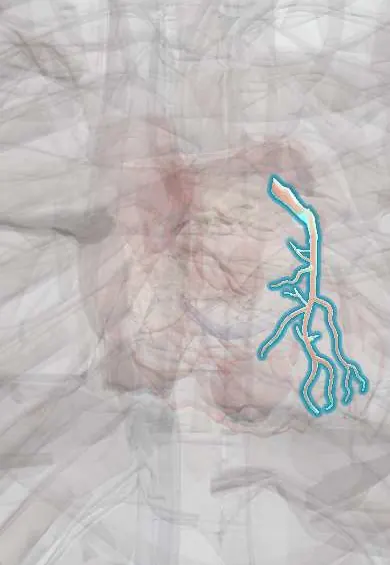
Tap one to see what it is and open it in 3D.
- LAD (anterior descending artery)
- Left main coronary artery
- Right coronary artery
- Circumflex artery
- Ascending aorta
In biochemistry
What it is
A common inherited disorder in which the liver overproduces apoB-containing lipoproteins (VLDL and LDL), raising cholesterol and/or triglycerides; Fredrickson types IIb, IIa or IV in the same family.
Who gets it
The most common genetic disorder that raises blood fats and an important cause of early heart attacks. It often appears with obesity and insulin resistance, which are frequent in Latin America; no Colombian prevalence figures are published.
Causes
- Polygenic inheritance with an autosomal dominant-like pattern in families
- Hepatic overproduction of apoB-100 (VLDL)
Risk factors
- Family history of high lipids or early coronary disease
- Obesity, diabetes, alcohol and hypothyroidism, which make it worse
Pathophysiology
The liver secretes too many VLDL particles, each with one apoB-100. Lipoprotein lipase turns them into IDL and LDL, so the number of atherogenic particles (apoB) rises even when LDL cholesterol is only modestly high. Depending on diet, weight, insulin resistance and other genes, a person can show high LDL (IIa), high LDL and VLDL (IIb) or high VLDL (IV), and the pattern can change over time. Small dense LDL and low HDL are common.
Symptoms and signs
- Usually no symptoms until coronary disease appears
- Chest pain or a heart attack at a young age
- Xanthomas are uncommon (unlike familial hypercholesterolaemia)
Diagnosis
- Clinical
- Mixed or changing lipid pattern in the patient and first-degree relatives, often from the teens or twenties, with a family history of early coronary disease.
- Tests
- Fasting lipid profile (total, LDL and HDL cholesterol, triglycerides), apolipoprotein B (raised), glucose or HbA1c, TSH, liver and kidney tests to exclude secondary causes; family screening.
- Imaging
- Coronary imaging only when symptoms or risk assessment require it (for example coronary calcium score or angiography).
Treatment
- Lifestyle
- Heart-healthy diet low in saturated fat, sugars and alcohol, with weight loss when needed
- Lifestyle
- Regular physical activity and stopping smoking
- Medical
- Statins as first-line lipid-lowering drugs, according to cardiovascular risk
- Medical
- Added ezetimibe, fibrates or omega-3 fatty acids in selected patients, chosen by the treating physician
- Follow-up
- Periodic lipid monitoring and treatment of diabetes and hypertension
Drugs for this condition
Complications
- Premature coronary artery disease and myocardial infarction
- Stroke and peripheral artery disease
- Fatty liver and type 2 diabetes
Prognosis
Good when lipids and other risk factors are controlled; untreated, coronary risk is markedly increased.
Test yourself
Think of the answer, then tap the question to see it.
What is the basic defect in familial combined hyperlipidaemia?
The liver overproduces apoB-100-containing VLDL, increasing VLDL and LDL particles.
Which Fredrickson types can appear in one family with this disorder?
Types IIa, IIb and IV; the pattern can change over time in the same person.
Which lab test best reflects the number of atherogenic particles?
Apolipoprotein B, because each VLDL, IDL and LDL particle carries one apoB-100.
How does it differ clinically from familial hypercholesterolaemia?
Xanthomas are rare and the lipid pattern is mixed or variable, while FH shows isolated very high LDL with tendon xanthomas.
Related conditions
- Familial hypertriglyceridaemia
- Familial hypercholesterolemia
- Atherosclerosis and dyslipidaemia
- Myocardial Infarction (Heart Attack)
- Stable angina
- Metabolic syndrome
- Type 2 diabetes mellitus
Educational information, not medical advice. For any symptom, see a health professional.
Sources: Familial combined hyperlipidemia: MedlinePlus Medical Encyclopedia (MedlinePlus, US National Library of Medicine, 2026); High blood cholesterol levels: MedlinePlus Medical Encyclopedia (MedlinePlus, US National Library of Medicine, 2026); Textbook of Biochemistry for Medical Students, 6th ed. (Jaypee Brothers Medical Publishers (Vasudevan DM, Sreekumari S, Vaidyanathan K), 2011).
Spotted a mistake?We are always improving for the community. Tell us what is wrong and our team will review it.Report a mistake
Representative model, for educational purposes only.