Conditions · Pediatrics and neonatology
Febrile seizures !
A seizure set off by fever in a young child without brain infection. Usually brief and harmless, but meningitis must be ruled out.
Updated 2026-11-01
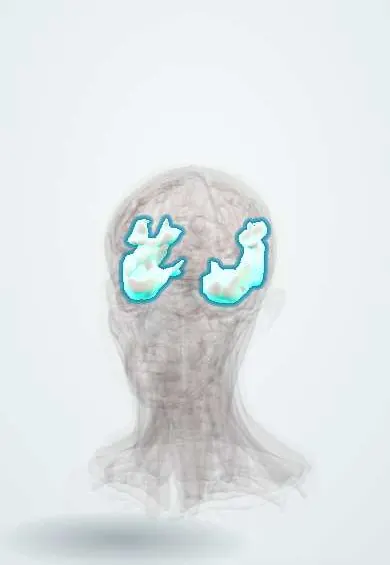
Structures involved
Tap one to see what it is and open it in 3D.
In the clinical exam
Why it happens
What it is
A seizure in a child about 6 months to 5 years old that occurs with a fever of 38 °C or higher, without central nervous system infection, metabolic cause or previous afebrile seizures. Most are brief generalised (simple) seizures.
Who gets it
The most common seizure of childhood, affecting a few percent of children, with a peak in the second year of life. Often there is a family history. In Latin America common triggers include viral respiratory infections, gastroenteritis, otitis and, after vaccines, the fever they may cause.
Causes
- Fever from viral infections (upper respiratory infections, roseola from human herpesvirus 6, influenza)
- Bacterial infections such as otitis media or urinary tract infection
- Fever after some vaccines (rare)
- Age-dependent low seizure threshold of the developing brain, with genetic susceptibility
Risk factors
- Age 6 months to 5 years, especially 12 to 18 months
- First- or second-degree relative with febrile seizures
- High peak temperature
- Daycare attendance and frequent infections
- Developmental delay or neonatal unit stay
Pathophysiology
The immature brain has a lower seizure threshold, and fever with inflammatory cytokines (such as interleukin-1β) raises neuronal excitability. Genetic variants in ion channels add susceptibility. Very long febrile seizures can injure the hippocampus and are linked to later mesial temporal sclerosis, but simple febrile seizures do not damage the brain.
Classification
- Simple: generalised, lasting under 15 minutes, not repeated within 24 hours
- Complex: focal onset, longer than 15 minutes, or repeated within 24 hours
- Febrile status epilepticus: lasting 30 minutes or more, or repeated without recovery in between
Symptoms and signs
- Fever, often appearing in the first 24 hours of the illness
- Generalised tonic-clonic jerking or stiffening, sometimes atonic
- Eyes rolling, loss of consciousness, brief pauses in breathing
- Drowsiness or confusion for a short time afterwards
- Signs of the underlying infection (runny nose, ear pain, rash, diarrhoea)
Diagnosis
- Clinical
- A careful history of the event (duration, type, recovery) and of the fever, plus a full examination to find the source of fever and to look for meningeal signs. A simple febrile seizure in a well-appearing child is a clinical diagnosis.
- Tests
- Tests are aimed at the cause of fever (e.g. urinalysis), not at the seizure. Lumbar puncture when there are meningeal signs, the child looks unwell, is incompletely vaccinated against Haemophilus influenzae type b and pneumococcus, or has been on antibiotics, especially under 12 months. EEG is not needed after a simple seizure; considered after complex seizures.
- Imaging
- Not indicated after a simple febrile seizure. Brain MRI is considered for focal or prolonged seizures, focal neurological signs or abnormal development.
Differential diagnosis
- Bacterial meningitis or viral encephalitis
- Epilepsy triggered by fever, including Dravet syndrome
- Febrile rigors or delirium
- Breath-holding spells or reflex syncope
- Hypoglycaemia or electrolyte disturbance (e.g. from dehydration)
Goal of treatment
Keep the child safe during the seizure, stop a prolonged seizure, find and treat the cause of the fever, and reassure and teach the family; long-term anticonvulsants are not used for simple febrile seizures.
Treatment
- Acute
- First aid: lay the child on the side in a safe place, loosen clothing, do not restrain or put anything in the mouth, and time the seizure.
- Acute
- Seizure lasting 5 minutes or more: a rescue benzodiazepine (buccal or intranasal midazolam, rectal or intravenous diazepam, or intravenous lorazepam), oxygen and airway support, and status epilepticus protocol if it continues.
- Medical
- Treatment of the cause of the fever; antipyretics such as paracetamol or ibuprofen ease discomfort but do not prevent recurrence.
- Conservative
- Family education: the seizure is frightening but usually harmless, recurrence is common, and what to do next time; intermittent rescue medication at home may be prescribed for prolonged or frequent seizures.
- Follow-up
- Nursing priorities: airway and oxygen saturation, seizure duration and features, temperature, level of consciousness until full recovery, safety (side rails, padding) and calm support for the caregivers.
Complications
- Recurrence with later fevers (about one in three children)
- Febrile status epilepticus
- Slightly higher risk of later epilepsy, mainly after complex seizures or with a family history of epilepsy
- Aspiration or injury during the seizure (uncommon)
- Severe parental anxiety
Prognosis
Excellent: simple febrile seizures do not cause brain damage, intellectual disability or death, and most children outgrow them by about age 5. Recurrence is more likely with a first seizure at young age, a low temperature at the time, a short fever before the seizure or a family history.
Test yourself
Think of the answer, then tap the question to see it.
What age range defines febrile seizures?
About 6 months to 5 years.
Which features make a febrile seizure complex?
Focal onset, duration over 15 minutes, or recurrence within 24 hours.
Do antipyretics prevent the recurrence of febrile seizures?
No. They improve comfort but do not lower the risk of another febrile seizure.
Which diagnosis must be ruled out first in a child with fever and a seizure?
Central nervous system infection, mainly bacterial meningitis (with lumbar puncture when indicated).
Is an EEG or brain imaging needed after a first simple febrile seizure in a well child?
No; the diagnosis is clinical and work-up targets the source of fever.
Related conditions
Educational information, not medical advice. For any symptom, see a health professional.
Sources: Febrile seizures: MedlinePlus Medical Encyclopedia (MedlinePlus (U.S. National Library of Medicine), 2024).
Spotted a mistake?We are always improving for the community. Tell us what is wrong and our team will review it.Report a mistake
Representative model, for educational purposes only.