Acute otitis media !
Acute otitis media is an infection of the middle ear behind the eardrum, usually after a cold; it causes ear pain and fever, mostly in young children.
Updated 2026-10-30
Structures involved
Tap one to see what it is and open it in 3D.
Microorganisms that cause it
In embryology
In the clinical exam
In physiology
Why it happens
What it is
Acute infection of the middle ear with fluid behind a bulging, inflamed eardrum, usually following a cold. It is one of the commonest reasons young children see a doctor and receive antibiotics.
Who gets it
Most frequent between about 6 months and 2 years of age and in children who attend day care. Pneumococcal conjugate vaccination, part of Colombia's national schedule, has reduced the burden: from 2008 to 2016, otitis media incidence in children under 2 fell 42.1–51.1% in Bogotá and Medellín after its introduction, though it rose in Barranquilla.
Causes
- Streptococcus pneumoniae
- Non-typeable Haemophilus influenzae
- Moraxella catarrhalis
- Respiratory viruses, alone or preceding bacterial infection
Risk factors
- Young age: the auditory tube is shorter, wider and more horizontal
- Day care and siblings (more viral colds)
- Exposure to tobacco smoke
- Bottle feeding lying down; not breastfed
- Enlarged adenoids
- Cleft palate, Down syndrome, immunodeficiency
Pathophysiology
A viral upper respiratory infection inflames the nasopharynx and auditory tube, which stops draining and ventilating the middle ear. Negative pressure draws in secretions and nasopharyngeal bacteria; the trapped fluid becomes infected and pus under pressure makes the eardrum bulge and may perforate it.
Symptoms and signs
- Ear pain; in infants, ear pulling, irritability, crying and poor sleep
- Fever
- Reduced hearing on the affected side
- Discharge from the ear if the eardrum perforates (pain often eases)
- Preceding runny nose and cough
Diagnosis
- Clinical
- Otoscopy is key: a moderately to severely bulging eardrum, or mild bulging with recent ear pain or intense redness, or new discharge not due to otitis externa. Pneumatic otoscopy shows poor eardrum movement. Middle-ear fluid without acute signs is otitis media with effusion.
- Tests
- Not routine. Tympanometry confirms middle-ear fluid; culture of discharge or of fluid from tympanocentesis in recurrent or treatment-failure cases.
- Imaging
- Not needed in uncomplicated cases. Contrast CT of the temporal bone, or MRI, when mastoiditis or an intracranial complication is suspected.
Differential diagnosis
- Otitis media with effusion
- Otitis externa
- Referred ear pain (teeth, throat, temporomandibular joint)
- Cholesteatoma
- Eardrum redness from crying or fever alone
Goal of treatment
Relieve pain, let most cases settle on their own, use antibiotics where they help most, and detect complications early.
Treatment
- Medical
- Pain relief with analgesics (paracetamol class) or NSAIDs in every case, whatever the antibiotic decision.
- Follow-up
- Watchful waiting with assured follow-up in selected children older than 6 months with non-severe illness; antibiotics start if there is no improvement within 2–3 days. Criteria vary between guidelines.
- Medical
- Antibiotics for younger infants, severe or bilateral disease, or discharge: aminopenicillins first line, with a beta-lactamase inhibitor after recent treatment or failure; cephalosporins or macrolides in penicillin allergy.
- Procedure
- Tympanostomy (ventilation) tubes considered for recurrent acute otitis media or persistent effusion with hearing loss.
Drugs for this condition
Complications
- Eardrum perforation
- Persistent middle-ear effusion with conductive hearing loss and speech delay
- Acute mastoiditis
- Facial nerve palsy, labyrinthitis
- Meningitis, brain abscess, sigmoid sinus thrombosis (rare)
- Chronic suppurative otitis media
Prognosis
Most episodes resolve within a few days, many without antibiotics. Middle-ear fluid can last for weeks after the infection settles. Serious complications are now rare where follow-up and vaccination are good.
Prevention
- Pneumococcal conjugate and influenza vaccination
- Breastfeeding
- Avoiding tobacco smoke exposure
- Not bottle feeding lying flat
Test yourself
Think of the answer, then tap the question to see it.
Which otoscopic finding best supports a diagnosis of acute otitis media?
A bulging tympanic membrane (moderate to severe, or mild with recent pain or intense redness).
Why are young children more prone to acute otitis media?
Their auditory tube is shorter, wider and more horizontal, so it drains and ventilates the middle ear poorly.
Which three bacteria cause most acute otitis media?
Streptococcus pneumoniae, non-typeable Haemophilus influenzae and Moraxella catarrhalis.
What is the antibiotic class of first choice for acute otitis media?
Aminopenicillins, with a beta-lactamase inhibitor after recent antibiotics or treatment failure.
Which complication causes swelling behind the ear and pushes the auricle forward?
Acute mastoiditis.
Related conditions
- Acute rhinosinusitis
- Streptococcal pharyngitis
- Bacterial meningitis
- Otitis externa
- Bell palsy
- Allergic rhinitis
- Temporomandibular disorder
- Cleft lip and palate
Educational information, not medical advice. For any symptom, see a health professional.
Sources: Acute Otitis Media (StatPearls (NCBI Bookshelf), 2026); Trends in all-cause pneumonia and otitis media in children aged <2 years following pneumococcal conjugate vaccine introduction in Colombia (Human vaccines & immunotherapeutics, 2021) · adapted, CC BY 4.0.
Spotted a mistake?We are always improving for the community. Tell us what is wrong and our team will review it.Report a mistake
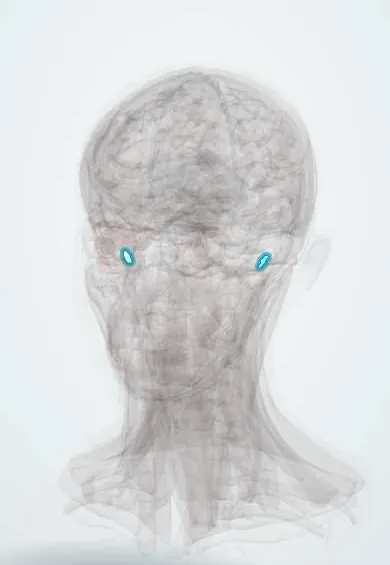
Representative model, for educational purposes only.