Conditions · Metabolism (biochemistry)
Hypercalcaemia !
Blood calcium is high, nearly always from hyperparathyroidism or cancer. It causes stones, bone pain, gut upset and confusion.
Updated 2026-11-01
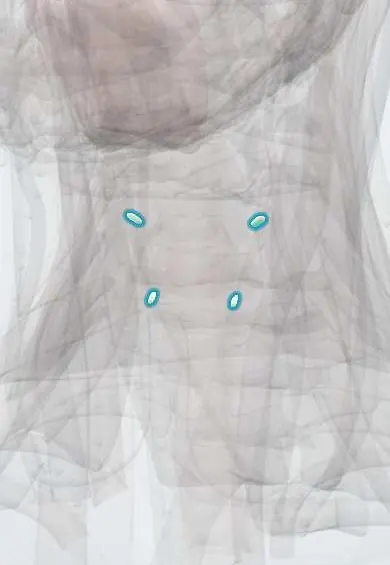
Structures involved
Tap one to see what it is and open it in 3D.
In physiology
- The ECG in potassium and calcium disorders
- Calcium regulation: PTH, vitamin D and calcitonin
- Transport in the loop of Henle
- Distal tubule and collecting duct
- Reasoning through fluid and electrolyte imbalances
- Renal handling of calcium, phosphate and magnesium
Why it happens
What it is
A high serum calcium (corrected or ionised) from excess bone resorption, gut absorption or renal reabsorption.
Who gets it
Primary hyperparathyroidism is the most common cause in outpatients and cancer in hospital patients; together they explain the vast majority of cases.
Causes
- PTH-mediated: primary hyperparathyroidism (adenoma, hyperplasia), tertiary in kidney disease, familial hypocalciuric hypercalcaemia
- Cancer: PTHrP (squamous lung, breast, kidney carcinoma), lytic bone metastases, multiple myeloma, calcitriol-producing lymphomas
- Vitamin D: supplement toxicity, granulomas (sarcoidosis, tuberculosis)
- Drugs: thiazides, lithium, excess vitamin A, milk–alkali syndrome
- Others: prolonged immobilisation, hyperthyroidism, adrenal insufficiency
Risk factors
- Postmenopausal women (hyperparathyroidism)
- Advanced cancer
- Lithium or thiazide use
- Excess calcium and vitamin D supplements
- Immobilisation
Pathophysiology
PTH or PTHrP activate osteoclasts (via RANKL) and increase tubular calcium reabsorption; calcitriol raises gut absorption. High calcium over-stabilises membranes: neuromuscular excitability falls (weakness, hyporeflexia, constipation, confusion) and the QT shortens. In the kidney it activates the calcium-sensing receptor, causes nephrogenic diabetes insipidus (polyuria and dehydration, which worsen the hypercalcaemia), stones and nephrocalcinosis. It stimulates gastrin (ulcers) and can trigger pancreatitis.
Classification
- With high or inappropriately normal PTH: hyperparathyroidism, familial hypocalciuric hypercalcaemia, lithium
- With suppressed PTH: cancer (PTHrP, metastases), vitamin D, granulomas, others
- Mild, moderate or severe per the laboratory and symptoms
Symptoms and signs
- 'Bones, stones, abdominal groans and psychic moans': bone pain, kidney stones, abdominal pain, constipation, nausea, depression and confusion
- Thirst and polyuria
- Weakness and fatigue
- Many mild cases have no symptoms
Diagnosis
- Clinical
- History of cancer, drugs, supplements and symptoms of stones or bone pain; assessment of hydration.
- Tests
- Corrected or ionised calcium, PTH (the test that splits the causes), PTHrP, 25-hydroxy and 1,25-dihydroxyvitamin D, phosphate, creatinine, urine calcium (hypercalciuria vs familial hypocalciuric), protein electrophoresis if myeloma is suspected, ECG.
- Imaging
- Sestamibi scan and neck ultrasound to locate a parathyroid adenoma; bone densitometry; renal ultrasound for stones; imaging to look for cancer when PTH is suppressed.
Treatment
- Acute
- Severe hypercalcaemia: intravenous saline rehydration as the first step
- Medical
- Halt bone resorption: intravenous bisphosphonates or denosumab; calcitonin for a fast, short effect
- Surgical
- Parathyroidectomy in symptomatic primary hyperparathyroidism or when surgical criteria are met
- Medical
- Treat the cause: corticosteroids in granulomas or lymphoma, cancer treatment, stop thiazides, lithium or supplements; dialysis in refractory cases
- Follow-up
- Monitoring of calcium, kidney function and hydration
Complications
- Acute kidney injury and nephrocalcinosis
- Kidney stones
- Arrhythmias
- Pancreatitis and peptic ulcer
- Osteoporosis and fractures (hyperparathyroidism)
- Coma
Prognosis
Primary hyperparathyroidism has a good outlook with surgery; hypercalcaemia of malignancy usually signals advanced disease.
Prevention
- Avoiding excess calcium and vitamin D supplements
- Monitoring calcium on lithium or thiazides
- Hydration and early mobilisation of immobilised patients
Test yourself
Think of the answer, then tap the question to see it.
Which test splits the causes of hypercalcaemia?
PTH: high or inappropriately normal in hyperparathyroidism; suppressed in cancer, vitamin D toxicity and granulomas.
Which substance do some tumours make to raise calcium?
PTH-related peptide (PTHrP), typical of squamous cell lung carcinoma.
Why does hypercalcaemia cause polyuria?
High calcium stops the collecting duct responding to ADH (nephrogenic diabetes insipidus).
What is the first step in treating severe hypercalcaemia?
Intravenous saline rehydration, because dehydration worsens hypercalcaemia; bone resorption is then halted.
Related conditions
- Hypocalcaemia
- Primary hyperparathyroidism
- Lung cancer
- Breast cancer
- Kidney stones (urolithiasis)
- Acute pancreatitis
Educational information, not medical advice. For any symptom, see a health professional.
Sources: Hypercalcemia: MedlinePlus Medical Encyclopedia (MedlinePlus, US National Library of Medicine, 2026); Hyperparathyroidism: MedlinePlus Medical Encyclopedia (MedlinePlus, US National Library of Medicine, 2026); Parathyroid hormone-related protein blood test: MedlinePlus Medical Encyclopedia (MedlinePlus, US National Library of Medicine, 2026); Calcium Blood Test: MedlinePlus Medical Test (MedlinePlus, US National Library of Medicine, 2026); Textbook of Biochemistry for Medical Students, 6th ed. (Jaypee Brothers Medical Publishers (Vasudevan DM, Sreekumari S, Vaidyanathan K), 2011).
Spotted a mistake?We are always improving for the community. Tell us what is wrong and our team will review it.Report a mistake
Representative model, for educational purposes only.