Conditions · Metabolism (biochemistry)
Hypocalcaemia !
Blood calcium is low, often after thyroid surgery or from lack of vitamin D; nerves become excitable with cramps and spasms.
Updated 2026-11-01
Structures involved
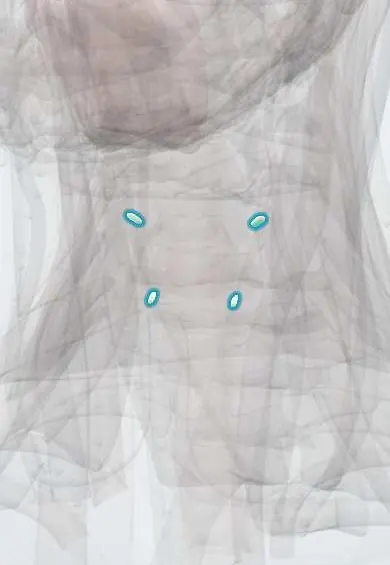
Tap one to see what it is and open it in 3D.
In biochemistry
In embryology
- Pharyngeal pouches: tonsil, thymus, parathyroids and C cells
- 22q11.2 deletion (DiGeorge): the third and fourth pouches
In physiology
- The ECG in potassium and calcium disorders
- The resting membrane potential
- Ion channels and gating
- Calcium regulation: PTH, vitamin D and calcitonin
- Phosphate and FGF-23
- Absorption of iron, calcium and vitamin B12
- Refractory periods and excitability
- Reasoning through fluid and electrolyte imbalances
- Respiratory acidosis and alkalosis
- Metabolic alkalosis and its compensation
- Renal handling of calcium, phosphate and magnesium
- Physiology of acute and chronic kidney failure
What it is
A low ionised calcium, from lack of PTH, lack of or resistance to vitamin D, or calcium being deposited or bound in excess.
Who gets it
It is common in critically ill patients and after thyroidectomy or parathyroidectomy; vitamin D deficiency and chronic kidney disease are common causes in clinic.
Causes
- Hypoparathyroidism: post-surgical (thyroidectomy), autoimmune, DiGeorge syndrome, infiltration
- Hypomagnesaemia (blocks PTH secretion and action)
- Vitamin D deficiency or resistance: little sunlight, malabsorption, kidney or liver disease
- Pseudohypoparathyroidism (PTH resistance)
- Calcium deposited or bound: acute pancreatitis, hyperphosphataemia (tumour lysis, rhabdomyolysis, kidney failure), massive transfusion (citrate), hungry bone syndrome after parathyroidectomy
- Spurious: hypoalbuminaemia (lowers total calcium with normal ionised calcium)
Risk factors
- Thyroid or parathyroid surgery
- Chronic kidney disease
- Malabsorption or bariatric surgery
- Alcoholism (hypomagnesaemia)
- Severe acute pancreatitis
Pathophysiology
PTH maintains calcium: it releases calcium from bone, increases its reabsorption in the distal tubule and activates renal 1α-hydroxylase to form calcitriol, which raises gut absorption. Without PTH or vitamin D, ionised calcium falls. Extracellular calcium stabilises sodium channels in nerve and muscle; with little calcium the firing threshold drops and paraesthesia, cramps, tetany, laryngospasm and seizures appear. In the heart the ST segment and QT lengthen. In pancreatitis, released fatty acids form soaps with calcium (saponification).
Classification
- With low PTH: hypoparathyroidism, hypomagnesaemia
- With high PTH: vitamin D deficiency, kidney disease, pseudohypoparathyroidism, hyperphosphataemia
- Acute symptomatic or chronic
Symptoms and signs
- Tingling around the mouth and in the fingers
- Cramps and carpopedal spasm
- Chvostek and Trousseau signs
- Fatigue, irritability, anxiety
- Laryngospasm and seizures when severe
- Cataracts and basal ganglia calcification in chronic forms
Diagnosis
- Clinical
- Chvostek sign (facial twitch on tapping the facial nerve) and Trousseau sign (carpal spasm on inflating the cuff); history of neck surgery.
- Tests
- Total calcium with albumin (corrected calcium) or ionised calcium, PTH, magnesium, phosphate, 25-hydroxyvitamin D, creatinine; ECG for the QT.
- Imaging
- Does not make the diagnosis; X-rays if rickets or osteomalacia is suspected.
Treatment
- Acute
- Severe or symptomatic hypocalcaemia: intravenous calcium with cardiac monitoring
- Medical
- Correct hypomagnesaemia, without which calcium will not normalise
- Medical
- Chronic: oral calcium and active vitamin D (calcitriol) in hypoparathyroidism; cholecalciferol in vitamin D deficiency; recombinant PTH in selected cases
- Follow-up
- Serial calcium, phosphate and urine calcium to avoid hypercalciuria and stones
Drugs for this condition
Complications
- Laryngospasm
- Seizures
- Arrhythmias and heart failure
- Cataracts and brain calcification (chronic)
- Nephrocalcinosis from treatment
Prognosis
Good in corrected acute forms; permanent hypoparathyroidism needs lifelong treatment and follow-up.
Prevention
- Calcium checks after thyroid surgery
- Vitamin D supplements in at-risk groups
- Monitoring phosphate and calcium during tumour lysis prophylaxis
Test yourself
Think of the answer, then tap the question to see it.
Why does hypocalcaemia cause tetany?
With little extracellular calcium the sodium-channel threshold falls and nerves and muscles fire easily.
Which test must always be measured with total calcium?
Albumin (or ionised calcium directly), because hypoalbuminaemia lowers total calcium without changing ionised calcium.
Why does hypomagnesaemia cause hypocalcaemia?
Magnesium is needed to secrete PTH and for tissues to respond to it.
Which operation is the most common cause of hypoparathyroidism?
Thyroidectomy, through injury to or accidental removal of the parathyroids.
Related conditions
- Hypercalcaemia
- Acute pancreatitis
- Rickets and osteomalacia
- Chronic kidney disease
- Tumour lysis syndrome
- Thyroid cancer (papillary)
Educational information, not medical advice. For any symptom, see a health professional.
Sources: Hypoparathyroidism: MedlinePlus Medical Encyclopedia (MedlinePlus, US National Library of Medicine, 2026); Calcium Blood Test: MedlinePlus Medical Test (MedlinePlus, US National Library of Medicine, 2026); Parathyroid Hormone (PTH) Test: MedlinePlus Medical Test (MedlinePlus, US National Library of Medicine, 2026); Magnesium Blood Test: MedlinePlus Medical Test (MedlinePlus, US National Library of Medicine, 2026); Textbook of Biochemistry for Medical Students, 6th ed. (Jaypee Brothers Medical Publishers (Vasudevan DM, Sreekumari S, Vaidyanathan K), 2011).
Spotted a mistake?We are always improving for the community. Tell us what is wrong and our team will review it.Report a mistake
Representative model, for educational purposes only.