
Hyperchloraemia (high blood chloride)
Chloride in the blood is too high, most often from large volumes of saline or from losing bicarbonate; it makes the blood acidic and may harm the kidneys.
What it is
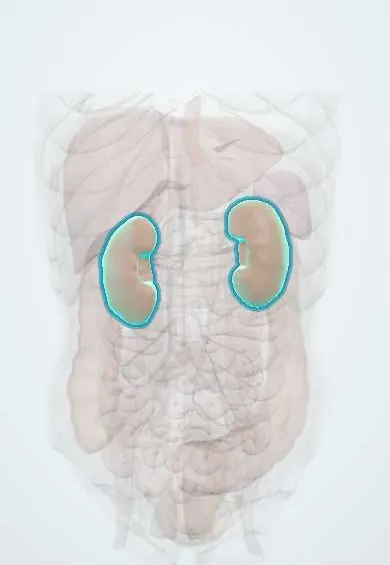
A serum chloride above the reference range, usually relative to sodium. It commonly comes with a normal anion gap metabolic acidosis, from chloride-rich fluids, gastrointestinal bicarbonate loss or renal causes such as renal tubular acidosis.
Who gets it
Chloride abnormalities are found in about a quarter of patients in critical care. Iatrogenic hyperchloraemia is common during resuscitation of sepsis and shock with chloride-rich crystalloids.
Causes
- Large volumes of chloride-rich crystalloid, mainly 0.9% saline, during resuscitation
- Gastrointestinal bicarbonate loss: diarrhoea, ileostomy, enteric fistulas
- Renal: renal tubular acidosis types 1, 2 and 4, carbonic anhydrase inhibitors (acetazolamide), early kidney failure and tubulointerstitial disease, hypoaldosteronism
- Urinary diversion into bowel (ureterosigmoidostomy, ureteroileal conduit), where the colon trades bicarbonate for urinary chloride
- Chloride-containing infusions: ammonium chloride, arginine or lysine hydrochloride, calcium chloride
Risk factors
- Sepsis or shock resuscitated with large volumes of saline
- Critical illness with high fluid turnover
- Severe or prolonged diarrhoea
- Urinary diversion through bowel
- Chronic kidney disease
Pathophysiology
Chloride rises relative to sodium (chloride added, or bicarbonate lost and replaced by retained chloride) → the strong ion difference falls → water dissociates more, so free H⁺ rises and bicarbonate falls → a metabolic acidosis with a normal anion gap → in the kidney, high chloride delivery to the macula densa activates tubuloglomerular feedback and chloride sensitises afferent arteriolar smooth muscle to contract → renal vasoconstriction and a fall in GFR, plausibly linking chloride load to acute kidney injury → experimental hyperchloraemic acidification also appears pro-inflammatory.
Classification
- Iatrogenic (fluid-related): saline and other chloride-rich infusions
- Gastrointestinal bicarbonate loss
- Renal: renal tubular acidosis, carbonic anhydrase inhibitors, early CKD, hypoaldosteronism
- Urinary diversion through bowel
Symptoms and signs
- Usually no symptoms of its own; findings are those of the cause (diarrhoea, shock, kidney disease)
- With marked acidosis: nausea, vomiting, malaise and deep, regular breathing (hyperpnoea)
Diagnosis
- Clinical
- Review the fluid chart (volume and type of crystalloid), stool or stoma output, drugs such as acetazolamide and any urinary diversion; judge volume status.
- Tests
- Electrolytes with chloride, sodium and bicarbonate; blood gas and anion gap (a high gap means another acid is present too); serial chloride during fluid therapy; urine anion gap when the cause is not obviously fluid or gut loss.
- Imaging
- No imaging is needed for the chloride itself; imaging is used only for the cause, such as an enteric fistula.
Differential diagnosis
- High anion gap acidosis (lactate, ketones), which can coexist with hyperchloraemia
- Renal tubular acidosis versus diarrhoea (urine anion gap)
- Recovery phase of diabetic ketoacidosis, which often becomes a normal-gap, high-chloride acidosis
- Low chloride with metabolic alkalosis, its mirror image
0.9% saline versus balanced crystalloids
| Feature | 0.9% saline | Balanced crystalloids (for example Ringer's lactate) |
|---|---|---|
| Chloride content | Well above plasma | Closer to plasma; part of the anion is a metabolisable buffer such as lactate |
| Acid–base effect of large volumes | Hyperchloraemic, normal anion gap acidosis | Less acidosis; a chloride-restrictive strategy reduced metabolic acidosis and severe hyperchloraemia |
| Kidney | Chloride-induced renal vasoconstriction; chloride load linked to AKI | A chloride-restrictive strategy was associated with less AKI and less renal replacement therapy |
| Critically ill and sepsis | Higher mortality than balanced fluids in septic patients in the SMART trial | Small overall benefit, clearest in sepsis; recommended by ESICM 2024 and Surviving Sepsis 2021 (weak, low-certainty evidence) |
| Traumatic brain injury | Favoured | Two meta-analyses found higher mortality than with saline |
Goal of treatment
Avoid unnecessary chloride load, treat the cause, and restore bicarbonate when it has been lost.
Treatment
- Medical
- Large-volume resuscitation in most critically ill patients, especially sepsis: prefer balanced crystalloids over 0.9% saline, as ESICM 2024 and Surviving Sepsis 2021 suggest (weak recommendations).
- Medical
- Traumatic brain injury: use saline rather than balanced crystalloids.
- Medical
- Fluid stewardship: give fluid as a drug, reassess after each bolus and stop chloride-rich fluids once the deficit is corrected.
- Medical
- Treat the cause: rehydrate and replace bicarbonate in gut loss; alkali in renal tubular acidosis; review acetazolamide and other chloride-containing infusions.
- Follow-up
- Monitor chloride, bicarbonate, creatinine and urine output during large-volume fluid therapy.
Complications
- Normal anion gap metabolic acidosis
- Renal vasoconstriction, reduced GFR and acute kidney injury
- Possible pro-inflammatory effects in sepsis (experimental data)
- Association with higher mortality in sepsis and critical illness (observational data)
Common traps
- Normal saline is the physiological fluid: its chloride is well above plasma, and large volumes narrow the strong ion difference and cause a normal anion gap acidosis
- A falling bicarbonate during saline resuscitation means worsening shock: if lactate and the anion gap are not rising, it is often hyperchloraemic acidosis caused by the fluid itself
- Balanced crystalloids are better for every patient: the benefit is small, and in traumatic brain injury two meta-analyses found higher mortality with balanced fluids than with saline
- High chloride is only a laboratory number: chloride reaching the macula densa constricts the afferent arteriole and lowers GFR, and chloride-restrictive fluid strategies were linked to less AKI
Prognosis
Mild iatrogenic hyperchloraemia resolves when chloride-rich fluids stop. In septic patients, a chloride that keeps rising (by 5 mEq/L or more over 72 hours) was associated with higher hospital mortality in observational data; whether chloride itself causes this is not proven.
Prevention
- Prefer balanced crystalloids for large-volume resuscitation, except in traumatic brain injury
- Reassess fluid needs often and stop fluids that no longer help
- Track chloride and bicarbonate daily in patients receiving large fluid volumes
Test yourself
Think of the answer, then tap the question to see it.
Why does large-volume saline cause acidosis?
Its chloride is far above plasma, so it narrows the strong ion difference (and dilutes bicarbonate), raising free H⁺ with a normal anion gap.
How can a high chloride load reduce GFR?
Chloride at the macula densa triggers tubuloglomerular feedback and constricts the afferent arteriole, lowering glomerular filtration.
In which patient group is saline preferred over balanced crystalloids, and why?
Traumatic brain injury: meta-analyses found higher mortality with balanced fluids in these patients.
A septic patient's bicarbonate falls from 22 to 16 mmol/L after several litres of saline; lactate is normal and the anion gap unchanged. What is the likely cause and response?
Hyperchloraemic acidosis from the saline: switch to a balanced crystalloid if more fluid is needed and reassess whether more fluid is needed at all.
Connections
Educational information, not medical advice. For any symptom, see a health professional.
Sources: Hyperchloraemia in sepsis (Annals of Intensive Care, 2018); Balanced crystalloids versus saline for critically ill patients: an overview of systematic reviews (Critical Care Science, 2026); Metabolic Acidosis - Nephrology - MSD Manual Professional Edition (MSD Manual Professional Edition, 2026).
Spotted a mistake?We are always improving for the community. Tell us what is wrong and our team will review it.Report a mistake
Representative model, for educational purposes only.