
Intestinal stomas: colostomy and ileostomy
A stoma brings the bowel out through the belly wall so stool drains into a bag. Knowing which gut segment it is predicts most of its problems.
What it is
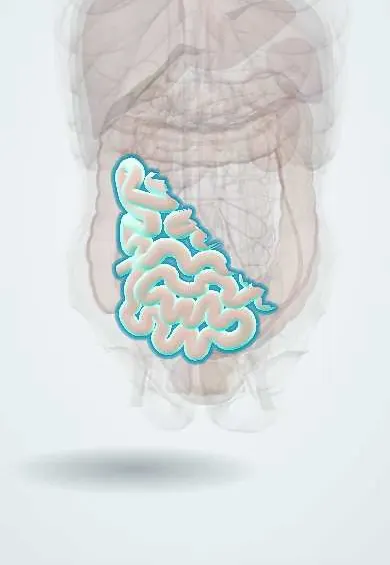
A surgically made opening of the bowel onto the skin of the abdomen. A colostomy brings out the colon and an ileostomy the end of the small bowel; either can be temporary or permanent, and an end or a loop stoma.
Who gets it
Stomas are made in planned and emergency colorectal surgery: rectal and colon cancer, complicated diverticulitis, inflammatory bowel disease, obstruction, trauma and perforation. Many temporary stomas are never reversed, and parastomal hernia is the commonest late problem, affecting a large share of people with a permanent colostomy.
Causes
- Diversion to protect a low rectal or ileal pouch anastomosis (temporary loop ileostomy)
- Emergency surgery when joining the bowel is unsafe: perforated diverticulitis with peritonitis, obstruction, ischaemia, trauma, an unstable patient (Hartmann procedure)
- Permanent end colostomy after abdominoperineal resection of a very low rectal cancer
- End ileostomy after total colectomy or proctocolectomy for ulcerative colitis, Crohn disease or familial polyposis
- Diversion for complex perianal disease, fistulas, faecal incontinence or pelvic radiation injury
Risk factors
- For parastomal hernia: obesity, stoma brought out lateral to the rectus muscle, large trephine, emergency surgery, older age, chronic cough, malnutrition, steroids
- For prolapse: loop transverse colostomy, emergency stoma, raised abdominal pressure
- For retraction and ischaemia: obesity, short or tense mesentery, emergency surgery, poor blood supply
- For high output: ileostomy (especially soon after surgery), short remaining small bowel, intra-abdominal sepsis, Crohn disease, some drugs
- For skin problems: poor siting near folds or scars, a flush ileostomy, ill-fitting appliance
Pathophysiology
Ileostomy: effluent leaves before the colon, which normally reabsorbs most of the water and sodium → large losses of water, sodium and magnesium → dehydration, low urine output, acute kidney injury, low magnesium and potassium; the effluent also carries active digestive enzymes → contact with skin causes rapid chemical dermatitis → so an ileostomy is made with a spout that pushes effluent straight into the bag. Every stoma is an opening through the abdominal wall → chronic stretching of the fascial defect, especially through weak lateral muscles → parastomal hernia and prolapse over months and years.
Classification
- By segment: ileostomy (right iliac fossa, liquid output, spouted) versus colostomy (usually left iliac fossa for sigmoid or descending colon, formed stool, flush); transverse colostomy is less used
- By construction: end stoma (one opening, the distal bowel resected, closed or brought out separately as a mucous fistula) versus loop stoma (a bowel loop opened on the skin with two openings, a functioning proximal and a non-functioning distal one; diverting and easier to close)
- Hartmann procedure: resection of the sigmoid, end colostomy and closed rectal stump; reversal later is major surgery and many are never reversed
- By intent: temporary (planned reversal) or permanent
- High-output stoma: output persistently above about 1.5–2 litres a day, or enough to cause dehydration
- Complications: early (ischaemia and necrosis, retraction, mucocutaneous separation, high output, peristomal skin damage) and late (parastomal hernia, prolapse, stenosis, retraction, peristomal varices, skin disease)
Symptoms and signs
- Normal stoma: moist, pink to red, slightly raised (an ileostomy spout stands well above the skin), painless to touch
- Ischaemia: dusky, purple or black mucosa in the first days
- Retraction: stoma at or below skin level, repeated leaks and sore skin
- High output: very watery output, thirst, dizziness on standing, low urine output, cramps
- Parastomal hernia: bulge around the stoma, worse on standing or coughing, appliance leaks, dragging discomfort
- Prolapse: the bowel telescopes out, sometimes many centimetres long, with swelling
Diagnosis
- Clinical
- Look at colour, height, size and the skin around it, standing and lying, and with a cough; feel for a hernia; measure output in a chart. A dark stoma early after surgery is checked for depth of ischaemia by shining a light into a lubricated tube inserted into the stoma. A gentle digital examination checks for stenosis.
- Tests
- Electrolytes (sodium, potassium, magnesium), urea and creatinine, and urine sodium (a low urine sodium means the body is short of salt) in high output; full blood count and inflammatory markers if infection or ischaemia is suspected; stool tests for infection when output rises suddenly.
- Imaging
- CT of the abdomen with the patient straining shows a parastomal hernia and its contents and confirms obstruction or strangulation. Contrast study through the distal limb (or the rectal stump) before a planned reversal checks that the anastomosis has healed and the distal bowel is open. Ultrasound can show a hernia at the bedside.
Differential diagnosis
- Parastomal hernia versus prolapse versus a bulging lipoma or abscess
- High output from the stoma itself versus infection (Clostridioides difficile), recurrent Crohn disease or intra-abdominal sepsis
- Peristomal skin damage from leaking effluent versus allergy to the appliance, infection (candida) or peristomal pyoderma gangrenosum
- Bleeding from mucosal trauma versus peristomal varices or recurrent tumour
Which stoma is it, and what will it do?
| Stoma | Usual site and look | Output | Typical reason | Reversal |
|---|---|---|---|---|
| End colostomy | Left iliac fossa; flush, one opening | Formed stool | Abdominoperineal resection for low rectal cancer | Permanent |
| Hartmann end colostomy | Left iliac fossa; one opening, rectal stump closed inside | Formed stool | Emergency sigmoid resection for perforated diverticulitis or obstruction | Possible but major surgery; often never done |
| Loop colostomy | Transverse or sigmoid; two openings, often large | Semi-formed stool | Diversion for an obstructing tumour or perianal problems | Local closure; prolapse is common |
| End ileostomy | Right iliac fossa; spouted, one opening | Liquid, enzyme-rich | Colectomy for ulcerative colitis, Crohn disease or familial polyposis | Permanent, or later pouch surgery |
| Loop ileostomy | Right iliac fossa; spouted, two openings | Liquid, highest early risk of dehydration | Protects a low rectal or ileal pouch anastomosis | Planned local closure once the join has healed |
Goal of treatment
Choose the right stoma and site, keep it healthy and well fitted, protect the skin, prevent dehydration from high output, treat complications early and support the person to live normally with it, reversing it when planned and safe.
Treatment
- Procedure
- Preoperative siting by a stoma nurse: marked on a flat area within the rectus abdominis, away from folds, scars, the umbilicus, bony prominences and the belt line, visible to the patient and checked sitting, standing and lying.
- Surgical
- Construction: ileostomy everted to form a spout, colostomy usually flush, brought through the rectus muscle with a trephine no larger than needed; prophylactic mesh at the time of a permanent colostomy is used in some centres to reduce parastomal hernia.
- Medical
- High output: oral rehydration solution with enough sodium, restriction of plain water and other low-salt drinks, antimotility drugs such as loperamide, acid suppression with a proton pump inhibitor and, in selected cases, codeine; correct magnesium and potassium, and treat any cause (infection, sepsis, Crohn disease).
- Acute
- Dehydration or acute kidney injury from high output: intravenous fluids and electrolytes, a strict input and output chart and daily weights.
- Surgical
- Reoperation for necrosis below the fascia, strangulated hernia or an irreducible ischaemic prolapse; elective repair (usually with mesh) or re-siting for symptomatic hernia, recurrent prolapse, stenosis or retraction; stoma reversal once the patient and the distal bowel are ready.
- Conservative
- Prolapse: lying flat and gentle manual reduction, with sugar or cold compresses to reduce oedema first; parastomal hernia: support belt and a flexible appliance when surgery is not needed or not safe.
- Follow-up
- Nursing and stoma therapy (see the nursing page on ostomy care): appliance sizing and changes, skin barrier products, convex appliances for retraction, output charts, diet and fluid teaching, and emotional support; early review after discharge is when most problems are caught.
Complications
- Peristomal skin damage (the most common problem)
- Ischaemia and necrosis, mucocutaneous separation
- Retraction and stenosis
- High output with dehydration, acute kidney injury and low magnesium, sodium and potassium
- Parastomal hernia with obstruction or strangulation
- Prolapse, sometimes ischaemic
- Peristomal varices in portal hypertension; kidney stones and gallstones with long-term ileostomy
- Body image problems, sexual dysfunction, depression and social isolation
Common traps
- A patient with a high-output ileostomy should drink more water: plain water pulls sodium into the bowel and increases losses; oral rehydration solution with salt and limiting plain fluids is the fix
- A loop stoma has one opening like an end stoma: a loop has two openings, a functioning proximal one and a non-functioning distal one, which matters when you give contrast or examine it
- A Hartmann colostomy is temporary, so it will be closed: reversal is a major operation and many are never reversed; counsel the patient honestly
- A dusky stoma on day one is just bruising: check how deep the ischaemia goes; necrosis below the fascia needs reoperation
- An ileostomy can be made flush like a colostomy: its enzyme-rich liquid would burn the skin; it needs a spout
Prognosis
Most people adapt well and return to work, sport and normal relationships, especially with good preoperative counselling and stoma nurse support. Outcome depends on the underlying disease. Temporary loop ileostomies are usually closed within months; Hartmann colostomies are reversed far less often, mainly in younger and fitter patients.
Prevention
- Preoperative siting and counselling for every planned stoma, and whenever possible before emergencies
- Bringing the stoma through the rectus muscle with a tension-free, well-perfused bowel end
- Prophylactic mesh for permanent colostomy in selected patients
- Early output charts after ileostomy and teaching about salt and fluid
- Weight control, treating chronic cough and avoiding heavy lifting in the first months
Test yourself
Think of the answer, then tap the question to see it.
Why is an ileostomy made with a spout while a sigmoid colostomy is usually flush?
Ileostomy effluent is liquid and rich in digestive enzymes that quickly damage skin; the spout delivers it straight into the bag. Colostomy stool is formed and much less corrosive.
Day 5 after a loop ileostomy: output is very high, the patient is dizzy and creatinine is rising. What is happening and what helps?
High output with dehydration and prerenal acute kidney injury. Give intravenous fluids and electrolytes (including magnesium), then oral rehydration solution, limit plain water, add antimotility and acid-suppressing drugs; find the cause.
What is a Hartmann procedure and when is it chosen?
Resection of the diseased sigmoid with an end colostomy and a closed rectal stump, chosen when joining the bowel is unsafe: perforated diverticulitis with peritonitis, obstruction or an unstable patient.
Why is a stoma brought through the rectus abdominis muscle?
The muscle supports the opening and lowers the risk of parastomal hernia and prolapse compared with a site lateral to it.
A patient with cirrhosis and an old ileostomy bleeds repeatedly from the skin edge of the stoma. What is the likely cause?
Peristomal varices: portal hypertension opens connections between mesenteric and abdominal wall veins at the stoma. Treat the portal hypertension (for example with a shunt) rather than repeatedly suturing.
Why it happens
Connections
Educational information, not medical advice. For any symptom, see a health professional.
Sources: Intestinal Stoma (StatPearls (NCBI Bookshelf), 2023); Colostomy Care (StatPearls (NCBI Bookshelf), 2023); Ostomy | MedlinePlus (MedlinePlus (U.S. National Library of Medicine), 2025).
Spotted a mistake?We are always improving for the community. Tell us what is wrong and our team will review it.Report a mistake
Representative model, for educational purposes only.