
Hyperphosphataemia
Too much phosphate in the blood. It pulls calcium out of the blood into the tissues, causing low calcium now and hardened vessels later.
What it is
A serum phosphate above the normal range, in adults usually above about 4.5 mg/dL (1.45 mmol/L); children normally run higher. Chronic kidney disease is by far the commonest cause; acute forms come from cell breakdown or a large phosphate load.
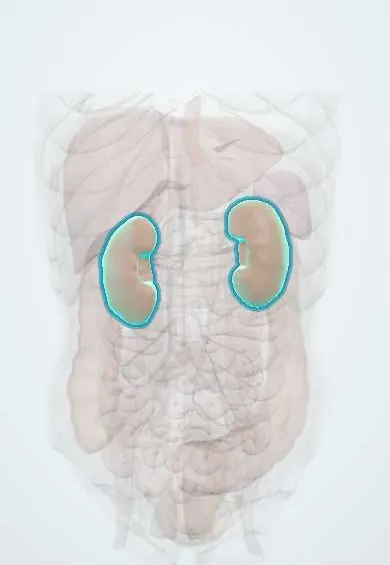
See it in 3D
Who gets it
Very common in advanced chronic kidney disease and in people on dialysis, where it is one of the main drivers of vascular calcification and cardiovascular death. Acute cases appear with tumour lysis, rhabdomyolysis and phosphate-containing enemas or bowel preparations.
Causes
- Reduced excretion: chronic kidney disease, acute kidney injury
- Increased tubular reabsorption: hypoparathyroidism and pseudohypoparathyroidism, acromegaly, vitamin D excess
- Shift out of cells: tumour lysis syndrome, rhabdomyolysis, haemolysis, untreated diabetic ketoacidosis or lactic acidosis
- Increased intake: phosphate enemas and bowel preparations, phosphate-rich processed foods in kidney disease
- Pseudohyperphosphataemia: haemolysed sample, high paraproteins or lipids interfering with the assay
Risk factors
- Chronic kidney disease, especially on dialysis
- Chemotherapy for bulky, fast-growing tumours
- Crush injury or prolonged immobilisation
- Phosphate enemas in older adults or dehydrated patients
- Diet high in processed foods with phosphate additives
Pathophysiology
When phosphate rises, it binds calcium and calcium phosphate precipitates in soft tissues, so ionised calcium falls. High phosphate also suppresses activation of vitamin D in the kidney, so less calcium is absorbed. Low calcium and high phosphate stimulate parathyroid hormone, and the bone hormone FGF-23 rises. Over years in kidney disease this drives secondary hyperparathyroidism, bone disease and calcification of vessels, valves and skin.
Classification
- Acute: tumour lysis, rhabdomyolysis, phosphate load; risk of symptomatic hypocalcaemia and acute phosphate nephropathy
- Chronic: chronic kidney disease; risk of mineral and bone disorder and vascular calcification
- Spurious (pseudohyperphosphataemia): a laboratory artefact
Symptoms and signs
- Often none on its own
- Signs of low calcium: perioral tingling, cramps, carpopedal spasm, tetany
- Itching (in chronic kidney disease)
- Bone and joint pain in long-standing disease
- Painful skin lesions in calciphylaxis
Diagnosis
- Clinical
- Look for kidney disease, a recent phosphate load, cell breakdown (chemotherapy, crush injury, severe exercise) and symptoms of hypocalcaemia.
- Tests
- Serum phosphate repeated on a non-haemolysed sample, calcium (ionised if possible), creatinine, potassium, uric acid and creatine kinase when cell breakdown is suspected; parathyroid hormone and vitamin D in chronic disease. ECG if calcium is low.
- Imaging
- Not needed for the diagnosis; plain films or CT may show vascular or soft-tissue calcification in chronic disease.
Differential diagnosis
- Pseudohyperphosphataemia from a haemolysed sample or paraprotein interference
- Hypocalcaemia from other causes (vitamin D deficiency, hypomagnesaemia)
- Normal higher phosphate in growing children
Four ways to a high phosphate
| Mechanism | Examples | Clue |
|---|---|---|
| Kidney cannot excrete it | Chronic kidney disease, acute kidney injury | High creatinine; chronic course |
| Kidney holds on to it | Hypoparathyroidism, pseudohypoparathyroidism, vitamin D excess | Normal creatinine; abnormal parathyroid hormone or vitamin D |
| Cells release it | Tumour lysis, rhabdomyolysis, haemolysis | High potassium, uric acid or creatine kinase; sudden onset |
| Load from outside | Phosphate enemas, bowel preparations | Recent procedure or laxative; older or dehydrated patient |
| Not real | Haemolysed sample, paraproteins, lipids | No cause found; normal on repeat |
Goal of treatment
Find and treat the cause, correct dangerous hypocalcaemia carefully, lower phosphate, and in chronic kidney disease keep phosphate near normal to protect bones and vessels.
Treatment
- Acute
- Treat the cause (for example, prevention and treatment of tumour lysis) and give intravenous fluids when kidney function allows, to increase phosphate excretion.
- Procedure
- Dialysis for severe or symptomatic hyperphosphataemia, especially with kidney failure or symptomatic hypocalcaemia.
- Acute
- Calcium is given only for symptomatic hypocalcaemia, because extra calcium in severe hyperphosphataemia can precipitate as calcium phosphate in tissues.
- Medical
- In chronic kidney disease: phosphate binders taken with meals, adequate dialysis and control of parathyroid hormone with vitamin D analogues or calcimimetics.
- Lifestyle
- Dietary advice to limit phosphate, especially additives in processed foods and soft drinks, with a renal dietitian.
Complications
- Symptomatic hypocalcaemia and tetany
- Acute phosphate nephropathy and acute kidney injury
- Secondary hyperparathyroidism and renal bone disease
- Vascular and valvular calcification, cardiovascular events
- Calciphylaxis
Common traps
- Mistaken belief: low calcium with high phosphate should be corrected quickly with calcium. Correction: extra calcium can precipitate in tissues; give it only for symptoms, and lower phosphate first.
- Mistaken belief: a high phosphate with normal kidneys is always real. Correction: a haemolysed sample, paraproteins or high lipids can falsely raise it; repeat before acting.
- Mistaken belief: phosphate enemas and bowel preparations are harmless. Correction: in older, dehydrated or kidney patients they can cause severe hyperphosphataemia and acute phosphate nephropathy.
- Mistaken belief: in kidney disease high phosphate only harms bone. Correction: vascular and valve calcification make it a cardiovascular problem.
Prognosis
Acute cases resolve with treatment of the cause. In chronic kidney disease persistent hyperphosphataemia is linked to higher cardiovascular and overall mortality.
Prevention
- Avoid phosphate enemas and bowel preparations in kidney impairment, dehydration and older adults
- Prevent tumour lysis in high-risk chemotherapy with hydration and monitoring
- Early dietary and binder treatment in chronic kidney disease
Test yourself
Think of the answer, then tap the question to see it.
Why do the symptoms of hyperphosphataemia look like those of hypocalcaemia?
Phosphate binds calcium and precipitates it in tissues, and also reduces vitamin D activation, so ionised calcium falls and causes tingling, cramps and tetany.
Why is calcium given cautiously when phosphate is very high?
Adding calcium to blood rich in phosphate can precipitate calcium phosphate in vessels and tissues, including the kidney.
Which oncology emergency causes acute hyperphosphataemia with high potassium and uric acid?
Tumour lysis syndrome, when chemotherapy breaks down many tumour cells and releases their contents.
Why does hyperphosphataemia raise cardiovascular risk in chronic kidney disease?
It drives calcification of arteries and heart valves, along with secondary hyperparathyroidism.
In endocrinology
Connections
Educational information, not medical advice. For any symptom, see a health professional.
Sources: Hyperphosphatemia (StatPearls (NCBI Bookshelf), 2023).
Spotted a mistake?We are always improving for the community. Tell us what is wrong and our team will review it.Report a mistake
Representative model, for educational purposes only.