Conditions · Metabolism (biochemistry)
I-cell disease (mucolipidosis II) !
In I-cell disease lysosomal enzymes miss their shipping tag and leave the cell; coarse features and bone disease are present from birth.
Updated 2026-11-01
Structures involved
Tap one to see what it is and open it in 3D.
In biochemistry
- Cell organelles and their metabolism
- Lysosomal storage diseases
- Glycosaminoglycans (mucopolysaccharides)
- Mannose 6-phosphate tagging (sending enzymes to the lysosome)
- Glycoproteins and protein glycosylation (N- and O-linked)
- Protein targeting and signal sequences
In histology
In physiology
What it is
An autosomal recessive mucolipidosis caused by GlcNAc-1-phosphotransferase deficiency (GNPTAB gene): lysosomal hydrolases do not receive mannose 6-phosphate and are secreted instead of reaching the lysosome.
Who gets it
It is rare; estimated at about 1 in 100,000 to 400,000 people worldwide.
Causes
- Biallelic variants of the GNPTAB gene (autosomal recessive)
Risk factors
- Carrier parents or an affected sibling
- Consanguinity
Pathophysiology
Golgi GlcNAc-1-phosphotransferase starts the mannose 6-phosphate tag on lysosomal hydrolases. Without it, receptors do not capture the enzymes, which leave into plasma (where they are very high) and are missing inside the lysosomes of fibroblasts and other mesenchymal cells. GAGs, oligosaccharides and lipids all accumulate in large inclusions (I-cells). Hepatocytes and leukocytes use other routes and are less affected.
Classification
- Mucolipidosis II (I-cell disease): no activity, prenatal or neonatal onset
- Mucolipidosis III alpha/beta (pseudo-Hurler): residual activity, childhood onset and a milder course
Symptoms and signs
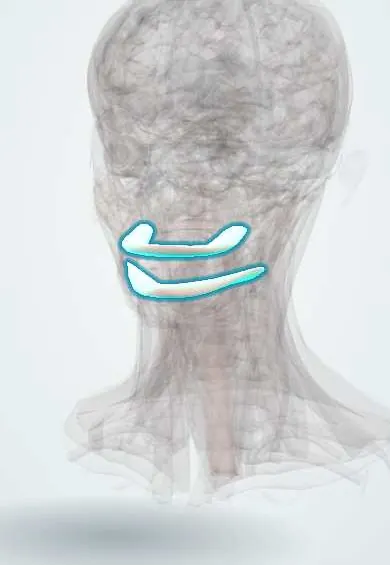
- Coarse facial features from birth
- Very thick gums (gingival hyperplasia)
- Short stature and slow growth
- Stiff joints, hip dislocation and clubfoot
- Hernias and thick skin
- Repeated respiratory infections
- Delayed motor and speech development
Diagnosis
- Clinical
- A newborn or infant with coarse features, gingival hyperplasia, stiff joints and skeletal changes, usually with clear corneas.
- Tests
- Activity of several lysosomal hydrolases very high in plasma and low in fibroblasts; urinary glycosaminoglycans normal or mildly raised; urinary oligosaccharides; GNPTAB gene testing; inclusions in cultured fibroblasts.
- Imaging
- X-rays with dysostosis multiplex, osteopenia and, in newborns, rickets- or hyperparathyroidism-like changes; echocardiogram with thickened valves.
Treatment
- Conservative
- No specific treatment exists; supportive care of the airway, nutrition and infections.
- Surgical
- Orthopaedic surgery, hernia repair and airway procedures as needed.
- Rehabilitation
- Physiotherapy, occupational and speech therapy.
- Follow-up
- Cardiac, respiratory, orthopaedic and hearing follow-up; genetic counselling for the family.
Complications
- Respiratory failure from a narrow airway and stiff chest
- Valve disease and heart failure
- Recurrent pneumonia
- Spinal cord compression
Prognosis
Most children with mucolipidosis II die in the first decade, mainly from cardiorespiratory complications.
Test yourself
Think of the answer, then tap the question to see it.
Which enzyme is missing in I-cell disease?
Golgi GlcNAc-1-phosphotransferase (GNPTAB gene).
Which laboratory finding is typical of I-cell disease?
Lysosomal hydrolases very high in plasma and low inside cells.
Which oral sign points to I-cell disease rather than Hurler syndrome?
Gingival hyperplasia, present from very early on.
Why are the cells in this disease called "I-cells"?
For the large inclusions (inclusion cells) seen in fibroblasts.
Related conditions
- Hurler syndrome (mucopolysaccharidosis type I)
- Developmental dysplasia of the hip
- Clubfoot (talipes equinovarus)
- Inguinal hernia
Educational information, not medical advice. For any symptom, see a health professional.
Sources: Mucolipidosis II alpha/beta: MedlinePlus Genetics (MedlinePlus, US National Library of Medicine, 2026); GNPTAB gene: MedlinePlus Genetics (MedlinePlus, US National Library of Medicine, 2026); Textbook of Biochemistry for Medical Students, 6th ed. (Jaypee Brothers Medical Publishers (Vasudevan DM, Sreekumari S, Vaidyanathan K), 2011).
Spotted a mistake?We are always improving for the community. Tell us what is wrong and our team will review it.Report a mistake
Representative model, for educational purposes only.