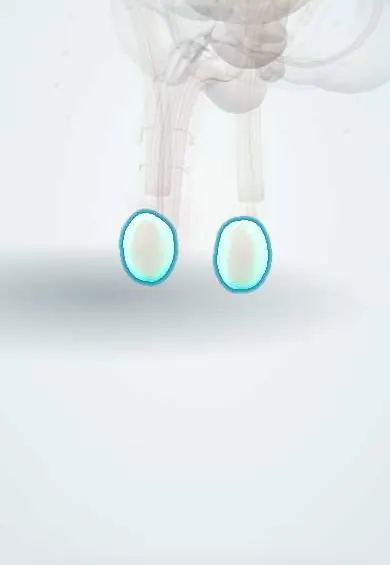
Male hypogonadism !
The testes make too little testosterone or sperm, from a testicular problem or a pituitary signal problem. It lowers libido, energy and bone strength.
Updated 2026-11-01
Structures involved
Tap one to see what it is and open it in 3D.
In embryology
Why it happens
- Sex chromosome disorders: Klinefelter and Turner
- Genomic imprinting: Prader–Willi and Angelman
- The male gonadal axis and spermatogenesis
- Testosterone and its actions
- Testis: seminiferous tubules, Sertoli and Leydig cells, spermatogenesis
What it is
A clinical syndrome of testosterone deficiency, impaired sperm production, or both. Primary (hypergonadotropic) hypogonadism is due to testicular failure with high LH and FSH; secondary (hypogonadotropic) hypogonadism is due to hypothalamic or pituitary disease with low or inappropriately normal LH and FSH.
Who gets it
Common in older men and strongly associated with obesity and type 2 diabetes, which are increasing in Colombia and Latin America. Klinefelter syndrome is the most common genetic cause of primary hypogonadism and is often diagnosed late, during evaluation for infertility.
Causes
- Primary: Klinefelter syndrome (47,XXY), cryptorchidism, mumps orchitis, testicular trauma or torsion, chemotherapy or radiotherapy
- Secondary: Kallmann syndrome (with loss of smell), pituitary tumours, hyperprolactinaemia, hypopituitarism, haemochromatosis
- Functional: obesity, chronic illness, opioids, glucocorticoids, anabolic steroid use and excessive exercise or undernutrition
- Age-related decline in testosterone (late-onset hypogonadism)
Risk factors
- Obesity, metabolic syndrome and type 2 diabetes
- Older age
- Chronic opioid, glucocorticoid or anabolic steroid use
- History of undescended testis, orchitis, testicular cancer treatment or pituitary disease
Pathophysiology
GnRH from the hypothalamus drives pituitary LH, which stimulates Leydig cells to make testosterone, and FSH, which with intratesticular testosterone supports spermatogenesis in Sertoli cells. Damage at any level reduces testosterone; the site is identified by whether LH and FSH rise (testicular failure) or not (central cause).
Classification
- Primary (testicular): high LH and FSH
- Secondary (hypothalamic or pituitary): low or normal LH and FSH
- By onset: before puberty (eunuchoid proportions, absent puberty) or after puberty
Symptoms and signs
- Low libido and erectile dysfunction
- Fatigue, low mood and reduced muscle mass and strength
- Infertility and small or soft testes
- Reduced body and facial hair; gynaecomastia
- Before puberty: delayed or absent puberty, high-pitched voice, long arms and legs
- Osteoporosis and low-trauma fractures
Diagnosis
- Clinical
- Symptoms plus examination of testicular volume and consistency, body hair, gynaecomastia, body proportions and sense of smell.
- Tests
- Two early-morning fasting total testosterone measurements; then LH and FSH to separate primary from secondary. Prolactin, iron studies and other pituitary hormones in secondary forms; karyotype when Klinefelter is suspected; semen analysis for fertility.
- Imaging
- Pituitary MRI when the cause is central and testosterone is very low or prolactin is raised; scrotal ultrasound for a mass; bone densitometry.
Differential diagnosis
- Transient low testosterone from acute illness or sleep deprivation
- Depression and hypothyroidism (fatigue, low libido)
- Erectile dysfunction of vascular or neurogenic origin
- Androgen insensitivity syndrome
- Low sex hormone-binding globulin with normal free testosterone (obesity)
Goal of treatment
Correct the underlying cause, restore testosterone to the normal range to relieve symptoms and protect bone, and preserve or restore fertility when it is desired.
Treatment
- Lifestyle
- Weight loss, exercise and stopping opioids or anabolic steroids where possible, which can restore function in functional forms.
- Medical
- Testosterone replacement (injections, gels or patches) for confirmed deficiency in men not seeking fertility; it suppresses sperm production.
- Medical
- For fertility in secondary hypogonadism: gonadotropins (hCG with FSH) or GnRH; dopamine agonists when hyperprolactinaemia is the cause.
- Follow-up
- Testosterone levels, haematocrit (risk of polycythaemia), prostate assessment according to age, and bone density.
Complications
- Osteoporosis and fractures
- Infertility
- Anaemia, loss of muscle mass and increased fat mass
- From treatment: polycythaemia, suppressed spermatogenesis and testicular atrophy
Prognosis
Testosterone replacement improves sexual function, energy and bone density. Fertility can often be achieved in secondary hypogonadism with gonadotropins, but is limited in primary testicular failure.
Test yourself
Think of the answer, then tap the question to see it.
How do LH and FSH distinguish primary from secondary hypogonadism?
They are high in primary (testicular) failure and low or inappropriately normal in secondary (hypothalamic or pituitary) disease.
What is the most common genetic cause of primary hypogonadism in men?
Klinefelter syndrome (47,XXY): small firm testes, gynaecomastia and infertility.
Which syndrome combines hypogonadotropic hypogonadism with anosmia?
Kallmann syndrome, from failed migration of GnRH neurons.
Why is testosterone therapy avoided in a man who wants to conceive?
Exogenous testosterone suppresses LH and FSH, reducing sperm production.
Related conditions
- Klinefelter syndrome (47,XXY)
- Prolactinoma (hyperprolactinaemia)
- Hypopituitarism (incl. Sheehan syndrome and pituitary apoplexy)
- Cryptorchidism (undescended testis)
- Varicocele
- Erectile dysfunction
- Gynaecomastia
- Osteoporosis
- Obesity
- Hereditary hemochromatosis
Educational information, not medical advice. For any symptom, see a health professional.
Sources: Hypogonadism (MedlinePlus Medical Encyclopedia (U.S. National Library of Medicine), 2025).
Spotted a mistake?We are always improving for the community. Tell us what is wrong and our team will review it.Report a mistake
Representative model, for educational purposes only.