Varicocele !
A varicocele is a group of widened veins in the scrotum above the testis, usually on the left; it is the most common correctable cause of male infertility.
Updated 2026-10-29
Structures involved
Tap one to see what it is and open it in 3D.
In histology
In the clinical exam
In physiology
What it is
Dilated, tortuous veins of the pampiniform plexus in the spermatic cord. Usually left-sided, it is the most common correctable cause of male infertility.
Who gets it
Common in adolescents and adult men, and much more frequent among men evaluated for infertility. Most are on the left side.
Causes
- Absent or incompetent valves in the testicular vein
- Left testicular vein: longer, draining at a right angle into the left renal vein, so pressure is higher
- Compression of the left renal vein between the aorta and superior mesenteric artery (nutcracker phenomenon)
- Secondary: a renal or retroperitoneal mass blocking venous drainage
Risk factors
- Adolescence and young adulthood
- Left-sided venous anatomy
- Tall, lean build (reported in some studies)
- Renal or retroperitoneal tumour (secondary varicocele)
Pathophysiology
Venous reflux and pooling raise scrotal temperature and expose the testis to hypoxia and oxidative stress. This impairs sperm production and, in adolescents, can slow testicular growth.
Classification
- Subclinical: seen only on ultrasound
- Grade 1: palpable only with Valsalva
- Grade 2: palpable standing, without Valsalva
- Grade 3: visible through the scrotal skin
- Primary or secondary (to compression of venous drainage)
Symptoms and signs
- Often none
- Dull ache or heaviness, worse standing or late in the day, better lying down
- Soft mass above the testis that feels like a «bag of worms», more obvious with Valsalva
- Smaller testis on the affected side in adolescents
- Infertility or abnormal semen analysis
Diagnosis
- Clinical
- Examination standing and lying, with and without Valsalva, and clinical grading.
- Tests
- Semen analysis in adults with fertility concerns; FSH and testosterone in selected cases.
- Imaging
- Scrotal colour Doppler ultrasound confirms dilated veins and reflux and measures testicular volume; abdominal imaging for right-sided or non-collapsing varicoceles.
Differential diagnosis
- Hydrocele
- Spermatocele or epididymal cyst
- Inguinal hernia
- Testicular tumour
- Epididymitis
Goal of treatment
Relieve pain and improve fertility or testicular growth when affected; varicoceles without symptoms or semen changes are observed.
Treatment
- Follow-up
- Observation for varicoceles with normal semen and normal testicular growth; adolescents are followed with testicular volume measurements.
- Conservative
- Scrotal support and simple analgesics for mild discomfort.
- Surgical
- Varicocelectomy, preferably microsurgical subinguinal (fewer recurrences and hydroceles); laparoscopic or open approaches are also used.
- Procedure
- Percutaneous embolisation or sclerotherapy of the testicular vein by interventional radiology.
Complications
- Infertility
- Testicular atrophy or slowed growth in adolescents
- After repair: hydrocele, recurrence, rarely testicular artery injury
Prognosis
Benign. Repairing a clinical varicocele with abnormal semen often improves semen quality, and pain usually improves; the effect on pregnancy rates varies between studies.
Test yourself
Think of the answer, then tap the question to see it.
Why is varicocele more common on the left side?
The left testicular vein is longer and drains at a right angle into the left renal vein, with higher pressure; the right drains obliquely into the IVC.
What is the classic exam finding in varicocele?
A «bag of worms» above the testis, more obvious standing and with Valsalva, that shrinks lying down.
Which findings suggest a secondary varicocele?
An isolated right-sided varicocele or one that does not collapse lying down; the abdomen is imaged for a mass.
How does a varicocele impair fertility?
Higher scrotal temperature, hypoxia and oxidative stress impair sperm production.
What are the usual indications for varicocele repair?
Clinical varicocele with infertility and abnormal semen, testicular growth delay in adolescents, or persistent pain.
Related conditions
Educational information, not medical advice. For any symptom, see a health professional.
Sources: Varicocele (StatPearls (NCBI Bookshelf), 2023).
Spotted a mistake?We are always improving for the community. Tell us what is wrong and our team will review it.Report a mistake
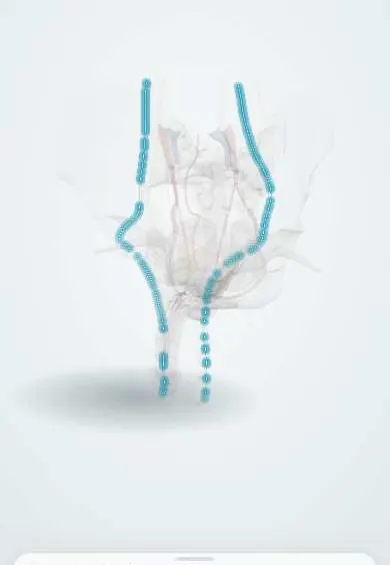
Representative model, for educational purposes only.