Miscarriage (early pregnancy loss) !
A miscarriage is the spontaneous loss of a pregnancy before the baby can survive, usually before 20 weeks; most happen in the first three months.
Updated 2026-10-29
Structures involved
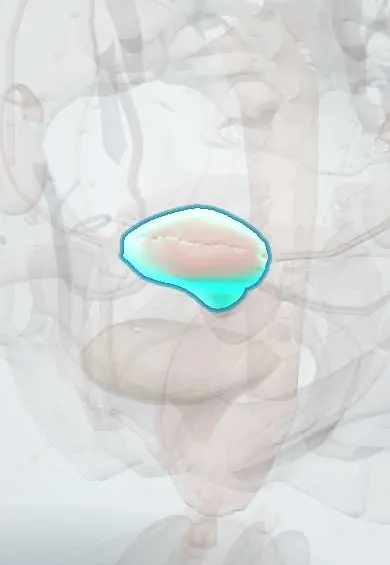
Tap one to see what it is and open it in 3D.
In embryology
- Trophoblast and hCG; gestational trophoblastic disease
- Principles of teratology: critical periods, dose and genotype
- Alcohol: fetal alcohol spectrum disorder
- Methotrexate and misoprostol
In physiology
Why it happens
What it is
Spontaneous loss of an intrauterine pregnancy before the fetus can survive, usually defined as before 20 weeks; some definitions use 22 weeks or fetal weight. Most occur in the first trimester (early pregnancy loss).
Who gets it
The most common complication of early pregnancy; many losses happen before a pregnancy is even recognised. Risk rises clearly with maternal age. In most cases nothing the woman did caused it.
Causes
- Chromosomal abnormalities of the embryo, the most common cause in the first trimester
- Uterine anomalies (septum, submucosal fibroids, intrauterine adhesions)
- Antiphospholipid syndrome
- Poorly controlled diabetes or thyroid disease
- Infections and cervical insufficiency (more in the second trimester)
Risk factors
- Older maternal age
- Previous miscarriages
- Smoking, alcohol and other drugs
- Obesity or very low body weight
- Uncontrolled chronic disease
Pathophysiology
Most early losses come from abnormal embryonic development, often from a random chromosomal error. When the embryo stops developing, hormonal support falls, the decidua breaks down and the uterus starts to expel the pregnancy, causing bleeding and cramps. Sometimes the non-viable pregnancy stays in the uterus without symptoms.
Classification
- Threatened: bleeding with a closed cervix and a viable pregnancy
- Inevitable: bleeding with an open cervix, tissue not yet passed
- Incomplete: part of the tissue passed, cervix open, tissue remains
- Complete: all tissue passed, cervix closed, uterus empty
- Missed: non-viable pregnancy retained with a closed cervix, often without symptoms
- Septic miscarriage; recurrent pregnancy loss (definitions vary)
Symptoms and signs
- Vaginal bleeding, from spotting to heavy
- Cramping lower abdominal or back pain
- Passage of tissue
- Loss of pregnancy symptoms
- No symptoms in a missed miscarriage (found on ultrasound)
Diagnosis
- Clinical
- Speculum examination to see whether the cervix is open and whether tissue is present; vital signs and assessment of blood loss.
- Tests
- Quantitative serum beta-hCG (serial when the location is uncertain), blood group and Rh status, full blood count.
- Imaging
- Transvaginal ultrasound to confirm an intrauterine pregnancy, fetal heartbeat and retained tissue. Criteria for diagnosing a non-viable pregnancy are strict, and repeat scans are used when results are borderline.
Differential diagnosis
- Ectopic pregnancy
- Implantation bleeding
- Molar pregnancy
- Cervical lesions or cervicitis
- Subchorionic haematoma
Goal of treatment
Ensure the uterus empties safely, prevent haemorrhage, infection and Rh alloimmunisation, and support the woman emotionally.
Treatment
- Conservative
- Expectant management: waiting for the tissue to pass naturally, with a follow-up check.
- Medical
- Medical management with a prostaglandin analogue (misoprostol), alone or after an antiprogestogen (mifepristone).
- Procedure
- Uterine aspiration (manual or electric vacuum) when bleeding is heavy, infection is present or the woman prefers it.
- Medical
- Anti-D immunoglobulin for Rh-negative women, according to local guidelines; antibiotics for septic miscarriage.
- Conservative
- Respectful counselling and emotional support, and referral for assessment after recurrent losses.
Drugs for this condition
Complications
- Haemorrhage
- Infection (septic miscarriage)
- Retained tissue
- Intrauterine adhesions after instrumentation
- Rh alloimmunisation
- Grief, anxiety and depression
Prognosis
After one miscarriage most women go on to have a successful pregnancy. The chance of another loss rises with maternal age and the number of previous losses; after recurrent losses a cause is looked for.
Prevention
- Control of diabetes and thyroid disease before pregnancy
- Avoiding tobacco, alcohol and drugs
- Most miscarriages cannot be prevented
Test yourself
Think of the answer, then tap the question to see it.
What is the most common cause of first-trimester miscarriage?
Chromosomal abnormalities of the embryo.
How is a threatened miscarriage distinguished from an inevitable one?
In a threatened miscarriage the cervix is closed and the pregnancy viable; in an inevitable one the cervix is open.
What is a missed miscarriage?
A non-viable pregnancy that stays in the uterus with a closed cervix, often without symptoms.
Why is Rh status checked in a woman with miscarriage?
Rh-negative women may receive anti-D immunoglobulin to prevent alloimmunisation, according to local guidelines.
Which diagnosis must be excluded in early pregnancy bleeding with no intrauterine pregnancy on ultrasound?
Ectopic pregnancy.
Related conditions
Educational information, not medical advice. For any symptom, see a health professional.
Sources: Early Pregnancy Loss (Spontaneous Abortion) (StatPearls (NCBI Bookshelf), 2023).
Spotted a mistake?We are always improving for the community. Tell us what is wrong and our team will review it.Report a mistake
Representative model, for educational purposes only.